Unitree H2 vs R1: Choosing Between Unitree's Humanoids
The Unitree H2 and R1 are both humanoid robots — but they are built for completely different buyers. Here is an honest comparison of the flagship H2 against the accessible R1, and how to know which humanoid actually fits your goals.
The Unitree H2 and the Unitree R1 are both humanoid robots from the same manufacturer, running the same software ecosystem. On paper they look like two points on a single product ladder. In practice they are built for completely different buyers, and choosing between them by price alone is the fastest way to end up with the wrong robot.
This is an honest comparison: the flagship H2 against the accessible R1. What each one is genuinely built for, where the differences actually matter, and how to know which humanoid fits your goals and budget before you commit.
The One-Paragraph Verdict
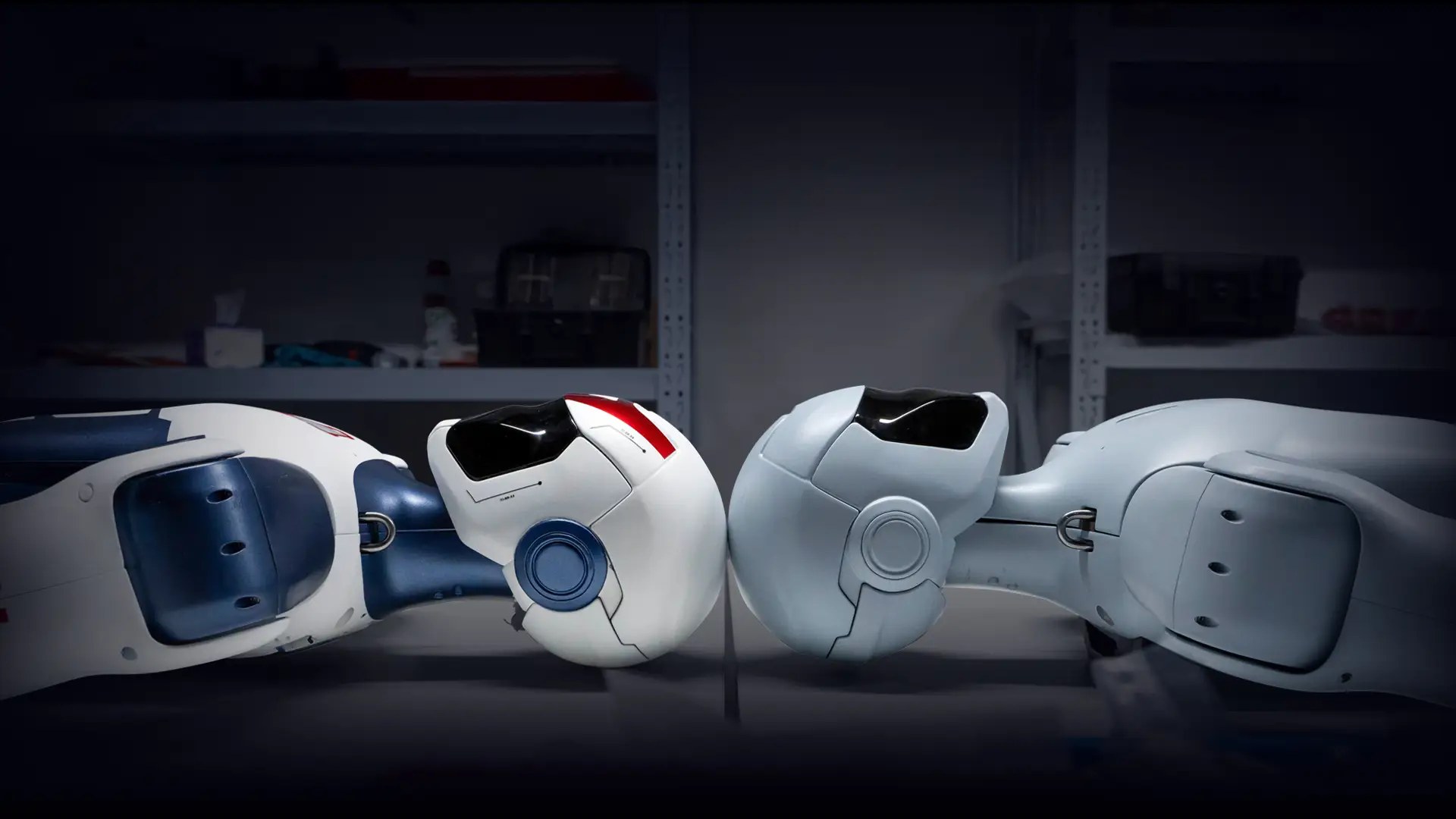
Choose the R1 if you are entering humanoid robotics, working within a research or education budget, want a lighter and customisable platform, or need the most accessible route into humanoid embodied AI. Choose the H2 if you need a full-size flagship humanoid for advanced research, high-end demonstration, greater scale and torque, and you have the budget the flagship tier requires. The R1 is the entry point; the H2 is the flagship. Most buyers entering the category should start with the R1.
Side-by-Side: The Specs That Matter
| Specification | Unitree R1 | Unitree H2 |
|---|---|---|
| Class | Accessible humanoid | Flagship humanoid |
| Starting price (USD, indicative) | ~$5,900 (Dual-Arm from $4,290) | Flagship tier |
| Height | ~123 cm | 182 cm |
| Weight | ~29 kg (ultra-lightweight) | Full-size build |
| Degrees of freedom | 20-26 + 2-DOF head | 31 |
| Max joint torque | Standard | Up to 360 N·m |
| Customisable shell | Yes — fully customisable | Flagship form |
| AI / computing | Multimodal, 8-core CPU + optional Jetson Orin | Flagship compute |
| Availability | First deliveries end of June 2026 | In stock |
| Best for | Entry, research, education, demos | Advanced research, flagship demonstration |
Where the R1 Wins
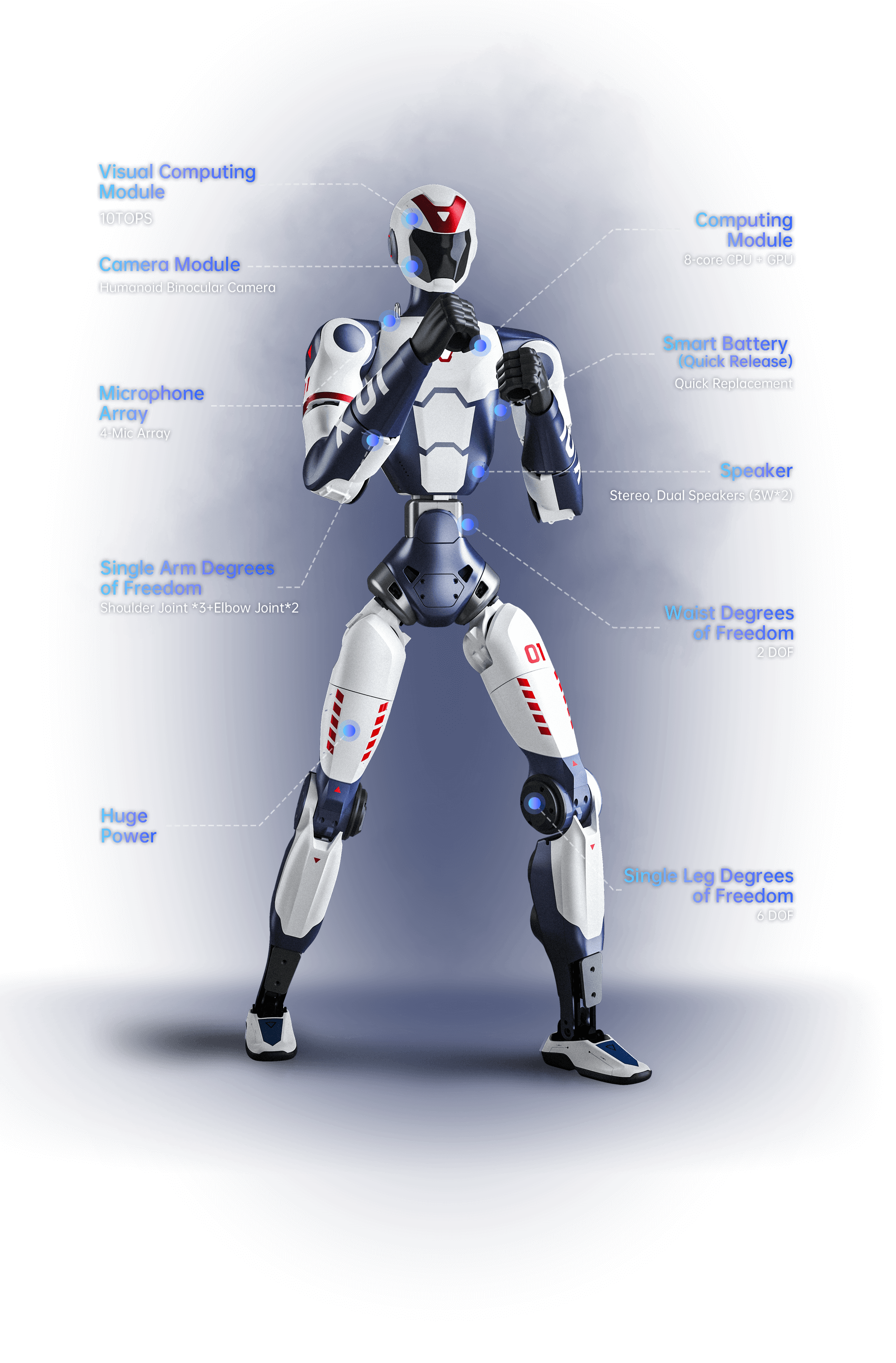
The R1 is not a "lesser H2". For the buyers it targets, it is exactly the right machine — and in several respects it is the more sensible choice even for buyers who could afford the H2.
Accessibility
At roughly $5,900 — and from $4,290 for the modular R1 Dual-Arm — the R1 is the most accessible current-generation humanoid on the market. This price changes who can buy a humanoid at all. A research group, a university department, or an embodied-AI startup can put an R1 on a workbench without a multi-year capital approval cycle. We explored what this price shift means more broadly in What the Unitree R1 Means for African Robotics.
Customisation
The R1's shell is fully customisable — colour, panels, branding. For demonstration, exhibition, brand activation, and experiential marketing, this matters enormously. An R1 can be skinned to match a brand or an institution; the H2 is a flagship form designed to look like a flagship.
Lightweight Handling
At around 29 kg and 123 cm, the R1 is genuinely easier to transport, set up, and operate safely around people than a full-size 182 cm humanoid. For a teaching lab, a travelling demonstration, or any environment where the robot operates near the public, the smaller, lighter platform is the more practical and safer choice.
Lower Stakes for Learning
The R1 is the platform to learn humanoid robotics on. Mistakes are cheaper, handling is easier, and the lower capital commitment means teams are more willing to experiment. Because it runs the full Unitree SDK, everything learned on the R1 transfers directly to the H2 if you upgrade later.
Where the H2 Wins
The H2 is Unitree's flagship for a reason. When your work genuinely needs full-size humanoid capability, nothing in the R1 line substitutes for it.

Scale and Presence
At 182 cm, the H2 is a full-size humanoid that operates at genuine human scale. For research into human-scale interaction, for flagship demonstrations where presence matters, and for any application that requires the robot to work in human-sized spaces and reach human-height surfaces, the full-size build is essential.
Degrees of Freedom and Torque
With 31 degrees of freedom and joint torque up to 360 N·m, the H2 is substantially more capable of complex, dynamic, and forceful movement than the R1. For advanced locomotion research, dynamic motion studies, and demanding manipulation, the additional degrees of freedom and torque headroom are the whole point.
Flagship Research Capability
The H2 is the platform for well-funded research groups pushing the frontier of humanoid robotics. If your work specifically requires maximum capability — the most articulated, most powerful, most human-scale platform Unitree offers — the H2 is the answer, and the price difference is justified by capability you would otherwise not have.
Available Now
The H2 is described as in stock and ready to ship. The R1 begins worldwide deliveries at the end of June 2026. If you need a humanoid robot immediately rather than reserving a future-wave R1, the H2 is available today.
Real Scenarios and the Right Answer
"I lecture robotics and want a humanoid for hands-on teaching."
R1. The price lets you buy one (or several) within a faculty budget, it is lighter and safer around students, and the SDK is identical to the flagship line so students learn transferable skills. Full-size scale is rarely necessary for teaching fundamentals.
"I run a robotics research group with serious funding and need maximum capability."
H2. If your research specifically requires full-size scale, maximum degrees of freedom, and high torque — dynamic locomotion, human-scale interaction, demanding manipulation — the flagship is the correct tool and the budget is justified.
"I need a humanoid for brand activations and exhibitions."
R1. The customisable shell is purpose-made for branding, it is easier and cheaper to transport between events, and it is safer operating around the public. The lower cost also de-risks the wear and tear of constant travel and demonstration.
"I want to start in humanoid robotics but I'm not sure how far we'll take it."
R1. Start accessible, prove the use case, build the skills. Because the SDK transfers, you can add an H2 later if the work justifies it — without throwing away anything you built on the R1.
"I need a humanoid in the building this quarter."
H2. It is in stock now. The R1's first worldwide deliveries are end of June 2026, so if your timeline does not allow for the reservation queue, the H2 is the available platform.
"We do manipulation research and need two arms on a desk, not a walking humanoid."
Neither — look at the R1 Dual-Arm. If your work is manipulation rather than locomotion, the modular R1 Dual-Arm from $4,290 is purpose-built for exactly that, with fixed or wheeled bases and 5- or 7-DOF arms. We covered it in detail in the R1 Dual-Arm launch post.
What They Have in Common
For all their differences, the H2 and R1 share the things that make a Unitree humanoid worth buying:
- The same SDK and software ecosystem — code and skills transfer between them, and both receive continuous OTA updates
- Multimodal AI — vision, voice interaction, and onboard intelligence
- The Unitree embodied-AI lineage — both are current-generation platforms, not legacy designs
- Local support through MCM Robotics — manufacturer warranty, training, integration assistance, and nationwide South African delivery on both
How to Decide in Three Questions
- Is your budget at the entry level or the flagship level? Entry budget points to R1. Flagship budget opens up the H2.
- Does your work specifically need full-size scale, maximum degrees of freedom, or high torque? If yes, H2. If no, the R1 is sufficient and more practical.
- Do you need a humanoid immediately, or can you reserve a June 2026 R1? Immediate need points to the in-stock H2. A flexible timeline keeps the R1 in play.
For most buyers entering humanoid robotics, the honest answer is the R1 — it is the accessible, practical, lower-risk way in, and the SDK means you never outgrow your investment. The H2 is the right call when your work genuinely demands the flagship.
What to Read Next
- The full Unitree lineup, humanoids and quadrupeds: How to Choose the Right Unitree Robot for Your Business
- The R1 worldwide launch and reservation details: Unitree R1 Worldwide Launch: First Deliveries End of June
- The modular dual-arm option: Unitree R1 Dual-Arm Humanoid Launch
- What "embodied AI" actually means: What Is Embodied AI?
- Humanoids in African industry: Humanoid Robots: From Science Fiction to African Factories
Talk to Us
Browse the product pages — Unitree R1, R1 Dual-Arm, and Unitree H2 — or get in touch for a real conversation about which humanoid fits your goals. MCM Robotics is the official Unitree reseller in South Africa, and we will recommend the platform that actually fits your work and budget, with local warranty, training, and nationwide delivery on every unit.
Frequently Asked Questions
What is the difference between the Unitree H2 and R1?
The H2 is Unitree's flagship full-size humanoid — 182cm tall, 31 degrees of freedom, up to 360 N·m of joint torque, built for advanced research and high-end demonstration. The R1 is the accessible humanoid — ultra-lightweight, fully customizable, around 123cm tall with 20-26 degrees of freedom, starting at roughly $5,900. The H2 is a flagship platform; the R1 is the entry point into humanoid embodied AI.
Which Unitree humanoid is cheaper, the H2 or the R1?
The R1 is significantly more affordable, starting at roughly $5,900, with the modular R1 Dual-Arm variant from $4,290. The H2 is the flagship platform and sits in a substantially higher price tier reflecting its full-size build, higher degrees of freedom, and greater torque. For buyers entering humanoid robotics for the first time, the R1 is the accessible starting point.
Is the H2 better than the R1?
Neither is universally "better" — they target different buyers. The H2 is more capable in absolute terms: taller, stronger, with more degrees of freedom and higher torque for demanding research and flagship demonstration. The R1 is better for accessibility, customisation, lighter handling, and getting started with humanoid embodied AI at a fraction of the cost. The right choice depends entirely on your goals and budget.
Which humanoid is best for a university or research lab?
For most universities and research labs entering humanoid robotics, the R1 is the right starting point — its accessible price lets a department buy one (or several) without special grant funding, and it runs the full Unitree SDK. Labs doing advanced, well-funded humanoid research that specifically needs full-size scale, higher payload, or maximum degrees of freedom should consider the H2. Many institutions start with R1 units and add an H2 later.
When do the H2 and R1 ship?
The H2 is described as in stock and ready to ship. The R1 begins its first worldwide deliveries at the end of June 2026, with South Africa on day-one allocation through MCM Robotics. If you need a humanoid immediately, the H2 is available now; if the R1 fits your use case and budget, reserving early secures a first-wave delivery slot.
Can I start with an R1 and upgrade to an H2 later?
Yes, and many buyers do exactly that. Both run the same Unitree SDK and software ecosystem, so skills, code, and workflows developed on the R1 transfer to the H2. Starting with the more affordable R1 to build capability and prove your use case, then adding an H2 when the work justifies the flagship platform, is a sensible and common path.