
What Is Embodied AI? A Plain-English Definition for 2026
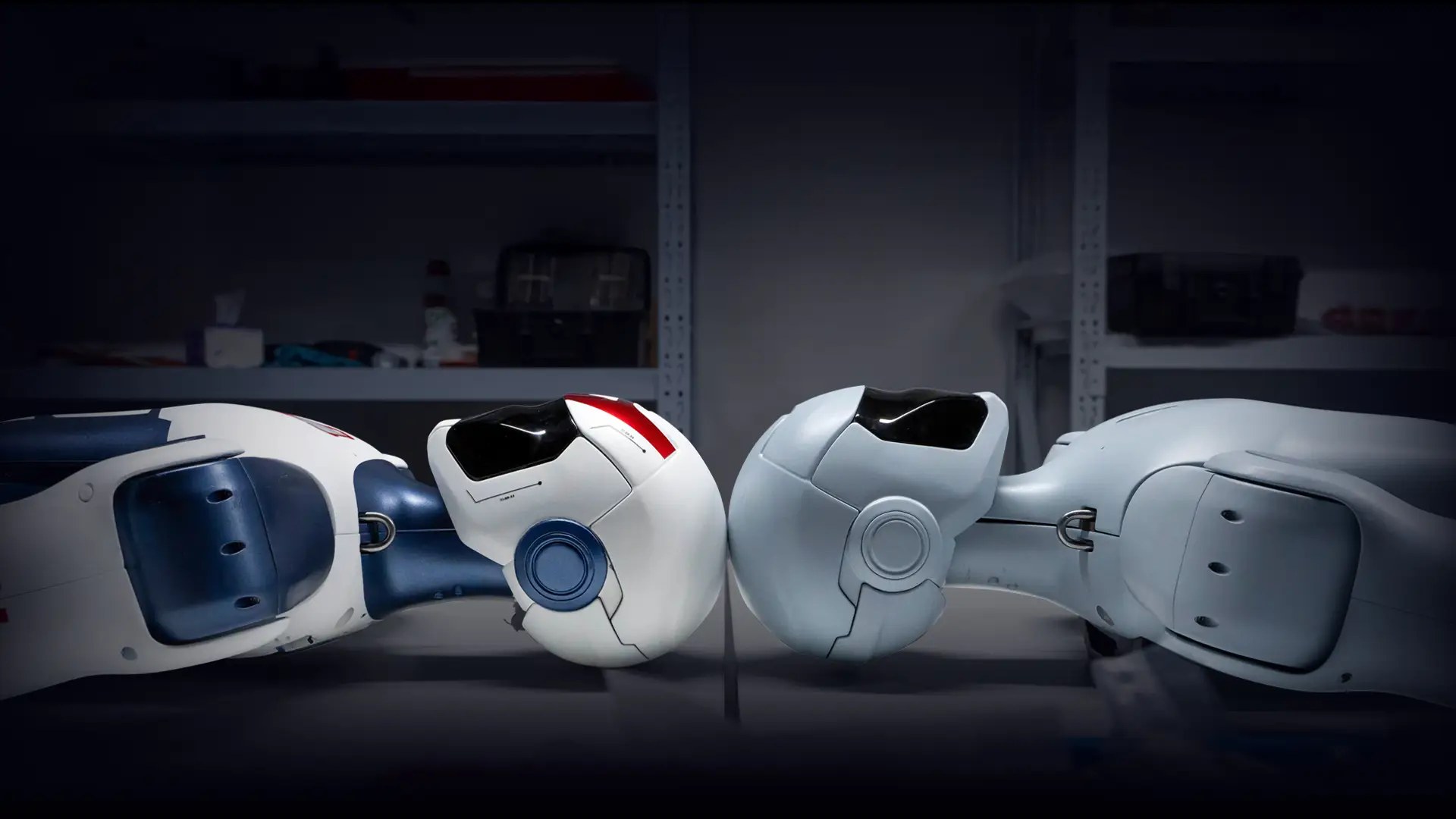
Embodied AI is artificial intelligence that operates a physical body — a robot — to perceive, decide, and act in the real world, rather than only processing language or images on a screen. That single sentence is the whole definition. Everything that follows is detail and context.
The term has exploded in robotics conversations in 2026 because the field has genuinely reached a turning point. Robots that were once expensive curiosities are now affordable enough that universities, startups, and serious educators can put embodied AI on a workbench. But "embodied AI" is also one of the most casually thrown-around phrases in robotics marketing, often without anyone explaining what it actually means or why it is different from any other AI.
This is the plain-English version: what it is, what it is not, how it works, and why it suddenly matters.
Embodied AI vs Disembodied AI
The simplest way to grasp embodied AI is by contrast with the AI most people interact with daily.
Disembodied AI — ChatGPT, Claude, Gemini, Midjourney, large language models in general — exists only as software. It reads text or images you type, runs computation in a data centre, and sends back text, code, or images. It has no body, no senses, no ability to move, and no direct interaction with the physical world. It is brilliant at the tasks it is designed for: language, reasoning, code, and increasingly image and audio understanding. But ask it to fold a towel or fetch a tool and it cannot do anything except describe how.
Embodied AI runs on a robot. It perceives through cameras, microphones, LiDAR sensors, and tactile feedback. It decides using onboard computation (and sometimes cloud AI). It acts through motors, manipulators, wheels, or legs. It learns not just from text and images on the internet but from interacting with the physical world directly — picking up objects, walking on uneven ground, recovering from falls, navigating around obstacles.
The "embodied" part is doing real work. A body is not just an output device for an AI brain. The body shapes what the AI can learn, what problems it solves, and how it improves. An AI that can pick something up and feel whether it is heavy learns things an AI that only reads text never will.
What Embodied AI Actually Consists Of
Four components, working together:
1. Perception
The robot needs to know what is happening around it. This means sensors: cameras (typically binocular for depth perception), LiDAR for precise 3D mapping, microphones for voice and audio cues, inertial measurement units (IMUs) for orientation, and increasingly tactile sensors for physical feedback. The Unitree 4D LiDAR L2, standard on most current Unitree platforms, is a good example of the perception stack that makes embodied AI possible.
2. Reasoning and Planning
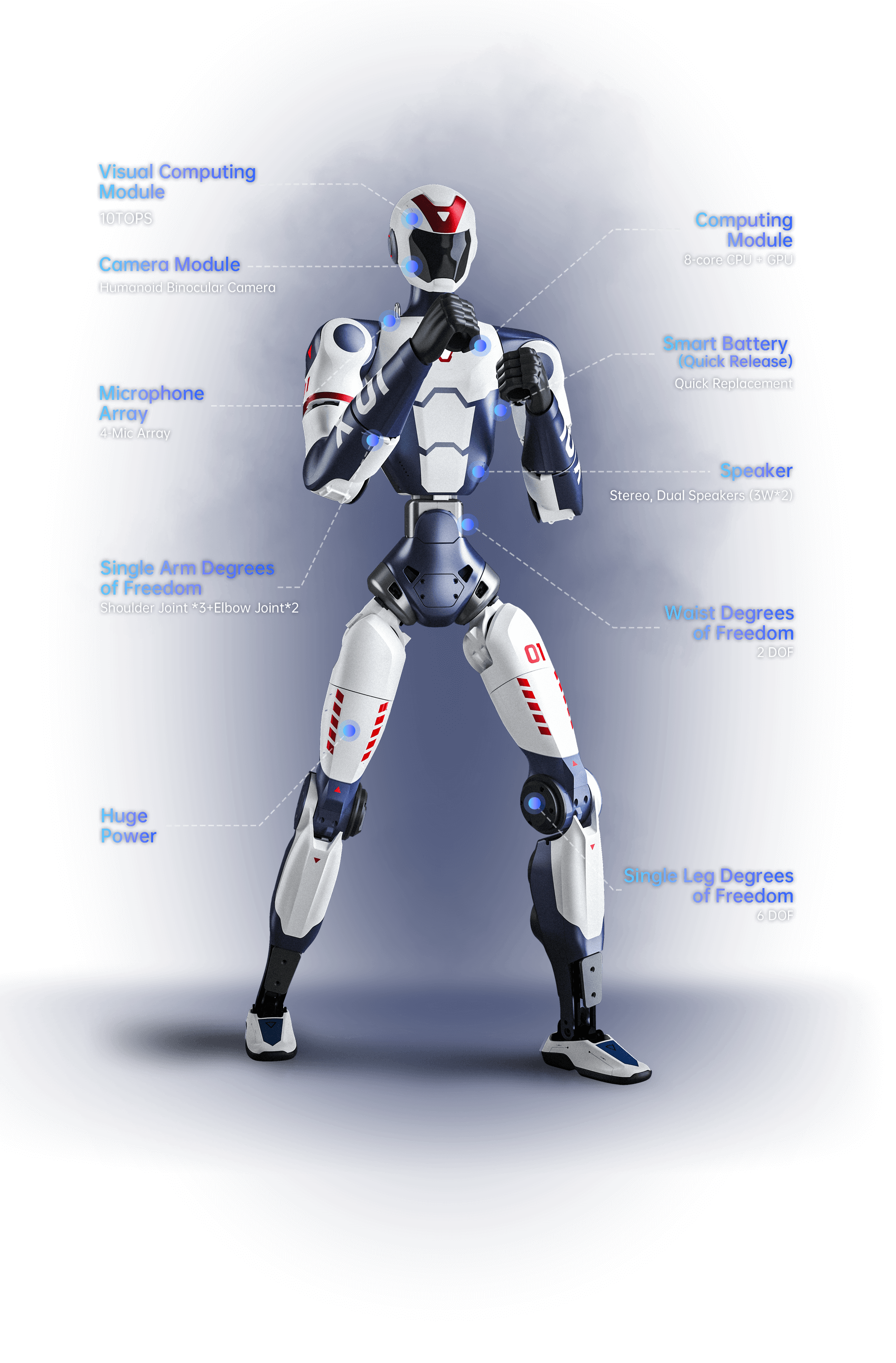
Perception data alone is not useful — the robot has to decide what to do with it. This is where onboard AI computing matters. Most current-generation embodied-AI platforms run an 8-core CPU paired with an AI accelerator (10 TOPS is typical, with NVIDIA Jetson Orin upgrades available for 40-100 TOPS). This handles object recognition, path planning, manipulation policy, and increasingly multimodal understanding that combines vision, audio, and language.
3. Action
The robot has to translate decisions into physical movement. For quadrupeds, that means coordinated joint motors driving four legs (typically 12 degrees of freedom). For humanoids, 20-31 degrees of freedom across legs, arms, head, and waist. For manipulators, the arms and hands. The mechanical precision of this layer — joint motor quality, gearbox design, sensor feedback at the joint — determines whether the AI's decisions actually translate to reliable physical action.
4. Learning
The whole stack improves over time. Embodied-AI platforms learn through teleoperation (a human guides the robot, the robot records and learns from those demonstrations), imitation learning, reinforcement learning in simulation, and increasingly continuous OTA updates that ship improved policies to deployed robots. A robot bought today is not the robot it will be in 12 months.
Why Embodied AI Matters Now
Embodied AI is not a new concept — robotics researchers have been working on it for decades. What changed in 2024-2026 is that three things came together at the same time.
Onboard Reasoning Got Much Better
Large language models, vision-language models, and multimodal architectures that emerged from the wider AI boom turn out to be excellent foundations for embodied reasoning. A robot can now describe what it sees, reason about what to do, and translate intent into action in ways that were not possible five years ago. The same advances that made ChatGPT good at language made embodied AI capable of acting on instruction.
Sensors and Compute Got Cheap
A 4D LiDAR sensor that cost $10,000 a decade ago now costs a few hundred. An AI accelerator capable of 10 TOPS fits in a thermal envelope that runs on a robot's battery. Binocular vision systems are now consumer-grade components. The hardware platform that makes embodied AI economically feasible is essentially a 2020s development.
Robot Platforms Got Affordable
This is the largest single shift. Two years ago, a current-generation humanoid robot cost $50,000 to $150,000. In 2026, the Unitree R1 starts at roughly $4,900 and the R1 Dual-Arm modular platform from $4,290. The Unitree Go2 quadruped starts at roughly $1,600. We covered the strategic implications of this shift for Africa specifically in What the Unitree R1 Means for African Robotics.
None of these three changes alone would have produced today's embodied-AI moment. Together, they have produced a real one.
What Embodied AI Is Not
A few common confusions worth clearing up.
Embodied AI is not just "robots". A pre-programmed industrial arm that executes the same motion 1,000 times an hour is a robot, but it is not embodied AI in the modern sense — it has no perception, no decision-making, no learning. Embodied AI specifically refers to robots that perceive their environment and adapt their behaviour.
Embodied AI is not necessarily humanoid. The pop-culture image of embodied AI is the humanoid robot, but quadrupeds, manipulator arms, autonomous vehicles, and even smart industrial inspection drones all qualify. The Unitree B2 quadruped doing autonomous mining inspection is embodied AI in exactly the same sense that the R1 humanoid is.
Embodied AI is not artificial general intelligence (AGI). A humanoid robot that can fold towels and load a dishwasher is impressive, but it is doing learned task-specific behaviour, not exhibiting general intelligence. Conflating embodied AI with AGI is one of the most common errors in 2026 robotics commentary.
Embodied AI is not ready to replace human workers. We covered this in the FAQ but it bears repeating in the body. Current embodied AI is excellent for research, education, inspection, demonstration, and a growing list of specific industrial use cases — but not yet reliable enough for unsupervised production work in safety-critical environments. Anyone selling you a humanoid as a labour replacement in 2026 is selling more than what is in the box.
Where Embodied AI Is Working Today
To make the definition concrete, here are real, current use cases for embodied AI in 2026.
- University research — embodied-AI research programmes using quadrupeds and humanoids for locomotion, manipulation, and policy learning
- Industrial inspection — autonomous quadrupeds carrying sensor payloads through mining, plant, and infrastructure environments (see our South African mining status report)
- Security patrol — autonomous robots extending coverage across large outdoor sites
- Education — universities and technical colleges teaching embodied AI hands-on rather than from textbooks
- Demonstration and brand activation — humanoids in exhibitions, retail, and experiential marketing where the customisable shell of platforms like the R1 makes them visually distinctive
- Embodied-AI startups — developers building manipulation policies, teleoperation systems, and domain-specific behaviour models on commercially-available platforms
- Healthcare and surgical robotics — though typically not what "embodied AI" implies in popular usage, surgical and rehabilitation robotics are a related branch
What unites these is that the AI is doing work in the physical world, not just in software.
How to Get Started with Embodied AI
For most South African researchers, educators, and developers, the practical entry point in 2026 is one of three platforms:
- Unitree Go2 AIR — $1,600 indicative, the most affordable serious embodied-AI platform. Quadruped with 4D LiDAR, 8-core CPU, full SDK. Right for research, education, and indoor development work. We have a 30-minute setup guide for first-time users.
- Unitree R1 Dual-Arm — from $4,290, modular dual-arm humanoid platform with binocular vision, voice interaction, and 5- or 7-DOF arms. Right for manipulation research, embodied-AI experimentation, and serious development work.
- Unitree R1 — from approximately $4,900, full ultra-lightweight customisable humanoid. Shipping since mid-2026. Right for humanoid-specific research, demonstration, and brand work.
For a fuller framework on choosing between these and the rest of the Unitree lineup, see How to Choose the Right Unitree Robot for Your Business and our complete buyer's guide.
The Short Version
Embodied AI is AI with a body — AI that perceives the world through sensors, decides what to do with onboard computing, acts through motors and manipulators, and learns through physical interaction. It is not the same as ChatGPT. It is not necessarily humanoid. It is not yet ready to replace human workers. But it is the area of AI research where the next decade of breakthroughs will land, and in 2026 it is finally affordable enough that universities, startups, and serious educators in South Africa can take part.
If you are weighing up which embodied-AI platform fits your work — research, industrial inspection, education, manipulation experiments, or anything else — get in touch. We will ask the right questions about your use case and recommend the platform that actually fits.
Frequently Asked Questions
What is embodied AI in one sentence?
Embodied AI is artificial intelligence that operates a physical body — a robot — to perceive, decide, and act in the real world, rather than only processing language or images on a screen. The "embodied" part is the key distinction: the AI has a body, senses, and the ability to move and manipulate, and it learns by interacting with the physical world.
How is embodied AI different from ChatGPT?
ChatGPT and similar large language models are disembodied AI — they exist only as software, process text or images, and produce text or images in response. They have no body, no senses, and no ability to act in the physical world. Embodied AI runs on a robot, perceives through cameras, LiDAR, and microphones, and acts through motors, manipulators, and locomotion. Both are AI, but they solve fundamentally different problems.
What are examples of embodied AI in 2026?
Current examples include humanoid robots like the Unitree R1, H1, and H2; quadruped robots like the Unitree Go2 and B2; warehouse manipulation robots; autonomous vehicles; surgical robotics; and increasingly, social robots in education and hospitality. The Unitree R1 series, shipping since mid-2026, is the most accessible embodied-AI platform on the market.
Why is embodied AI suddenly such a big deal?
Three things happened in parallel: large-language-model AI made onboard reasoning much more capable; sensor and compute hardware (LiDAR, binocular vision, AI accelerators) got dramatically cheaper; and robot platforms themselves dropped in price by an order of magnitude. The result is that current-generation humanoid and quadruped robots are now within budget for universities, startups, and serious educators, opening a research and deployment market that did not exist five years ago.
Can embodied AI replace human workers?
Not in any meaningful way for years. Current embodied AI is excellent for research, education, inspection, and demonstration but is not yet reliable enough for unsupervised production work in safety-critical environments. The short-term role is augmentation — robots taking on dangerous, repetitive, or data-intensive tasks while humans operate, interpret, and maintain the systems. Realistic labour displacement is a 5-to-10-year conversation, not a 2026 one.
How do I get started with embodied AI?
For most South African researchers, educators, and developers, the entry point is the Unitree Go2 AIR quadruped at roughly $1,600 — it carries a 4D LiDAR L2 sensor, an 8-core CPU, multimodal AI capability, and the full Unitree SDK. For humanoid embodied AI, the Unitree R1 starts at roughly $4,900 and the R1 Dual-Arm modular platform from $4,290. MCM Robotics is the official Unitree reseller in South Africa with local support, training, and warranty.