What the Unitree R1 Means for African Robotics
A humanoid robot for the price of a high-end laptop is not just a product launch — it is a turning point for African robotics. Here is an honest take on what changes, what does not, and which African industries move first.
For the past decade, the conversation about humanoid robots in Africa has gone the same way every time: yes, the technology is fascinating; no, no African institution can actually afford one. Boston Dynamics' Atlas has never had a published consumer price. Tesla's Optimus has not shipped commercially. The few platforms that did exist sat north of $100,000 and ran on proprietary stacks that university research budgets could not absorb.
The Unitree R1 changes the conversation. At a starting price of roughly $5,900, with the dual-arm R1 variant from $4,290, we are looking at a current-generation humanoid robot priced like a high-end mobile workstation. That is not an incremental change. That is a turning point.
This piece is the honest take on what that turning point actually means for African robotics: what changes immediately, what stays the same, which African industries move first, and where the realistic limits sit.

The Price Floor Has Genuinely Collapsed
The single most important fact about the R1 is the price. Comparable humanoid platforms two years ago sat at $50,000 to $150,000 — far above the budget of almost every African research lab, university department, and embodied-AI startup. The R1 brings that floor down by roughly a factor of ten.
That matters because it changes who can buy one. At $150,000, a humanoid robot is a once-a-decade capital expenditure that needs board approval, multi-departmental justification, and probably a grant. At $5,900, it is the same line item as a high-spec computer cluster — well within the discretionary budget of an engineering faculty, a postgraduate research group, or a robotics-focused startup with seed funding.
For African institutions specifically, this is the moment a lot of conversations stop being theoretical and start being procurement. The next academic year's robotics syllabus can credibly assume hands-on humanoid time. The next round of robotics PhDs at South African, Kenyan, Ghanaian, and Nigerian universities can build their research programmes around a real platform rather than a simulator.
What Does Not Change
Before the hype gets ahead of reality, a few honest caveats.
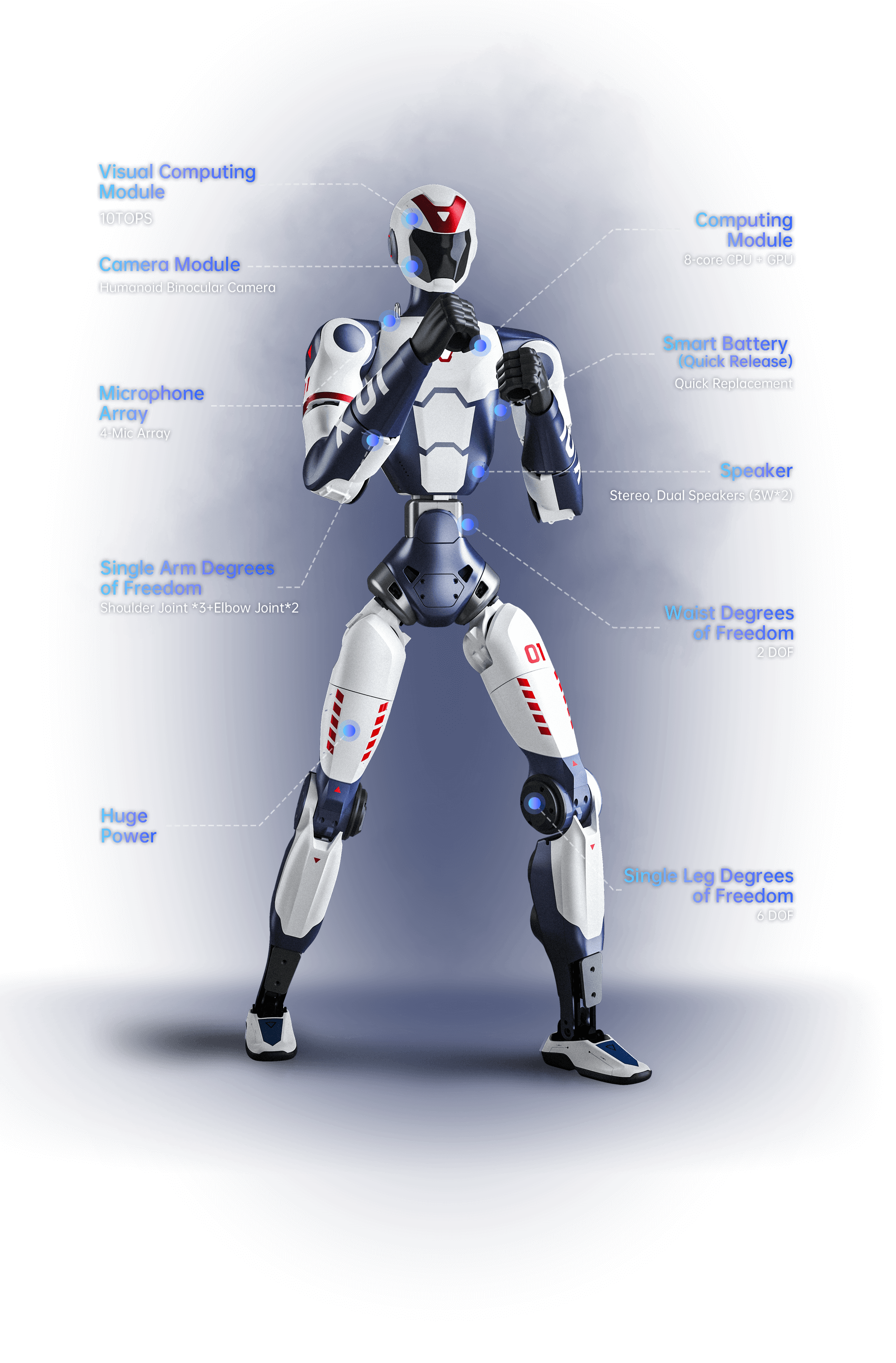
The R1 is a development platform, not a deployable labour replacement. It can walk, run, recover from falls, perform cartwheels, manipulate objects with binocular vision, and interact through voice — all impressive, all real. What it cannot do is replace a human warehouse worker, a security guard, or a factory operator on any meaningful timeline. Humanoid robots in 2026 are research tools. The conversation about replacing African labour with humanoids is several technical generations away from being a serious one.
Battery life is the second reality check. The R1 runs for approximately one hour on a charge. That is fine for a research session, a demonstration, or a teleoperation experiment. It is not fine for a four-hour shift. Solving the energy density problem is the same hard problem that limits electric vehicles, and humanoids will hit those limits earlier and harder.
Third: import logistics and warranty. A $5,900 USD indicative price translates to a meaningfully higher South African landed cost after airfreight, duties, and VAT. And direct imports forfeit the manufacturer warranty entirely — a risk worth taking on a $200 piece of consumer electronics, but not on a humanoid robot. Buying through an authorised reseller (we cover the maths in our quadruped buyer's guide) is the only sensible path.
Which African Industries Move First
The order of adoption is not random. It follows budget capacity, technical readiness, and the gap between what the R1 can do and what each industry needs.
1. Universities and Research Labs
This is the obvious first wave. African universities have spent the last decade building robotics, mechatronics, computer-science, and AI programmes that desperately need access to current-generation hardware. The R1 fits the budget of a single research group. It runs the same SDK as the rest of the Unitree lineup, meaning skills and code transfer directly from quadruped work students may have already done. Expect strong demand from research-intensive faculties at the University of Cape Town, Stellenbosch, Wits, UJ, and similar institutions across the continent.
2. Embodied-AI Startups
The African embodied-AI ecosystem is small but growing. For startups working on imitation learning, teleoperation, manipulation policy training, or domain-specific behavioural models, the R1 is the most affordable serious platform on the market. Crucially, the cost is low enough that a startup can buy one without committing the company's runway to a single piece of hardware.
3. Demonstration, Exhibition, and Experiential Marketing
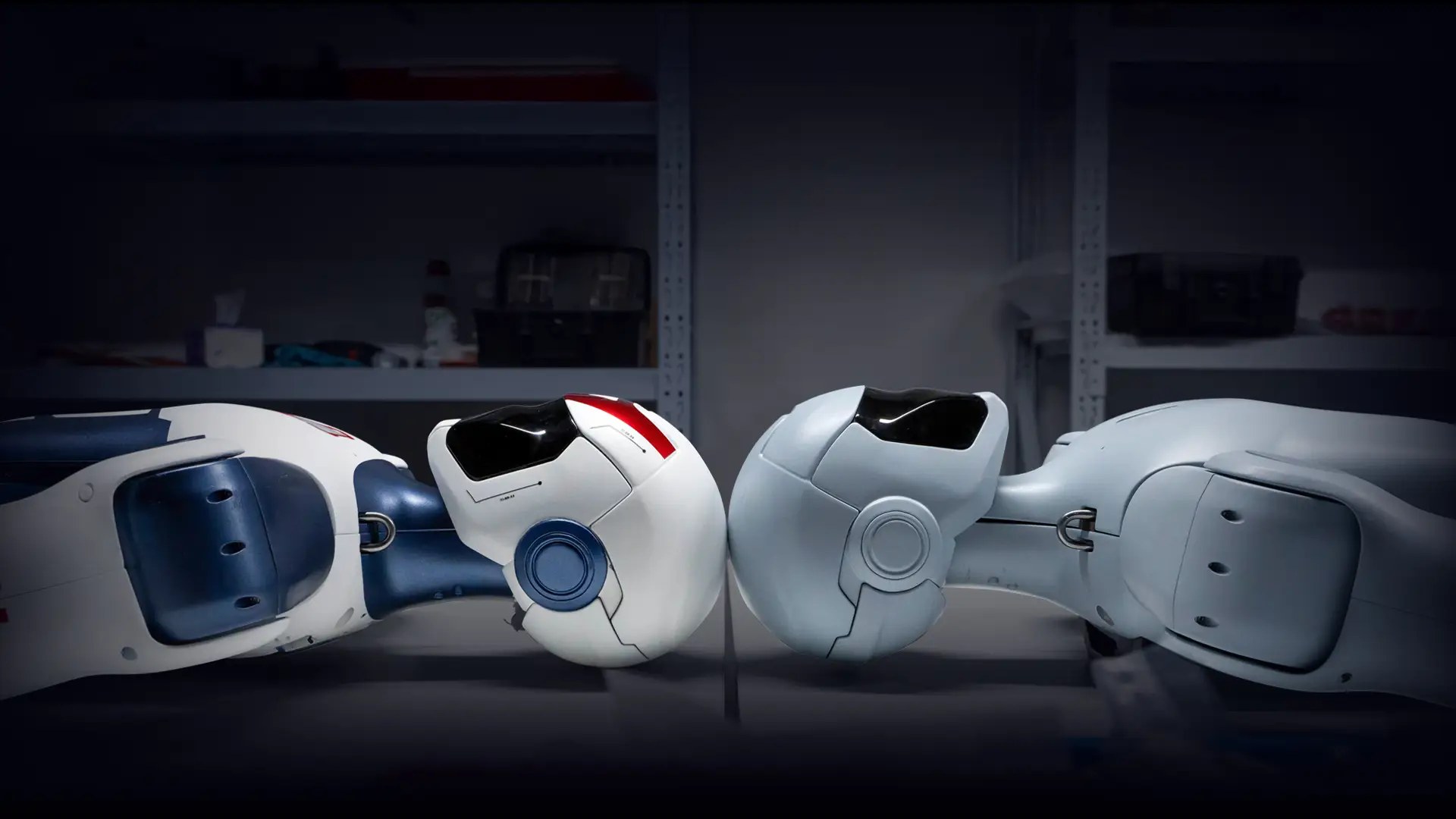
This is the underrated category. The R1 has a fully customisable shell — colour, decals, branded panels, the lot. For trade shows, brand activations, malls, science centres, and corporate experiences, the R1 is the first humanoid that is both visually compelling and commercially affordable. Expect African event production companies and brand activations to be early adopters.
4. Industrial Integrators (Slower)
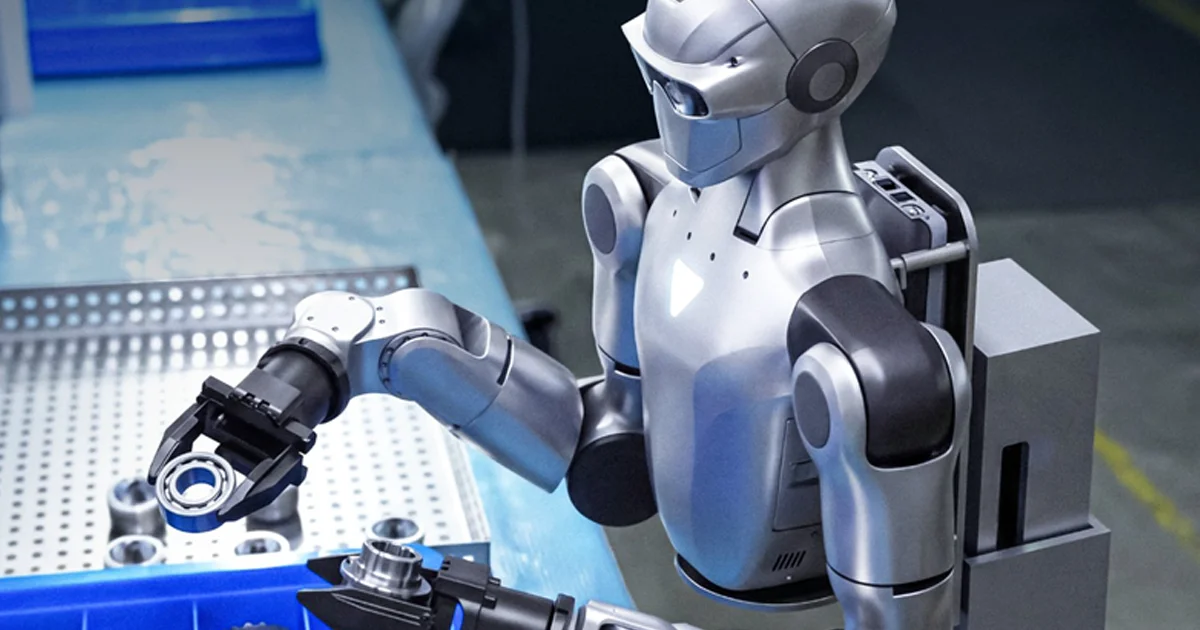
Industrial adoption takes longer. Most African industrial sites have not yet deployed a Unitree B2 quadruped for the inspection work humanoids cannot meaningfully outperform yet. Until quadruped adoption matures, industrial humanoid use cases are mostly experimental. The exception is the R1 Dual-Arm: the wheeled-base variant is genuinely interesting for desktop and small-factory manipulation experiments. Read more in our R1 Dual-Arm launch post.
5. Security, Healthcare, Hospitality (Future)
The hype around humanoids in security, elder care, and hospitality is real but premature. These industries will absorb humanoids eventually, but not in the first wave. The technology readiness is not there yet for unsupervised deployment in safety-critical environments. Anyone telling you otherwise is selling something.
The Skills Question
The most interesting second-order effect of an affordable humanoid is the talent it produces. African robotics suffers from a chicken-and-egg problem: not enough hardware to train robotics engineers, so not enough engineers to justify deploying hardware. The R1 breaks that loop. A university that buys two or three R1 units over a budget cycle will produce graduates who actually know how to work with embodied AI on real hardware.
This matters strategically. Africa's robotics talent has historically had to leave the continent to access serious platforms. If universities and labs can now keep their best students working on real systems locally, the continent's robotics ecosystem gets compound returns over the next decade — not from any single deployment, but from the engineers it produces.
What This Looks Like in Practice
Here is a concrete picture. A South African engineering faculty buys one R1 for the embodied-AI research group, one R1 Dual-Arm for the manipulation lab, and one Go2 quadruped for the autonomous-systems lab. Total capex: under R250,000 — a fraction of what a single humanoid would have cost in 2024. That faculty now has the hardware base for three distinct research programmes, runs an undergraduate course with hands-on time, produces postgraduate research with publishable hardware results, and turns out graduates who can walk into any embodied-AI role on the continent.
Multiply that across twenty African universities over the next two years and the talent pipeline picture changes meaningfully. None of it requires speculation about humanoids in factories. It just requires the technology to be affordable enough that institutions can act.
The Realistic Five-Year View
Five years from now, the picture probably looks like this. Humanoid robots remain primarily research, education, and demonstration platforms. A handful of structured industrial use cases emerge — repetitive inventory tasks, controlled-environment inspection, possibly some retail and hospitality demonstrations. Quadrupeds continue to do the bulk of real industrial work in African mining, security, and agriculture, because quadrupeds are the right tool for outdoor and rough-terrain environments. The R1 generation gets replaced by something better, and the next generation will be more capable still — but the inflection point for affordability has already happened.
What changes in those five years is the talent base, the research output, the supplier ecosystem, and the cultural familiarity with embodied AI. Those are the second-order effects that compound. Africa will not lead the world in humanoid deployment by 2031, but Africa can absolutely build a robotics talent base and applied-research community that the next wave of robotics investment plugs into.
How to Get Involved
The R1 begins worldwide deliveries at the end of June 2026 and South Africa is on day-one allocation through MCM Robotics. We covered the timing and reservation process in detail in Unitree R1 Worldwide Launch.
For deeper background on why Africa specifically is positioned for this moment, see Why Africa Is Ready for the Robotics Revolution. For the longer arc on humanoids in African industry, see Humanoid Robots: From Science Fiction to African Factories. And for an honest framework on choosing between the full Unitree lineup, see How to Choose the Right Unitree Robot for Your Business.
If you are weighing up whether the R1 fits your research programme, your startup, your faculty, or your business — get in touch. We will ask the questions you should be asking yourself anyway, and recommend the platform that actually fits.
Frequently Asked Questions
Why is the Unitree R1 such a big deal for Africa?
For the first time, a current-generation humanoid robot is available at a price that fits the budget of African universities, research labs, embodied-AI startups, and serious educators. The R1 starts at roughly $5,900 with the dual-arm variant from $4,290. Previously, comparable platforms cost ten to twenty times that amount, putting humanoid research out of reach for almost every African institution. The R1 changes the maths in a single move.
Which African industries will adopt humanoid robots first?
Universities and research labs move first because their budgets can absorb a low-five-figure platform and they have the technical staff to do real work with it. Embodied-AI startups follow next. Demonstration and experiential marketing pick up the R1 because the customisable shell makes it visually distinctive. Industrial integration takes longer — most African industrial sites still need the IP67-rated B2 quadruped before they can justify a humanoid.
Is the R1 actually capable of doing useful work?
For research, education, and demonstration: yes, immediately. The R1 has 20 to 26 degrees of freedom, multimodal AI with voice and vision, an 8-core CPU plus optional NVIDIA Jetson Orin, and the full Unitree SDK. For production industrial work: not yet. Humanoid robots in 2026 are development platforms, not deployment-ready labour replacements. Treat the R1 as a serious research tool, not as a robot worker.
When will the R1 reach Africa?
Unitree has confirmed end of June 2026 as the first worldwide delivery window. South Africa is on day-one allocation through MCM Robotics, the official Unitree reseller. There is no tier-two rollout — African buyers are competing with global demand for the same first-wave units, which is why local reservations have filled up faster than any prior Unitree launch.
Will the R1 take African jobs?
Not in any meaningful way for years. The R1 is a development platform, not a labour replacement. In the short term, the African jobs created by R1 deployments — robotics engineers, integrators, researchers, technicians — outnumber any jobs displaced. The bigger employment question is the one that comes five to ten years from now when humanoids do start to do real work; that is a conversation worth having early, not a reason to delay engaging with the technology now.