The Complete Guide to Buying a Quadruped Robot in South Africa (2026)
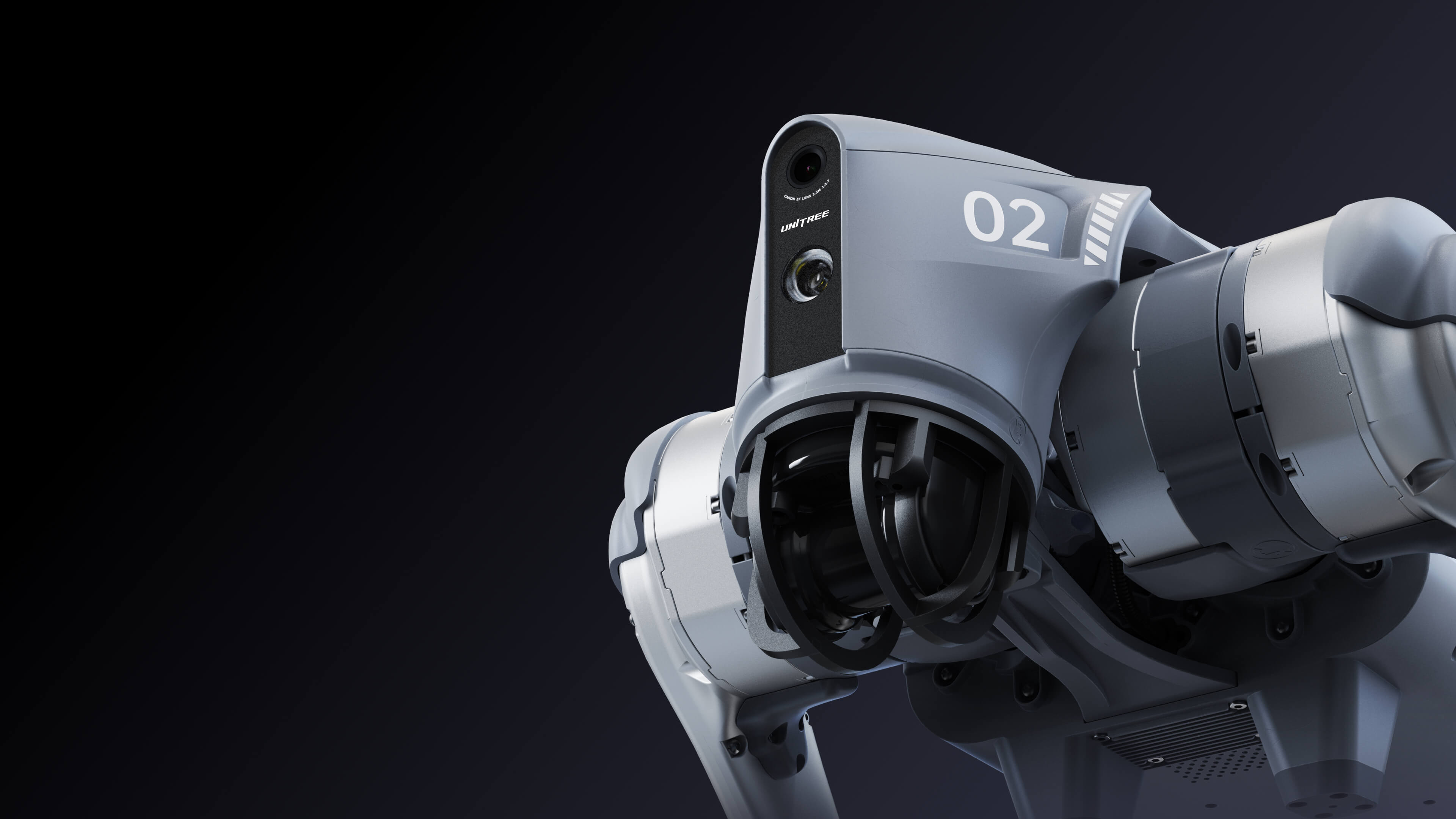
Buying your first quadruped robot is the kind of decision that gets easier the more you know. The headline price is rarely the full story. Total cost of ownership, warranty cover, software support, integration time, and the cost of getting it wrong all matter, sometimes more than the sticker price itself.
This guide walks through the Unitree Go2, Go2-W, B2, B2-W and A2 families available in South Africa in 2026, explains what each one is genuinely good at, and helps you avoid the traps that catch first-time buyers. By the end, you will know exactly which model fits your use case, what you should expect to pay landed in South Africa, and why importing one yourself is usually a more expensive mistake than it looks.
Quick Answer: Which Quadruped Should You Buy?
If you are short on time, here is the one-paragraph version. For education, demonstrations and a first hands-on robot, buy the Unitree Go2 AIR; for research and embodied-AI development, which need the Unitree SDK, buy the Unitree Go2 X or Go2 EDU. For industrial inspection, security patrol, or anything outdoors, buy the Unitree B2. For payload-heavy industrial work, stay with the Unitree B2; for long-range endurance carrying, buy the Unitree A2. For wheeled-leg hybrid use cases where speed and efficiency over mixed ground matter, buy the Unitree Go2-W for dry conditions or the IP67-rated B2-W. Now let us look at why.
The Consumer Tier: The Unitree Go2 Family
The Go2 is the most accessible quadruped robot in the world, and the one that put autonomous four-legged robotics within reach of universities, startups, and serious hobbyists. Four tiers share the same chassis but differ in computing power, sensor configuration, and price.
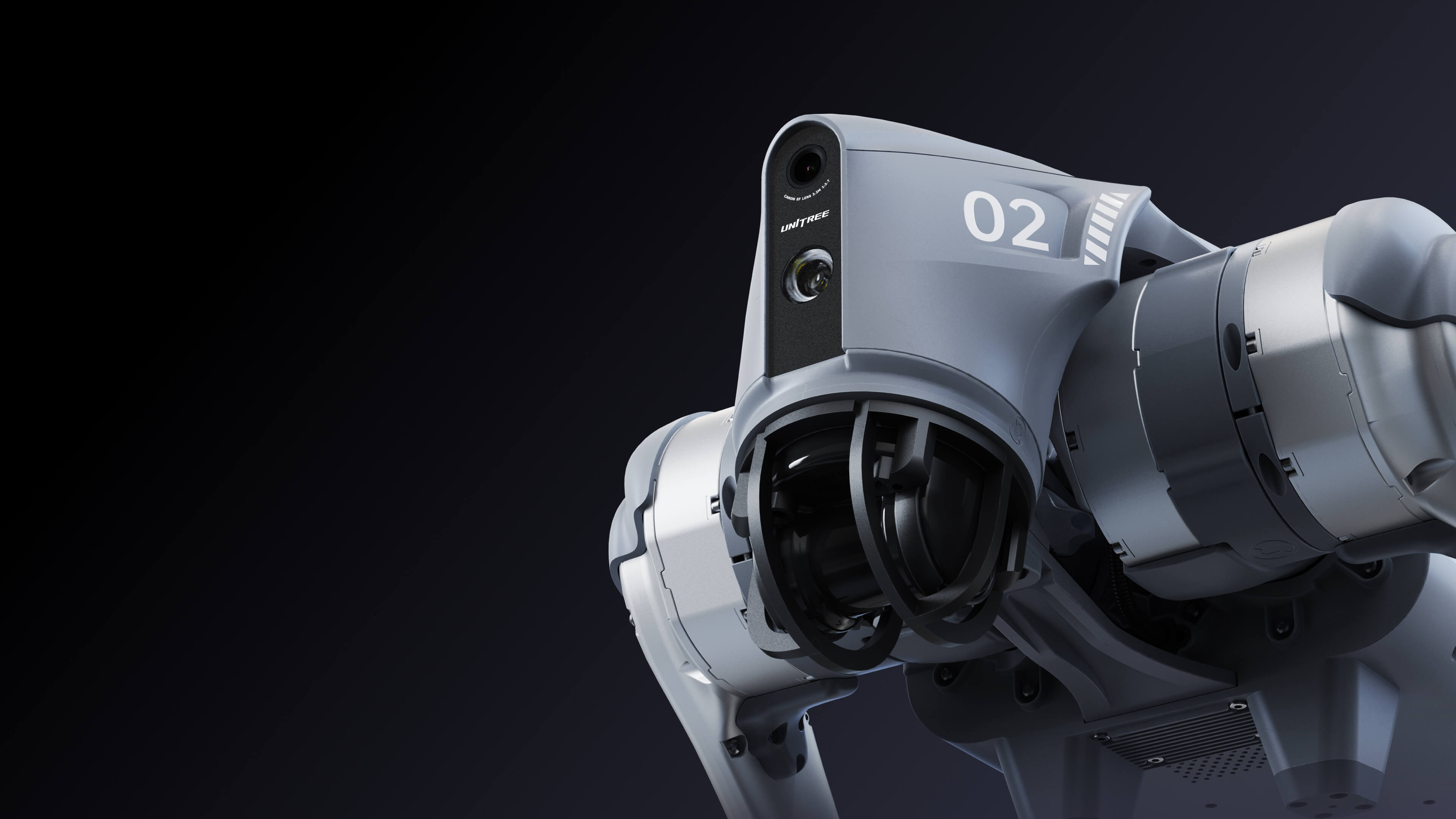
Unitree Go2 AIR: R32,375 ex VAT
The Go2 AIR is where most South African buyers should start. For roughly the price of a high-end mobile workstation, you get an autonomous quadruped with the standard 4D LiDAR L2 sensor (360°×96° field of view), an HD wide-angle camera, WiFi 6, and a 2.5 m/s top speed. Battery life is 1-2 hours per charge, which is more than enough for almost any research session.
The AIR is the right choice for educators, students, robotics clubs, and anyone wanting a first hands-on quadruped without committing to industrial-grade pricing. It supports continuous OTA updates and graphical programming in the app; secondary development with the Unitree SDK needs the Go2 X or EDU.
Unitree Go2 PRO and Unitree Go2 X
The PRO adds upgraded computing for more demanding AI workloads and faster actuator response. The X is the performance flagship of the consumer line, suited to advanced developers who need every available bit of capability inside the consumer pricing tier. Unless you have a specific need that the AIR cannot meet, the AIR is still the right starting point: the PRO and X are best chosen with a concrete workload in mind.
For a deeper look at the Go2 family, read our existing piece: Unitree Go2: The Most Accessible Robot Dog in the World.
The Industrial Tier: The Unitree B2 and B2-W
When the Go2 line is too fragile for sustained outdoor or industrial work, the B2 is where you step up. This is a different class of machine: IP67-rated dust and water protection, an operating temperature range of -20°C to 55°C, and substantially heavier-duty joint motors and gearboxes.
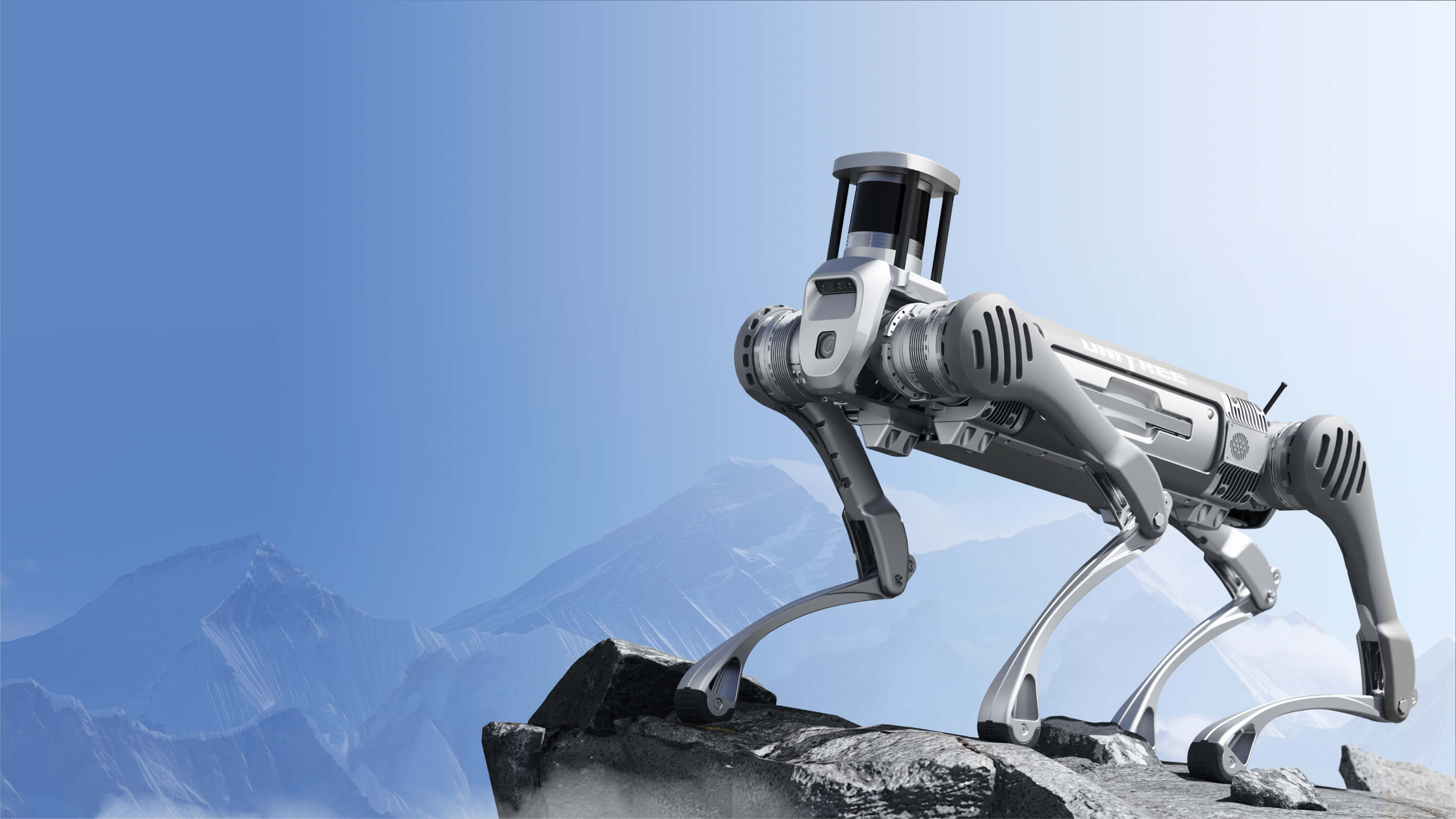
The B2 is the right call for mining inspection, perimeter security patrol, agricultural fieldwork, infrastructure monitoring, and any deployment where the robot will spend serious time outdoors or in dusty, wet, or temperature-extreme conditions. South African mining sites, farms, and security estates fit this profile almost perfectly.
The B2-W fits powered wheels to all four legs, dramatically increasing speed and energy efficiency on flat surfaces while keeping true legged articulation for stairs, kerbs, and obstacles. It is the right choice when most of your operating environment is paved, smooth, or factory-floor flat, but you still need true legged capability for the occasional vertical challenge.
The Endurance Tier: The Unitree A2
The A2 is the endurance-focused industrial quadruped, lighter and longer-legged than the B2, trading payload (25 kg walking) for class-leading endurance of about 20 km per charge; the B2 remains the payload king at over 40 kg walking. It is the right choice for industrial integrators who need to mount substantial sensor packages, robotic arms, or task-specific tooling on a quadruped chassis.

If you are sizing the right platform for a custom autonomous inspection robot, a manipulator-mounted mobile platform, or a long-range field robot, the A2 is the starting point. For pure perimeter patrol or lightweight inspection, the B2 is usually the better fit.
The Wheeled-Leg Hybrid: Unitree Go2-W
The Go2-W is the wheeled variant of the consumer Go2 chassis. Wheels in place of feet give it far better battery efficiency and endurance on smooth ground, at a similar top speed. It also copes with rough ground, climbing obstacles up to about 70 cm and 35 degree slopes, but like the rest of the Go2 line it has no published IP rating, so keep it to dry conditions.
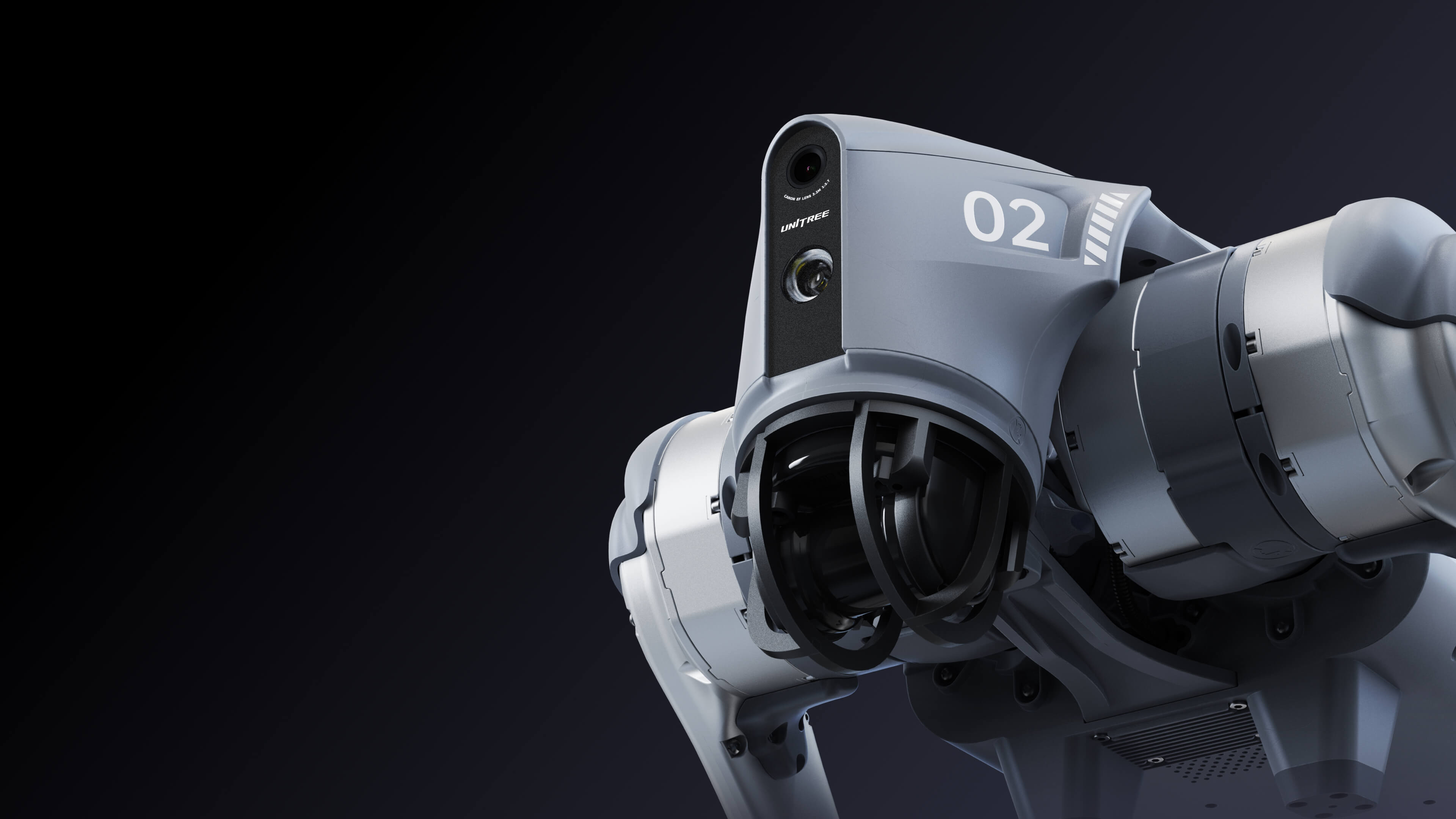
The Go2-W is the right call when your operating environment is predominantly flat (warehouses, offices, exhibition halls, large indoor venues) and battery life plus running efficiency matter most. It is also the easiest quadruped for new operators to handle, since wheeled locomotion is more predictable than fully legged movement.
The range now also includes the Unitree AS2 and the wheeled AS2-W, the wheeled A2-W, and the B2-based B2-XF (inspection and fire rescue) and B2-XJ (patrol inspection) builds. Each product page lists the current builds and Rand prices.
Side-by-Side: How the Models Compare
| Model | Best For | IP Rating | Top Speed | Price (ex VAT) |
|---|---|---|---|---|
| Go2 AIR | Education, demonstrations, first hands-on robot | - | 2.5 m/s | R32,375 |
| Go2 PRO | Demonstrations and outreach, AI modes and voice control | - | 3.5 m/s | R49,000 |
| Go2 X | Performance development, full SDK exploration | - | ~5 m/s (extreme mode) | R78,750 |
| Go2-W | Mixed ground in dry conditions, high efficiency | - | 2.5 m/s | From R148,750 |
| B2 | Industrial inspection, security, outdoor work | IP67 | Over 6 m/s (special configuration) | From R822,500 |
| B2-W | Industrial flat-ground work, mixed terrain | IP67 | Up to 15 km/h (special configuration) | From R1,102,500 |
| A2 | Long-endurance industrial integration | IP56 (Pro: core components IP67) | 3.7 m/s (max ~5 m/s) | From R367,500 |
Total Cost of Ownership: What People Forget
The ex-VAT Rand price on each product page is the start of the conversation, not the end. For a realistic South African landed cost, factor in the following.
- Airfreight from China: typically R12,250 to R32,500 depending on model weight and shipping speed
- Customs: R4,000 to R7,000 per robot depending on the model, itemised on your quotation
- 15% VAT: applied to the full landed value including freight
- Spare battery: strongly recommended for any commercial deployment; budget R7,000 for a Go2 standard battery, R17,500 for an A2 battery and from R52,500 for a B2 battery
- Training and integration time: typically 1-3 days for an experienced developer to be productive on the SDK
- Extended warranty: optional, available through MCM Robotics for commercial deployments
Airfreight, customs, delivery and VAT are itemised on your quotation before you pay. We provide South African Rand quotes inclusive of all costs on request. There are no hidden line items at delivery.
The Real Cost of Importing Yourself
It is tempting to look at an overseas online price, find Unitree on AliExpress, and click buy. Do not do this. The maths almost never works out.
First, Unitree warranties are tied to authorised reseller channels. A direct import typically arrives with no valid manufacturer warranty, meaning that if a joint motor fails on day 30, you are paying full retail to ship the robot back to China for repair, or buying replacement parts at full price with no recourse if Unitree declines to honour the claim. On a Go2 AIR at R32,375 this is uncomfortable. On a B2 at R822,500 and up, this is catastrophic.
Second, you become the importer of record. That means you are personally responsible for customs clearance, duty calculation, VAT payment, and any compliance documentation South African Revenue Service might request. Get any of this wrong and the robot sits in a SARS warehouse accruing storage fees while you sort it out.
Third, you have no local technical support. The Unitree SDK is well-documented but not trivial. When something does not work (and at some point, something will not work), having a local team that has deployed dozens of these robots before is worth more than any price difference you imagined you were saving.
How to Pick the Right Model for Your Use Case
If you are still uncertain, work through these questions in order.
- Will the robot operate outdoors or in dusty, wet, or temperature-extreme conditions? If yes, you need an IP67-rated model: B2 or B2-W. If no, the Go2 family is the right starting point.
- Will the robot carry heavy payloads, custom sensor packages, or a robotic arm? If yes, look at the B2 for the heaviest payloads, or the A2 where endurance matters more. If no, the Go2 family is sufficient.
- Is your operating environment predominantly flat? If yes, a wheeled variant (Go2-W or B2-W) will be faster and more battery-efficient. If no, stick with the legged variant.
- What is your primary use case? Education and demonstrations point to Go2 AIR; research and SDK development point to Go2 X or EDU. Industrial inspection and security point to B2. Heavy-payload integration points to B2; long-endurance work points to A2.
- What is your honest budget, all costs in? Add airfreight, customs, delivery and 15% VAT to the ex-VAT Rand price for the landed South African cost. Make sure the budget covers a spare battery and a small training-time buffer.
For a different angle on this decision, our companion piece How to Choose the Right Unitree Robot for Your Business looks at the broader Unitree lineup including humanoids and the R1 dual-arm platform.
What You Get When You Buy Through MCM Robotics
Every Unitree quadruped sold through MCM Robotics ships with the full manufacturer warranty, local technical support, training programmes for operators and integrators, integration assistance for custom deployments, and nationwide delivery across all nine South African provinces. Genuine spare parts are sourced direct from Unitree and held in regional stock. Pricing is transparent: every product page shows the current Rand price excluding VAT, and airfreight, customs and delivery are itemised on your quotation.
For deeper reading on specific deployment patterns, see our existing posts: Deploying Robot Dogs for Security: A Practical Guide, The Role of LiDAR in Modern Robotics, and Why Africa Is Ready for the Robotics Revolution.
Ready to Choose?
The right next step depends on where you are in the buying process. If you know which model you want, head straight to the product page for current Rand pricing and request a South African quote. If you are still narrowing down, get in touch with our team for a guided conversation: we will ask the right questions, work through your operating environment, and recommend the model that actually fits, not the one with the biggest margin.
Browse the full quadruped lineup:
- Unitree Go2 AIR: entry-level, education and demonstrations
- Unitree Go2 PRO: mid-tier consumer
- Unitree Go2 X: top-tier consumer
- Unitree Go2-W: wheeled hybrid consumer
- Unitree B2: industrial flagship
- Unitree B2-W: wheeled industrial
- Unitree A2: long-endurance industrial
Frequently Asked Questions
How much does a Unitree quadruped robot cost in South Africa?
Prices start at R32,375 ex VAT for the Unitree Go2 AIR (the most accessible model); the flagship B2 industrial quadruped starts at R822,500 ex VAT. South African landed cost adds airfreight, customs, delivery and 15% VAT, all itemised on your quotation. MCM Robotics provides South African Rand quotes inclusive of all costs on request.
Which Unitree quadruped is best for beginners?
The Unitree Go2 AIR is the entry point for most buyers. At R32,375 ex VAT with standard 4D LiDAR L2 and a 2.5 m/s top speed, it delivers serious capability at a hobby-research price point. It is the right choice for educators, students and robotics clubs who want a first hands-on quadruped without committing to industrial-grade pricing; developers who need the Unitree SDK should start with the Go2 X or EDU.
Can I use a Unitree quadruped outdoors in harsh South African conditions?
For sustained outdoor or industrial use, you need an IP67-rated model: the Unitree B2 or B2-W. These are engineered for dust, water exposure, and operating temperatures from -20°C to 55°C, well within South African mining, agricultural, and security deployment conditions. The consumer Go2 line is not rated for sustained outdoor exposure and is best kept to controlled environments.
What is the difference between the Go2 AIR, PRO, and X?
The Go2 AIR is the entry tier with standard 4D LiDAR L2. The Go2 PRO adds higher-grade computing for advanced AI workloads and improved actuator response. The Go2 X is the performance flagship of the consumer line with extended capabilities for serious development work. All three share the same chassis. Top speed steps up by tier: 2.5 m/s on the AIR, 3.5 m/s on the PRO, and about 5 m/s in extreme mode on the X and EDU. The EDU tier also uses a larger 15,000 mAh battery.
Should I import a quadruped robot myself or buy from a local reseller?
Direct import is almost always a false economy. You forfeit the manufacturer warranty (Unitree warranties are tied to authorised reseller channels), become responsible for customs clearance and 15% VAT, have no local technical support if anything goes wrong, and cannot easily source spare parts. Buying through an authorised reseller like MCM Robotics is typically the same total cost or cheaper once warranty risk is factored in.
How long do Unitree quadruped robots last?
With proper care, expect 3-5 years of active service from a consumer Go2 and 5-7+ years from industrial B2 and A2 platforms. Battery packs are the most consumable component (typical service life is 500-800 charge cycles); they are user-replaceable on every model. Joint motors, gearboxes, and structural components are designed for tens of thousands of hours of continuous operation.
What warranty comes with a Unitree quadruped from MCM Robotics?
Every Unitree quadruped sold through MCM Robotics ships with the full manufacturer warranty: 6 months on the Go2 Air, and 12 months on the Go2 Pro, X and EDU as well as the industrial B2, B2-W, and A2 models. Warranty service is handled locally in South Africa, with parts sourced direct from Unitree. Extended warranty options are available on request for commercial deployments.