
Robotics in South African Mining: A 2026 Status Report
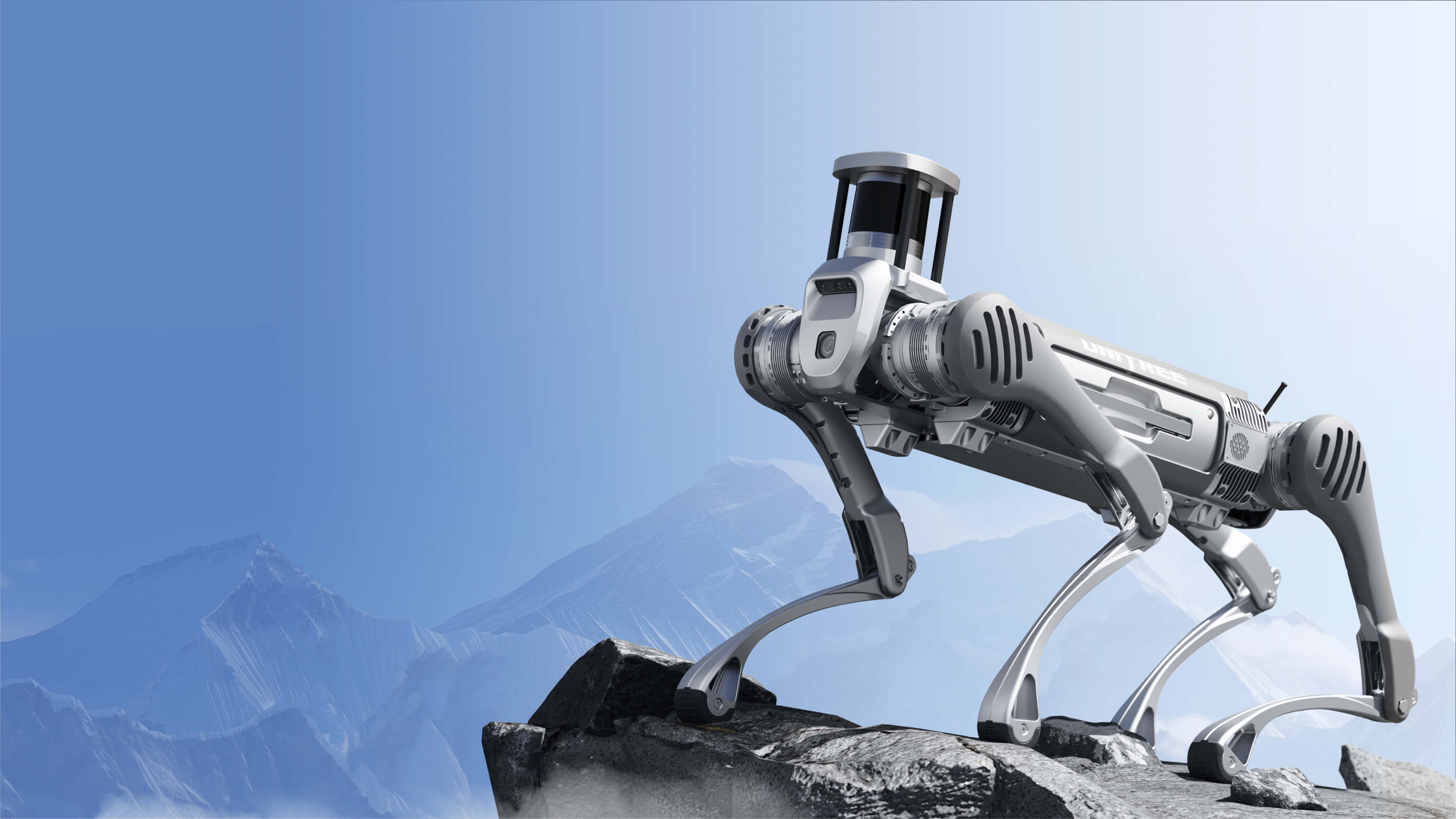
South African mining is one of the most demanding operating environments on earth. The country runs some of the deepest hard-rock mines in the world — gold operations reaching beyond 3,000 metres below surface, where rock temperatures exceed 55°C before cooling. Add platinum, coal, chrome, manganese, diamonds, and iron ore, and you have an industry that is simultaneously the backbone of the economy and one of the most hazardous places a person can work.
That combination — high value, high risk, harsh conditions — is exactly why mining is one of the most promising frontiers for robotics in South Africa. But there is a wide gap between the marketing vision of fully autonomous mines and what is actually deployable in 2026. This is an honest status report: what works today, what is still hype, where the real barriers sit, and which platforms suit local conditions.
Why Mining Is a Natural Fit for Robotics
Three characteristics make mining unusually well-suited to robotic assistance.
The environment is dangerous. Mining remains one of South Africa's most hazardous industries. Rockfalls, poor air quality, heat, confined spaces, and post-blast instability put human inspectors at risk daily. Every task a robot performs in a hazardous zone is a task a person did not have to risk their life to do.
The work is repetitive and measurable. Much of mining safety and operations relies on inspection: checking ground conditions, monitoring gas levels, inspecting conveyors and plant, surveying stopes, and tracking tailings facilities. These are exactly the consistent, repeatable, data-generating tasks robots excel at.
The value justifies the capital. A single unplanned shutdown, safety incident, or undetected structural failure can cost millions. Against that backdrop, the capital cost of an inspection robot is easy to justify — the return is measured in incidents avoided and downtime prevented, not just labour saved.
What Is Actually Working in 2026
Here is the honest picture of deployed and deployable robotics use cases in South African mining today.
Surface and Infrastructure Inspection
This is the most mature use case. Quadruped robots carrying cameras, thermal sensors, and LiDAR inspect headgear, plant infrastructure, conveyors, and processing facilities. They take the same measurements at the same points every shift, building a consistent data record that human inspection — variable by nature — cannot match. This is live, real, and delivering value now.
Tailings Storage Facility Monitoring
After high-profile global tailings dam failures, monitoring of tailings storage facilities has become a regulatory and reputational priority. Robots equipped with LiDAR and cameras can survey tailings facilities on a fixed schedule, detecting changes in surface geometry, seepage, and erosion far earlier and more precisely than periodic manual survey.
Conveyor and Plant Inspection
Conveyor systems run for kilometres and fail expensively. Autonomous and semi-autonomous robots inspecting belt condition, idler temperature (a fire-risk indicator), and structural integrity catch problems before they become shutdowns. Thermal imaging on a mobile robot platform is particularly valuable here.
Security and Perimeter Patrol
Mining sites are large, remote, and high-value targets for theft — particularly of copper, cable, and precious metals. Autonomous patrol robots extend security coverage across areas that are impractical to monitor with fixed cameras or human patrols alone. We cover this use case in more depth in our guide to deploying robot dogs for security.
Surveying and 3D Mapping
LiDAR-equipped robots build precise 3D maps of underground and surface environments, supporting volume calculations, ground-movement monitoring, and as-built verification. The role of LiDAR here is foundational — see our explainer on the Unitree 4D LiDAR L2 for how the sensing works.
Why Quadrupeds Specifically
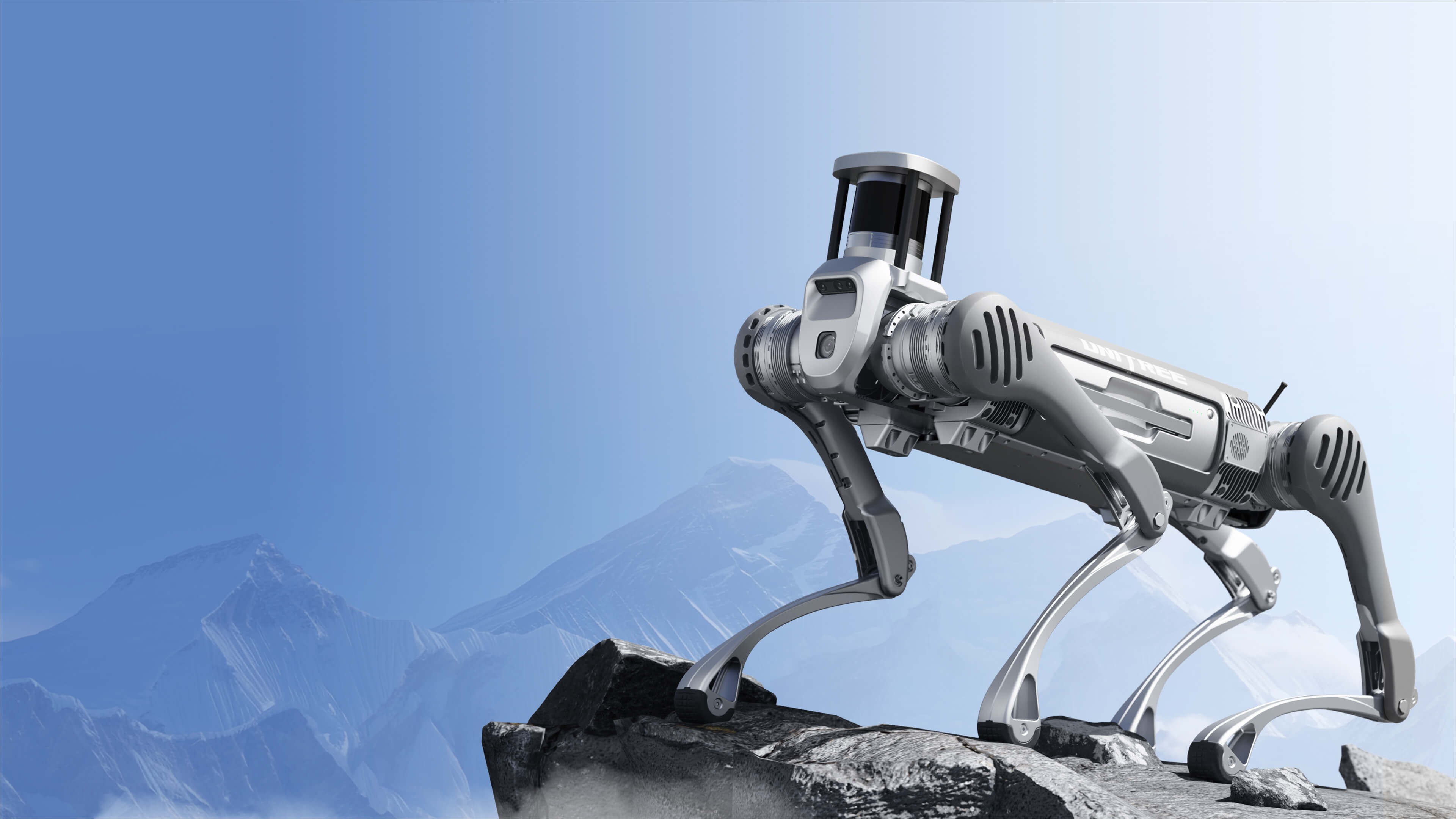
Mining environments are built for human bodies, not wheels. Stairs, ladders, steel grating, rubble-strewn floors, raised thresholds, and confined passages defeat wheeled and tracked robots that perform well on open ground. A legged robot traverses the same terrain a human inspector does.

This is why the quadruped form factor has become the default for mining inspection globally, and why the Unitree B2 is the practical entry point for South African operations. The B2 is IP67-rated — completely dust-tight and submersion-resistant — with an operating temperature range of -20°C to 55°C that covers the full spread of South African mining conditions, from highveld winter mornings to the heat of a deep operation. (For the full explanation of what that rating allows, see What Does IP67 Actually Mean for a Robot?.)
For long-range endurance work, the Unitree A2 offers about 20 km per charge while walking with a 25 kg payload; for the heaviest sensor packages and manipulation payloads, the B2 remains the stronger carrier at over 40 kg walking. The consumer Go2 line is excellent for above-ground proof-of-concept work and research, but it is not rated for sustained deployment in mining conditions — using it there would be operating outside its design envelope.
The Honest Limitations
Now the part the marketing brochures skip. Several real barriers explain why mining robotics in South Africa is advancing incrementally rather than all at once.
Underground Connectivity
GPS does not work underground. Cellular coverage is patchy to non-existent below surface. This means underground robots must either rely on a deployed mesh communication network — expensive infrastructure — or operate with genuine onboard autonomy that does not depend on a constant link. Onboard autonomy is improving fast, but full underground autonomous operation remains the frontier, not the norm.
Regulatory Approval
Introducing autonomous equipment into a licensed, safety-regulated mining operation is not a plug-and-play exercise. Mine health and safety regulation, intrinsic-safety requirements in gassy environments, and operational sign-off all add time. This is appropriate — these are life-safety environments — but it means deployment timelines are measured in months of validation, not days.
The Skills Gap
A robot is only as useful as the team operating and maintaining it. South Africa's robotics skills base is growing but still thin. Successful deployments pair the hardware with training and local support — which is precisely why buying through a supported local channel matters far more in mining than in a lab setting.
Intrinsic Safety in Gassy Mines
Coal and some other operations have explosive-atmosphere zones where any electrical equipment must be intrinsically safe (Ex-rated). Standard commercial robots are not Ex-rated. This restricts where general-purpose platforms can operate and is an important scoping question for any underground coal application specifically.
Where This Goes Next
The realistic five-year trajectory for South African mining robotics looks like this. Surface, plant, and infrastructure inspection becomes standard practice rather than pilot projects. Tailings monitoring becomes robot-assisted as a matter of routine compliance. Onboard autonomy matures to the point where limited underground inspection becomes practical without full mesh-network investment. Security patrol robotics becomes commonplace on large remote sites.
What does not happen in five years is the fully autonomous, human-free mine. That vision is real but distant. The near-term story is augmentation: robots taking on the most dangerous, most repetitive, and most data-intensive inspection tasks, while skilled humans move to operating, interpreting, and maintaining the systems. It is a safety and data-quality revolution before it is a labour one.
Getting Started Realistically
For a mining operation considering robotics, the sensible path is incremental. Start with a clearly-scoped surface or plant inspection use case where the safety and data-quality benefit is obvious and the connectivity problem is solved (because you are above ground or in a connected area). Prove the value, build the internal skills, then expand.
The wrong approach is to buy a robot hoping to find a use for it. The right approach is to identify the single inspection task that is most dangerous or most poorly served by current manual methods, and deploy against that specific problem with the correct platform and proper local support.
For the platform-selection framework, our Complete Guide to Buying a Quadruped Robot in South Africa walks through the full decision. For the broader context on why Africa is positioned for this shift, see Why Africa Is Ready for the Robotics Revolution.
Talk to Us
MCM Robotics is the official Unitree reseller in South Africa, and mining is one of the environments the Unitree industrial line is built for. If you are scoping a robotics inspection programme for a mining operation — surface, plant, tailings, or security — get in touch. We will work through your specific site conditions, the connectivity and regulatory constraints, and the right platform and payload for the task, with local support and warranty on every unit.
Frequently Asked Questions
Are robots actually being used in South African mining?
Yes, but selectively. The most established use cases in 2026 are surface and infrastructure inspection, tailings storage facility monitoring, conveyor and plant inspection, security patrol, and surveying. Fully autonomous underground operation remains limited by connectivity and regulatory constraints. Quadruped robots like the Unitree B2 are the most practical entry point because they handle stairs, ladders, and uneven terrain that wheeled robots cannot.
Why are quadruped robots suited to mining?
Mining environments are built for humans, not wheels: stairs, ladders, grating, rubble, and confined spaces. A quadruped can traverse the same terrain a human inspector does, carrying gas sensors, thermal cameras, and LiDAR into places that are dangerous or inaccessible for people. The IP67-rated Unitree B2, with its -20°C to 55°C operating range, is engineered for exactly the dust, moisture, and temperature extremes that South African mining presents.
What are the biggest barriers to mining robotics in South Africa?
The main barriers are underground connectivity (GPS and cellular do not work below surface, requiring mesh networks or autonomous onboard navigation), regulatory approval for autonomous equipment in licensed mining operations, the skills gap in robotics operation and maintenance, and the capital justification process. None of these are insurmountable, but they explain why adoption is incremental rather than sudden.
What can a robot do in a mine that a person cannot?
A robot can enter areas with poor air quality, unstable ground, or post-blast conditions without risking a human life. It can take consistent, repeatable measurements at the same points every shift, build precise 3D maps with LiDAR, monitor gas levels continuously, and inspect confined or elevated structures without scaffolding or confined-space entry permits. The safety case is the single strongest argument for mining robotics.
Which robot is best for South African mining inspection?
For most surface, plant, and infrastructure inspection the Unitree B2 quadruped is the practical choice — IP67-rated, rugged, and able to carry inspection payloads across mining terrain. For the heaviest sensor or manipulation payloads the B2 remains the payload leader at over 40 kg walking; the Unitree A2 is the lighter endurance option with about 20 km per charge. The consumer Go2 line is suitable for above-ground research and proof-of-concept work but is not rated for sustained mining-environment deployment. MCM Robotics can advise on the right configuration for a specific site.
Will mining robots replace miners in South Africa?
Not in the foreseeable term. The realistic near-term role of robotics in South African mining is removing humans from the most dangerous tasks — inspection in hazardous zones, post-blast assessment, confined-space monitoring — rather than replacing the broad workforce. Robotics in mining is currently a safety and data-quality story, not a labour-replacement one, and it creates skilled robotics and maintenance roles in the process.