Schools, Grade R to 12
Coding and Robotics on a real robot: teacher-led demonstrations in Grade R to 6, block coding next, Python when learners are ready.
- Demonstrations fromR 32,375
- STEM Classroom KitR 133,498

We supply Unitree robots to South African schools, colleges and universities, and stay with you until you teach with them: a plan for your grade or course, lab kits priced in Rand, a 16-hour educator bootcamp, and support from the people who set them up.
Choose your level. Each door opens the navigator with your level already chosen, and shows the kits that fit.
Coding and Robotics on a real robot: teacher-led demonstrations in Grade R to 6, block coding next, Python when learners are ready.
Mechatronics practicals on one bench: locomotion, LiDAR mapping and a six-axis robot arm, in Python and ROS 2.
Full SDK, ROS 2 and simulation twins: from first-year labs to sim-to-real research on the humanoid the papers use.
One hub serving ten schools reaches about 600 learners a year. Start with a measured 90-day pilot, then size the rollout.
Tell the navigator who you teach and what learners should be able to do. It recommends a robot at today’s Rand price, with a teaching ladder from Grade R to PhD and a course outline.
Plan your lab Watch how (2:03)Add a lab kit to your cart, or ask for a formal quotation in Rand, valid for 30 days, with tender documents. Stocked models typically arrive 4 to 6 weeks after payment.
See the lab kits ↓ Watch how (1:40)Two educators complete the 16-hour bootcamp (operate and supervise, teach and adapt, connect and troubleshoot, deliver and assess) and get a ready-to-teach sign-off before the first class.
About MCM Educator ↓Run lessons and robot sessions behind a six-point safety checklist, and judge the first 90 days on six measures before you decide on more.
The 90-day pilotMCM Educator is where steps 3 and 4 happen: the bootcamp and its ready-to-teach sign-off, classes with picture sign-in on class tablets, the grid lab, robot sessions behind the safety checklist, and the measured 90-day pilot. Learners’ names stay with their school.
Until the legal review is done, it runs as a demonstration platform with made-up schools: an approved registration gives you your own login to it.
Watch: how to register (1:34)Curated kits, quoted and shipped as one order. Add a kit to your cart and one request issues one quotation for procurement. Prices are in Rand, ex VAT, at today’s exchange rate; freight, customs and VAT are itemised on the quotation.
Teacher-led demonstrations from R 32,375. If learners will write code, start with a Go2-X (R 78,750) or an EDU tier: the base Go2 Air and Pro run the app only and cannot be upgraded. Plan for your grade
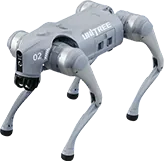
A Go2 EDU Standard that grows from app lessons and block coding into first Python, plus the spare battery and the self-charging mat it supports.
Watch the kit (1:25)Locomotion, perception and manipulation practicals on one bench, in Python and ROS 2. Plan for TVET
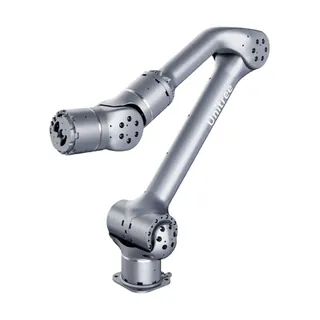
Go2 EDU locomotion, LiDAR perception and a 6-DOF arm on one bench: the full mechatronics syllabus in hardware.
Watch the kit (1:27)Full SDK, ROS 2 and simulation twins in Isaac Sim and MuJoCo. Undergraduate labs start with the Go2 EDU (R 105,000) or the Locomotion Lab; postgraduate research works on the G1 EDU from R 441,000. Plan for undergraduate Plan for postgraduate
Swipe for more kits →
The Go2 EDU Smart tier with full SDK, a spare long-life battery and the charging mat. Enough runtime for a full prac day.
Watch the kit (1:25)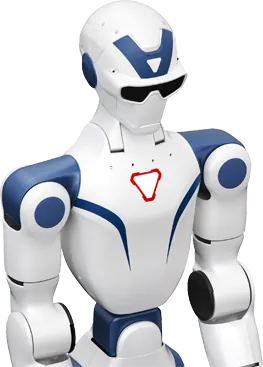
The compact R1 in its EDU configuration with full SDK access, plus the spare battery we recommend with every robot: one pack charges while the other teaches.
Watch the kit (1:29)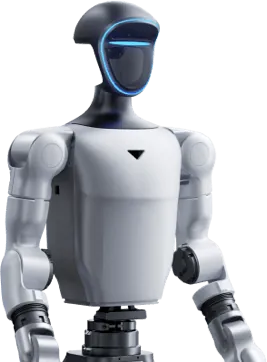
The G1 EDU Plus (extended DOF, full SDK) paired with the PICO VR kit: the teleoperation and demonstration-data setup, priced as one order.
Watch the kit (1:31)
Our university recommendation for hands research: the G1 EDU Ultimate with tactile five-finger hands, plus the PICO kit for demonstration capture.
Watch the kit (1:27)Students can simulate before they touch the hardware: Unitree publishes twins for Isaac Sim and MuJoCo, with open SDKs on GitHub.
Coding and Robotics has been a gazetted CAPS subject for Grade R to 9 since June 2024, with robotics skills as one of its five study areas. But rollout is optional and depends on capacity from 2026, and South Africa produces about 32,000 key STEM graduates a year against China’s 3.5 million. The gap does not close with worksheets. It closes with real robots in real classrooms.
The world leader in robotics did not start on the factory floor. It started in Grade 3. A decade of curriculum mandates built the talent pipeline that now installs more robots than the rest of the world combined, and Unitree, the brand we distribute, is the export of that system.
The State Council’s New Generation AI Development Plan puts AI and programming into primary and secondary schools as national strategy.
Information Science and Technology becomes a standalone compulsory course nationwide, with AI content embedded from age six.
Ministry of Education notice: every primary and secondary school teaching AI, from hands-on experience in early primary to AI project creation in senior high.
Beijing requires a minimum of 8 class hours of AI per year in every grade. Hangzhou, home of Unitree, mandates 10. Grade 3 covers AI basics; Grade 5 covers agents and algorithms; high school builds robotics projects.
The AI + Education Action Plan makes AI a basic public course at universities and targets AI literacy across every education stage.
Sources: IFR World Robotics 2025, China Ministry of Education notices 2022 to 2026, Beijing and Hangzhou municipal mandates 2025, Morgan Stanley humanoid market data 2025.
Book a demonstration in George or Midrand, or a virtual one. Tell us who you teach and your budget, and we leave you with a recommendation and a formal quotation in Rand.