
Robots at work
in South Africa.
Eight sectors where Unitree platforms already earn their keep: from substation rounds and estate patrols to mine re-entry, farm scouting and university labs. Every deployment is scoped, priced in Rand and supported from George.
Substations, plants and refineries, patrolled without people.
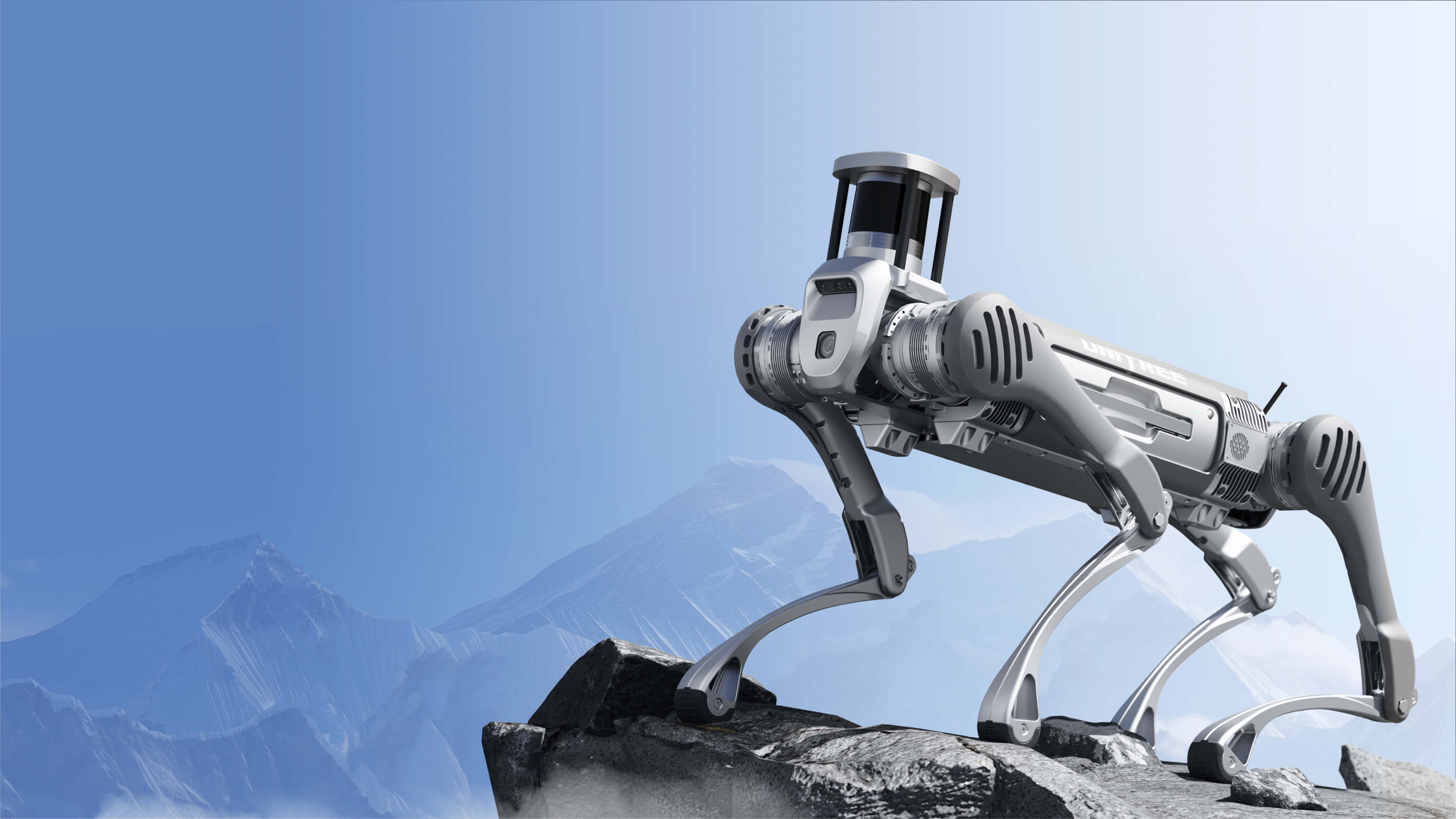
The B2 walks autonomous inspection routes through switchyards, plant floors and pipe racks carrying thermal cameras, optical zoom and acoustic sensors: reading analogue gauges, profiling hotspots and listening for partial discharge inside approach boundaries that are off-limits to people. The scale of adoption is the proof: China's State Grid is procuring roughly 5,000 quadrupeds for exactly this duty in its 2026 programme.
Gauge readings, hotspot trends and acoustic evidence captured on every round and filed to the control room.
Rain, dust and switchyard heat are inside the B2's operating spec, not exclusions.
Waypoint patrols mapped once, then repeated to the centimetre, shift after shift.
The robot docks and recharges itself between rounds, so scheduled inspections keep running.
Perimeter patrol that never gets tired, distracted or threatened.
South Africa runs one of the world's largest private-security markets: roughly 586,000 registered officers, with guards outnumbering police about four to one. Patrol robots multiply that workforce rather than replace it. They walk the long night routes on residential estates, depots, solar farms and industrial sites so that guards respond to events instead of walking fences.
The Go2 covers compound rounds; the B2 runs industrial perimeters at up to 6 m/s with 4 to 6 hour endurance.
Thermal and PTZ camera payloads feed the monitoring setup and VMS you already operate.
Sealed platforms patrol through rain and darkness, and dock themselves between shifts.
Footage stays on your infrastructure, under your retention policy, not in an offshore cloud.
Survey, gas sensing and post-blast entry, without sending people in.
Quadrupeds are already proven underground in South Africa: local mines have run robot dogs since 2021 for gas detection, laser scanning, conveyor inspection and no-go-zone entry. The B2 class brings a 40 kg walking payload and IP67 sealing to that job, carrying LiDAR, thermal and gas sensors into stopes and declines so the first thing back in after a blast is a machine.
Gas readings and visual confirmation from inside the working before people return.
LiDAR payloads capture stope and tunnel geometry on schedule, feeding survey and geotech models.
Autonomous routes past conveyors, ventilation walls and equipment nobody wants to walk to.
South African operations have used quadrupeds underground since 2021. This is procurement, not prototype.
Scouting farm roads at wheel speed, walking where wheels stop.
The Go2-W puts a powered wheel on each foot. On farm roads, orchard lanes and vineyard rows it rolls at speed with low energy use, then walks the moment it meets a contour bank, an irrigation line or rocky ground. That hybrid gait makes it a practical scouting platform for South African farms: long routes, mixed terrain, and nobody spare to drive them.
Cameras and multispectral sensors carried plant-by-plant across terrain that defeats wheeled rovers.
Long repetitive routes run on schedule, with imagery streamed back to the farmhouse or estate office.
US university farms are already using quadrupeds to move cattle between paddocks. The chassis is the same.
Aircraft cover the kilometres; the quadruped covers the last rough metres with tools or samples.
The platforms world robotics research publishes on.
The G1 is the reference humanoid of academic robotics: NVIDIA built its Isaac GR00T reference design on it, and Stanford, ETH Zurich and UC San Diego run it daily. The Go2 plays the same role for quadrupeds. South African groups at Stellenbosch, UCT, Wits, UP and the CSIR already work on legged and embodied-AI research. EDU configurations, supplied and supported locally, close the hardware gap.
EDU tiers expose every joint over C++ and Python SDKs, with ROS 2 support on the robot's native DDS transport.
Isaac Sim and MuJoCo models publish the same topics as the hardware: validate in sim, deploy the identical code.
Published controllers, datasets and course material transfer straight onto the robot in your lab.
Formal ZAR quotations, EFT invoicing and campus delivery, built for institutional purchasing.
The demo that fills a school hall, and the classroom that follows.
A Go2 walking into assembly recruits more learners to STEM than any poster. Schools and makerspaces use it to anchor coding clubs and Coding & Robotics curriculum work: small enough to be safe under supervision, driven from a phone app on day one, and programmable in Python as learners grow into it.
A 15 kg robot operated from an app under teacher supervision, with preset gaits and speed limits.
One platform spans a grade 8 demo to a matric project, then hands over to first-year labs.
We help where we can with open days and lab launches, and the robot arrives checked and ready to run.
The same hardware runs LiDAR mapping and vision projects when the club is ready for them.
The cast member that hits every mark, take after take.
Humanoids draw crowds. A G1 walking untethered and shaking hands at human scale is the activation robot of choice for product launches, expo stands and broadcast work, and MCM's own G1 already performs this role at South African corporate events. The R1 brings the same draw at a lighter weight and budget.
Greeter, demonstrator and photo magnet in controlled venues, from showrooms to conference stages.
Rehearse the routine once and it runs identically all day, every day of the activation.
Our own G1 works South African corporate events. Ask us what a booking actually involves.
Checked hardware, genuine spares and first-line support on call, so your production schedule carries less robot risk.
A pack mule for sites without roads.
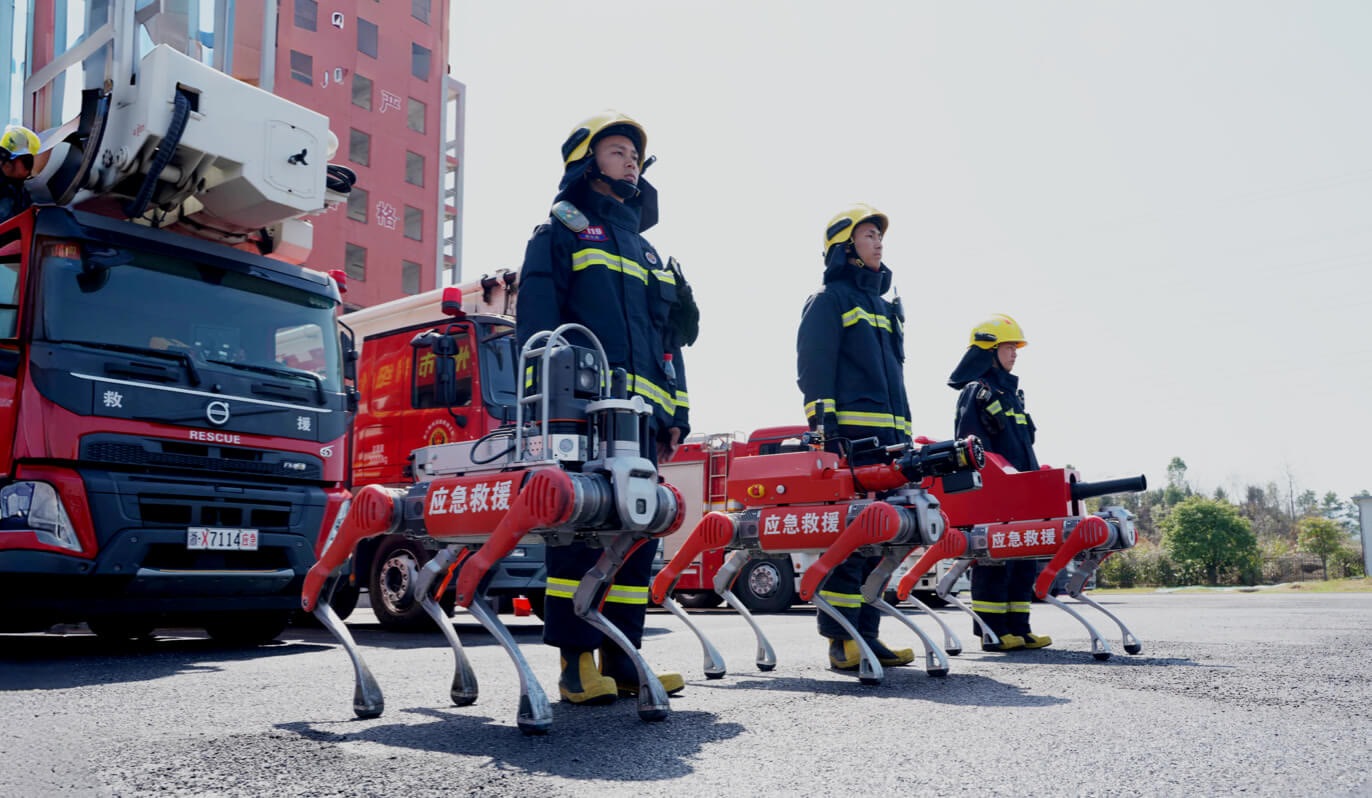
The B2-W is rated for loads up to 120 kg and covers up to 50 km on a charge with a 40 kg working payload: rolling plant roads and pipeline servitudes at speed, then walking over steps, rubble and slopes when the pavement ends. For mines, plants and disaster response it moves tools, spares and samples where no cart or bakkie can follow.
Carries a 40 kg working payload on long mixed-terrain routes; static capacity runs far higher.
Full-site circuits without battery swaps, on one vendor's parts and one support channel.
The extreme-terrain footage is the product demo, not a special effect.
Between carrying jobs the same chassis runs sensor routes, so the asset never idles.
Scope a pilot.
Tell us the site, the route and the risk. We spec the platform and payloads, quote the full landed cost in Rand, and support the robot from George.