
Unitree Go2 vs B2: Which Quadruped Is Right for You?
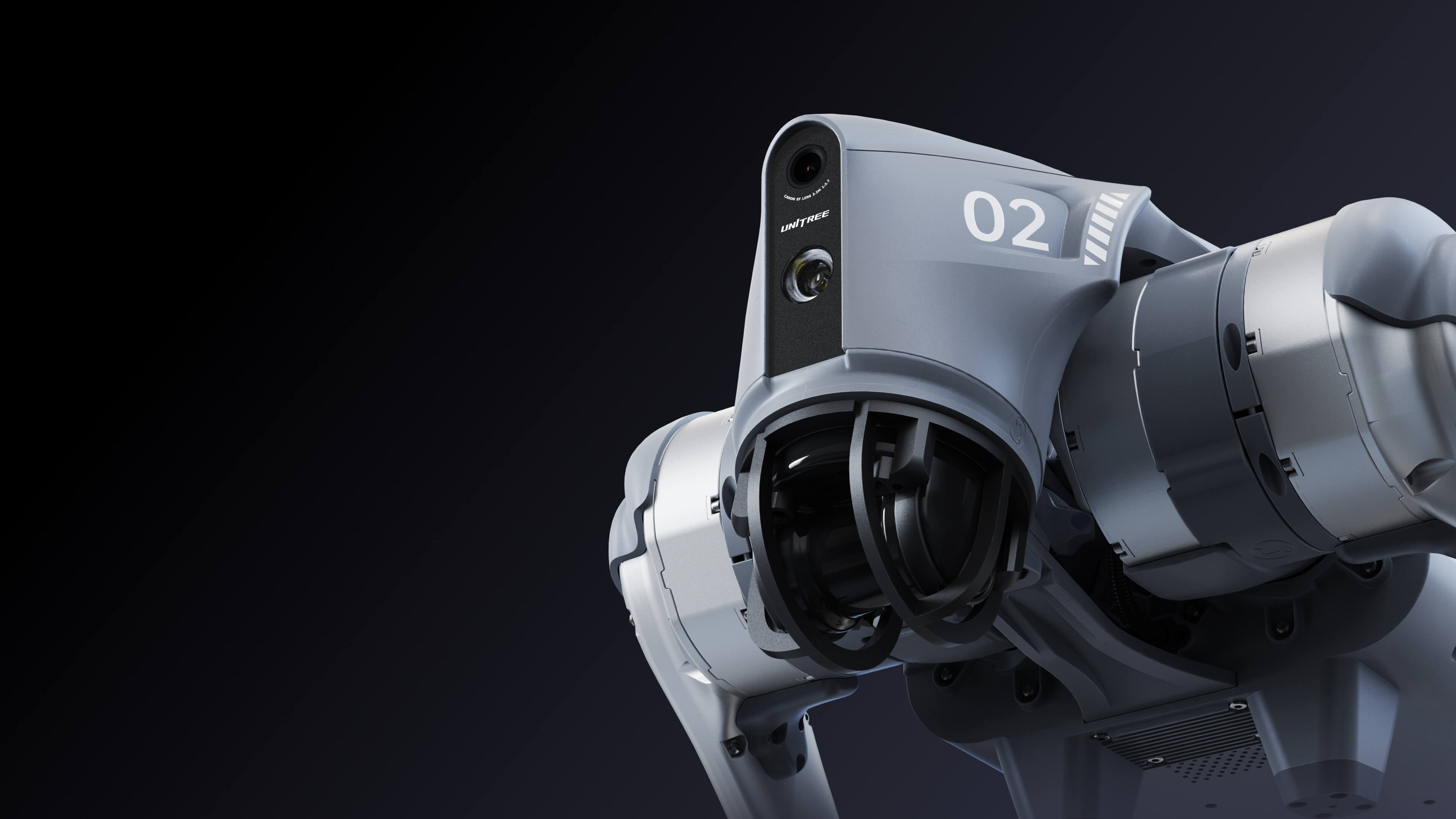
If you are choosing between the Unitree Go2 and the Unitree B2, the decision is rarely as obvious as the price difference suggests. The Go2 starts at roughly $1,600. The B2 sits in a substantially higher price tier. Looking at those two numbers, the temptation is to talk yourself into the cheaper option and hope it covers your use case. It almost certainly will not — but not for the reason you might assume.
This is a head-to-head comparison of the two platforms: where each one wins, where the price gap actually comes from, and how to know which is the right tool for your real-world job. The short version: they are not the same kind of machine, and choosing the wrong one is more expensive than choosing the right one, even when the right one costs more.
The One-Paragraph Verdict
Pick the Go2 for research, education, embodied-AI development, indoor inspection, demonstrations, and any work in a controlled environment. Pick the B2 for outdoor industrial deployment, mining inspection, security patrol, agricultural fieldwork, or anything sustained in dust, rain, or temperature extremes. If your use case has any meaningful environmental exposure, the B2 is the right answer regardless of price. If it does not, the Go2 is the right answer regardless of capability headroom you do not need.
Side-by-Side: The Specs That Actually Matter
| Specification | Unitree Go2 | Unitree B2 |
|---|---|---|
| Category | Consumer / research | Industrial |
| Starting price (USD, indicative) | ~$1,600 (AIR) | Industrial-tier pricing |
| IP rating | Not IP-rated | IP67 |
| Operating temperature | Controlled indoor | -20°C to 55°C |
| Top speed | Up to 3.5 m/s (Pro); ~5 m/s extreme (X/EDU) | ~6 m/s |
| Payload capacity | Light (sensor only) | Substantial |
| Battery life | 1-2 hours | Extended under load |
| Joint motor class | Consumer-grade | Heavy-duty industrial |
| LiDAR | 4D LiDAR L2 standard | 3D LiDAR plus depth and optical cameras (standard) |
| Warranty (via MCM Robotics) | 6 months (Air) / 12 months (Pro, X, EDU) | 12 months |
| Best for | Research, education, demos | Mining, security, outdoor industrial |
Where the Go2 Wins
The Go2 is not a "lesser" robot. For its intended job, it is genuinely excellent. Here is where it is the right call.
Cost of Experimentation
At roughly $1,600 indicative USD, the Go2 AIR is the most accessible serious quadruped on the market. For a research group, a robotics club, a faculty, or a small startup, this is a robot you can buy on a discretionary budget rather than wait for a capital approval cycle. That changes how willing teams are to experiment, prototype, and learn.
Software Parity
The Go2 runs the same Unitree SDK, the same Unitree Go mobile app, and the same OTA update system as the B2. Code, skills, and workflows developed on the Go2 transfer directly to the B2. This makes the Go2 an excellent on-ramp for teams that may later need an industrial platform — they prove the concept on a Go2, then upgrade.
Agility and Maneuverability
The Go2 is lighter, more responsive, and easier to operate in tight spaces than the B2. For indoor research, classroom demonstrations, exhibition halls, and any environment where the robot will operate close to people or fragile objects, the Go2 is the more sensible choice. The B2's payload capacity and ruggedness become liabilities indoors.
Deployment Friction
A Go2 is genuinely 30 minutes from crate to first walk — we covered the full setup in How to Set Up Your First Unitree Go2 in 30 Minutes. The B2 ships with the same software ecosystem but lives in a different operational context: it is typically going to a worksite, not a desk, with the deployment planning that implies.
Where the B2 Wins
The B2 is not "the same robot but bigger". It is engineered for a completely different operating envelope.
Environmental Protection (IP67)
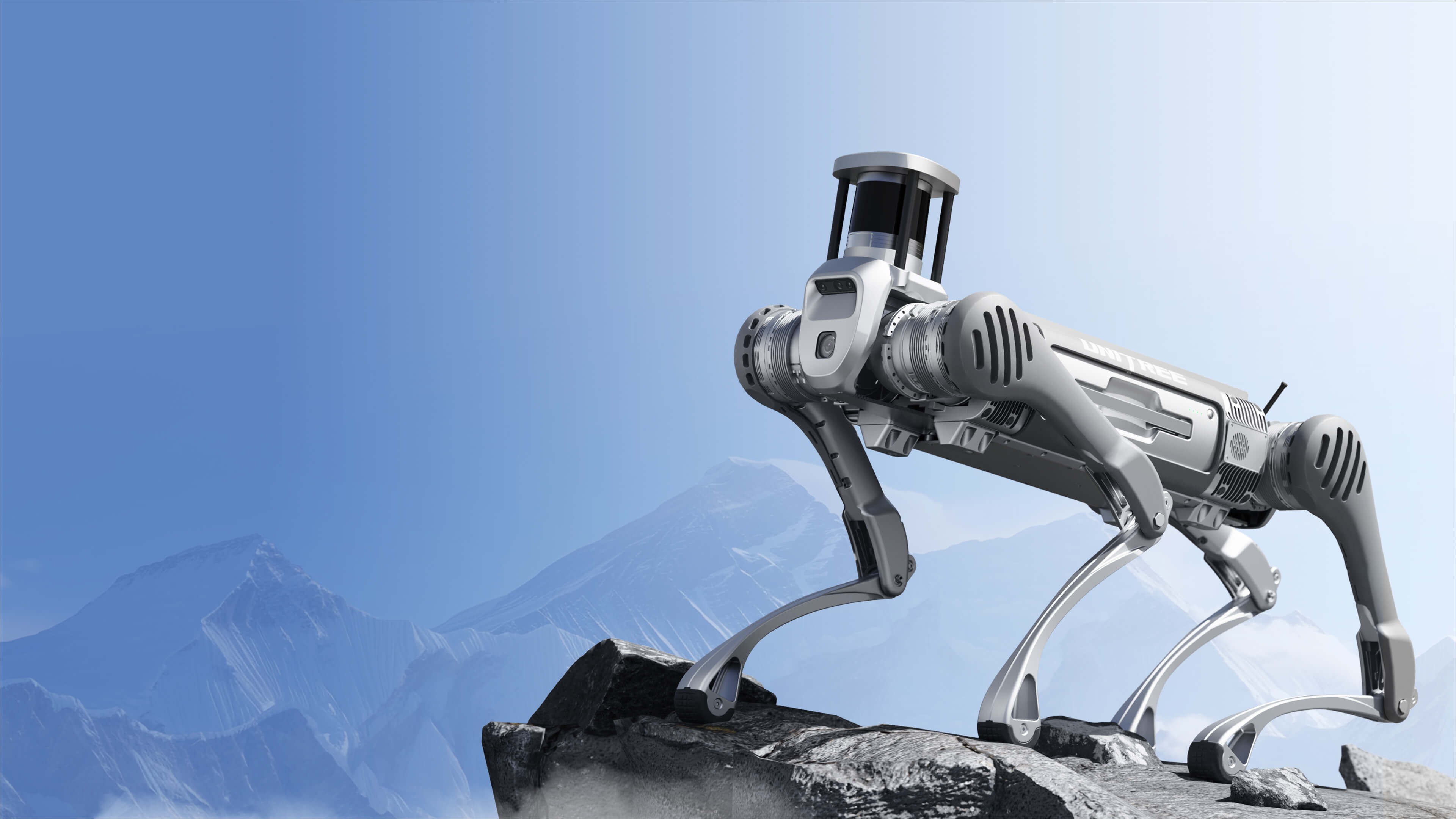
The B2 is IP67-rated: completely sealed against dust ingress, and submersion-resistant in fresh water up to one metre for 30 minutes. The Go2 has no such rating. For South African deployment specifically, this is the difference between a robot that survives a Karoo dust storm or an unexpected Highveld thunderstorm and one that becomes an expensive warranty conversation. Our full IP67 explainer covers exactly what that rating allows.
Temperature Range
The B2's rated operating range of -20°C to 55°C covers the full spread of South African conditions, from Free State winter mornings to Karoo summer afternoons and deep mining temperatures. The Go2 has no equivalent rating and is built for room-temperature operation. Temperature alone disqualifies the Go2 from any sustained outdoor deployment.
Payload Capacity
The B2 is engineered to carry substantial payloads — thermal cameras, gas sensors, additional LiDAR units, custom inspection rigs. The Go2 is designed primarily to carry itself, with limited capacity for accessories. If your use case involves mounting anything serious on the robot, the B2 is structurally the right platform.
Continuous-Duty Endurance
The B2 is designed for sustained operational shifts. Heavier-duty joint motors, larger gearboxes, and a battery system sized for industrial workloads mean the B2 can run continuous-duty patrols or inspection routes that would prematurely age a Go2. For commercial deployment economics, this is decisive.
Warranty Cover for Real-World Use
Every B2 sold through MCM Robotics ships with a 12-month manufacturer warranty — compared with 6 months on the Go2 Air and 12 months on the Go2 Pro, X and EDU — and the warranty terms specifically accommodate industrial deployment. The Go2's warranty does not extend to operation outside its design envelope.
Real Use Cases and the Right Answer
Let us walk through specific scenarios. Where would each platform actually be the right choice?
"I'm a robotics lecturer at a South African university and I want a hands-on quadruped for the embodied-AI course."
Go2 AIR. The price fits within a faculty budget, the SDK is identical to the industrial line so students learn transferable skills, and the indoor controlled environment is exactly what the Go2 is built for. Two Go2 AIRs cost less than a single B2 — better hands-on time per student.
"I'm running security at a remote mining site and I want autonomous patrol coverage."
B2. Outdoor, dusty, temperature-variable, continuous-duty, exposed to rain — every single criterion points to the IP67-rated industrial platform. A Go2 would fail before delivering its return on investment.
"I'm building an exhibition piece for a science centre — the robot needs to interact with visitors indoors."
Go2. Indoor, controlled, no payload requirements, and the cost matters for an exhibition budget. The Go2's agility and lighter footprint are actually safer around the public than the B2's heavier industrial frame.
"I need a robot to inspect a tailings storage facility weekly."
B2. Outdoor, exposed to weather, carrying inspection payload (LiDAR for surface change detection, cameras for visual inspection), and required to deliver consistent results over years. This is exactly the job the B2 is engineered for. The mining context is covered in depth in our 2026 status report on South African mining robotics.
"I'm a startup developing an embodied-AI manipulation policy."
Go2. Indoor research, no environmental exposure, low cost lets you focus capital on the development work rather than the hardware. When you are ready to deploy in a real industrial environment, you upgrade to a B2 with code that already works.
"I want a robot for our security estate."
This one depends on whether the deployment is sheltered. For an indoor-corridor patrol of a building, the Go2 may suffice. For perimeter patrol of grounds, the B2 is the correct platform. Our security deployment guide covers this trade-off in more detail.
Where the Price Gap Actually Comes From
The B2 is several times the price of a Go2, and people naturally ask whether that is justified. It is — but not because of any single headline spec. The cost difference comes from a stack of decisions:
- IP67 sealing — sealing every joint, every connector, and every electronics enclosure to IP67 standard adds real cost across the entire platform
- Heavier-duty motors and gearboxes — designed for higher torque, longer continuous duty, and load-bearing reliability
- Extended temperature range — materials, lubricants, and electronics rated to -20°C to 55°C are more expensive than room-temperature equivalents
- Larger battery and energy system — sized for industrial-shift workloads, not 1-2 hour research sessions
- Structural ruggedness — chassis and shell engineered to survive industrial impact, abrasion, and continuous outdoor exposure
- Warranty and support load — industrial deployment carries a different support obligation than a research unit
You are not paying more for a "premium" version of the Go2. You are paying for a fundamentally different class of machine that does jobs a Go2 cannot do, full stop.
The Wrong Question
The most common mistake we see is buyers asking "is the B2 worth the extra money?" That is the wrong question. The right question is: "what is the operating environment, and what will fail there?" Once you have answered that honestly, the price question answers itself. A Go2 deployed in a B2 environment will fail and need to be replaced or repaired. A B2 deployed in a Go2 environment will work fine but is over-specified.
The cheapest robot is the one that survives its deployment. Sometimes that is the Go2. Sometimes that is the B2. It is never "whichever is cheaper on the spec sheet".
Common Mistakes When Choosing
Mistake 1: Assuming "outdoor sometimes" means a Go2 is fine
"We'll only take it outside in good weather" is the most expensive sentence in robotics buying. Good weather becomes bad weather. Dust drifts indoors. A Go2 deployed with any sustained outdoor expectation will hit its limits faster than the budget anticipated.
Mistake 2: Buying a B2 for a Go2 job
The opposite mistake happens too. A university lab, a robotics club, a research group — buying a B2 when the work is entirely indoor research wastes capital that should have funded two Go2s, more student hands-on time, and a longer development runway.
Mistake 3: Ignoring the warranty boundary
Operating either robot outside its rated conditions typically voids warranty cover. On a Go2 in a research lab, this rarely matters. On a B2 used outside its conditions — pressurised cleaning, continuous submersion, exposure to chemicals not covered by IP67 — it can void cover on a high-value asset. Read the operating conditions before deployment.
Mistake 4: Importing directly to "save" money
Direct import of either robot forfeits the manufacturer warranty, creates customs complexity, and leaves you without local support. We cover the full maths in The Complete Guide to Buying a Quadruped Robot in South Africa. The summary: it is almost never cheaper once everything is counted.
How to Decide in Three Questions
If you are still uncertain, work through these in order:
- Will the robot spend sustained time outdoors, or be exposed to dust, rain, or temperature extremes? If yes, B2. If no, the Go2 is on the table.
- Does the robot need to carry meaningful payload — sensor packages, manipulators, custom rigs? If yes, B2. If no, Go2 is sufficient.
- Is the deployment continuous-duty (daily multi-hour shifts) or session-based (research sessions, demonstrations)? Continuous-duty points to B2. Session-based points to Go2.
If any of the three say B2, the answer is B2. If all three say Go2, the answer is Go2.
What to Read Next
- The full lineup beyond just Go2 and B2: Complete Guide to Buying a Quadruped Robot in South Africa
- Exactly what the B2's IP67 rating allows: What Does IP67 Actually Mean for a Robot?
- Where the B2 fits in mining specifically: Robotics in South African Mining: A 2026 Status Report
- Getting hands-on with the Go2: How to Set Up Your First Unitree Go2 in 30 Minutes
- The full lineup including humanoids: How to Choose the Right Unitree Robot for Your Business
Talk to Us
Browse the product pages — Go2 AIR, Go2 PRO, Go2 X, B2, B2-W — or get in touch for a real conversation about your specific use case. We will ask the right questions, recommend the platform that actually fits, and quote South African landed costs inclusive of airfreight, duties, VAT, and warranty.
Frequently Asked Questions
What is the main difference between the Unitree Go2 and B2?
The Go2 is the consumer quadruped — engineered for research, education, and controlled-environment use, starting at roughly $1,600. The B2 is the industrial quadruped — IP67-rated, built for sustained outdoor operation, larger payload capacity, and harsh environments, at a substantially higher price tier. The difference is not incremental; they are different classes of machine for fundamentally different jobs.
Is the Go2 just a smaller B2?
No. They share design language but are engineered differently throughout. The B2 has heavier-duty joint motors, larger gearboxes, IP67 sealing, an extended operating temperature range (-20°C to 55°C), and significantly higher payload capacity. The Go2 is lighter, faster to deploy, and far cheaper, but is not rated for sustained outdoor or industrial conditions. They are not interchangeable.
Can I use a Go2 for industrial inspection if I am careful?
You can use a Go2 for occasional indoor inspection, controlled-environment proof-of-concept work, and demonstration. You should not use it for sustained outdoor or industrial deployment. Operating a Go2 in dust, rain, or temperature extremes is outside its design envelope and typically voids warranty cover. If your application involves any meaningful environmental exposure, the B2 is the correct platform.
How much faster or stronger is the B2 compared to the Go2?
The B2 can reach approximately 6 m/s top speed compared to the Go2 at up to 3.5 m/s on the Pro (about 5 m/s in extreme mode on the X and EDU), but raw speed is not the headline difference. Payload capacity is the larger gap: the B2 is designed to carry substantial sensor packages, where the Go2 is built primarily to carry itself. The B2 also has longer battery life under load and significantly higher continuous-duty endurance.
Which is better for a university research lab?
For most university research, the Go2 AIR is the right choice. It delivers serious capability — 4D LiDAR L2, 8-core CPU, full SDK access — at a price a research group can absorb without special grant funding. The B2 only makes sense in research contexts that specifically require outdoor industrial deployment or heavy payload integration. Most embodied-AI, manipulation, and locomotion research can be done entirely on the Go2 platform.
What about the Go2-W and B2-W variants?
The wheeled-leg hybrids follow the same consumer-versus-industrial split. The Go2-W is the wheeled consumer variant, suitable for indoor flat-ground research and demonstration. The B2-W is the wheeled industrial variant, IP67-rated and suitable for industrial environments where most of the floor is paved or flat but some legged capability is still needed. The decision logic is the same as Go2 versus B2 plus a question about how much of your environment is flat.