
Best Humanoid Robots for STEM Education in South Africa (2026 Guide)
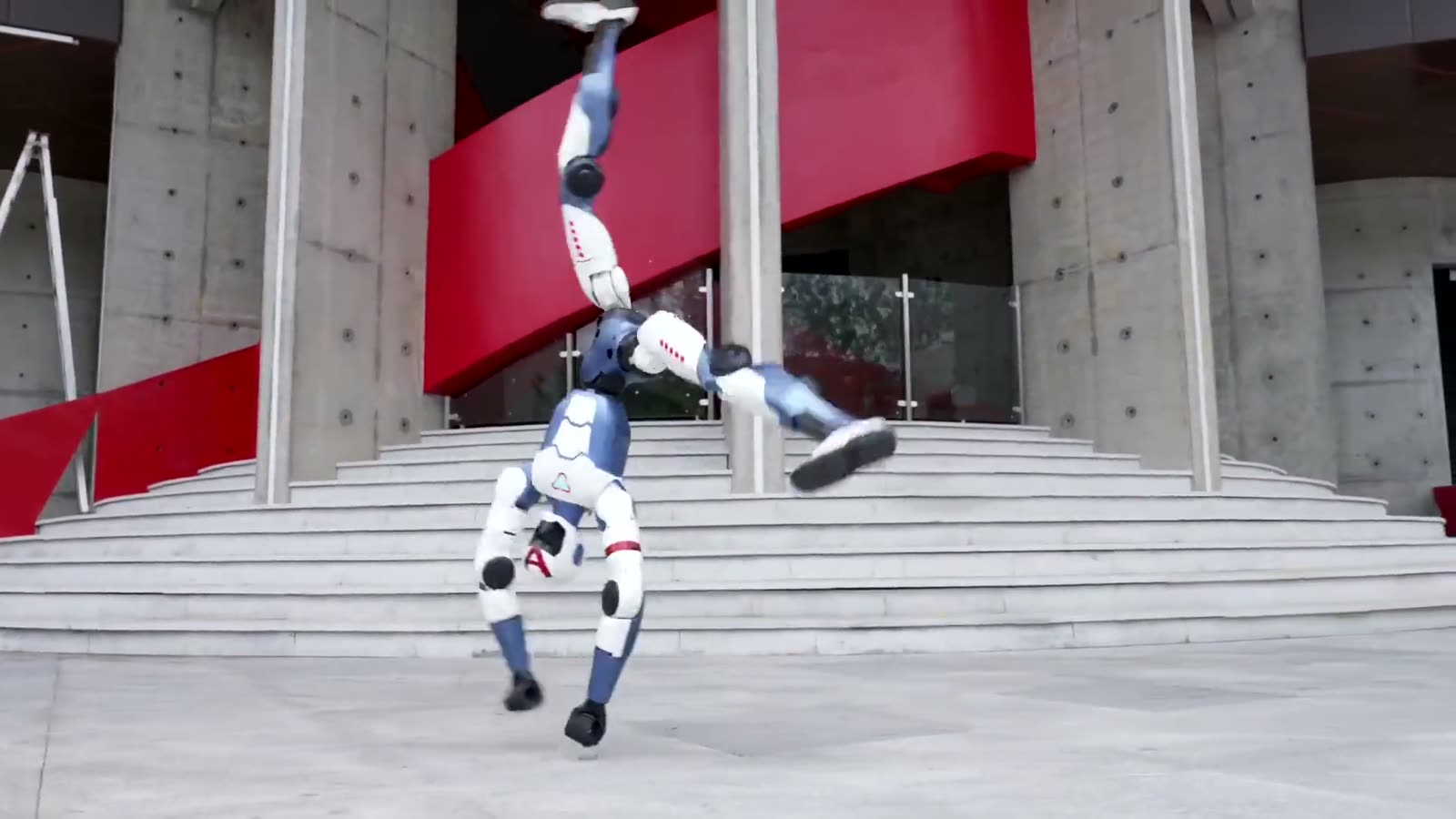
South African schools and universities are asking us the same question more and more: which humanoid robot should we buy? The honest answer is that it depends less on the robot and more on what your students will do with it.
This guide sorts the Unitree humanoid range by education level, from open days to postgraduate research. All prices are in Rand, excluding VAT, as listed on our site in October 2026.
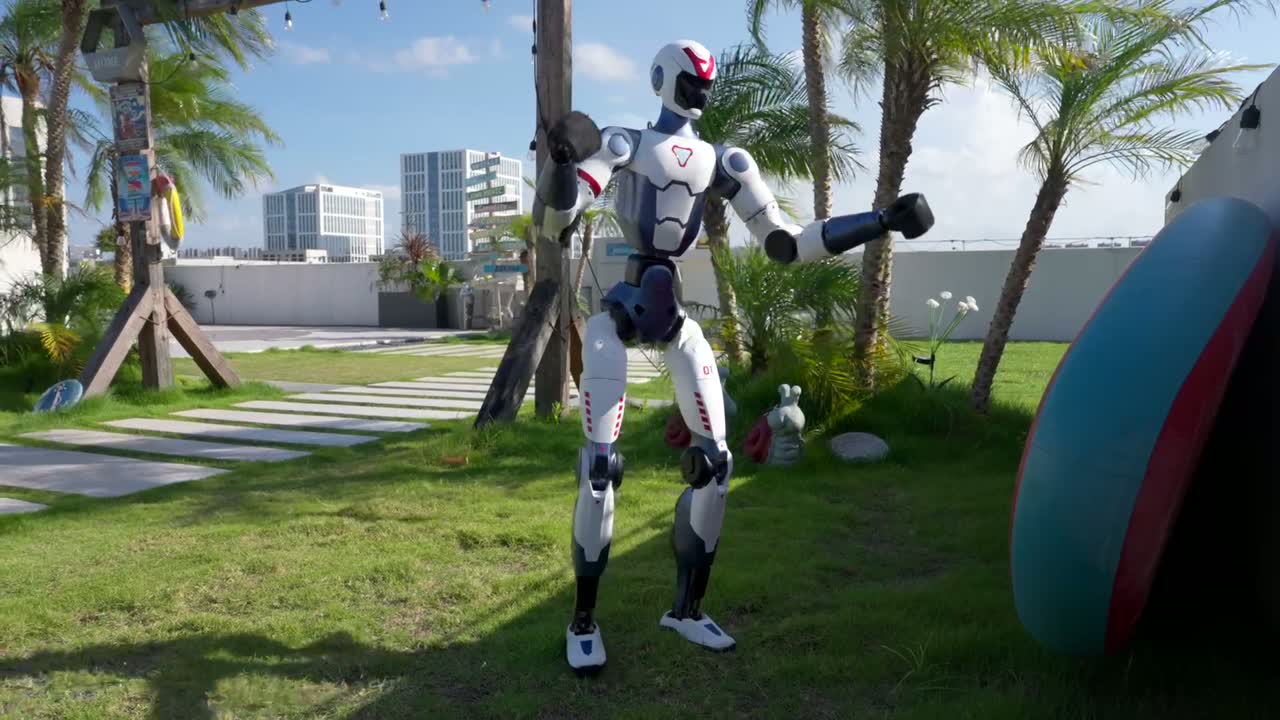
Start with one question: will students write code?
Every Unitree humanoid comes in demonstration tiers and EDU tiers. The demonstration tiers (R1 Air, R1 Basic, G1 Basic) walk, wave and perform, but they are built without developer access. The EDU tiers unlock the software development kit, so students can program movement, vision and speech.
If anyone will write code on the robot, even one day, buy EDU from the start. A demonstration robot stays a demonstration robot. If the robot will only appear at open days, career expos and assemblies, a demonstration tier saves a lot of money.
The shortlist by level
| Level | Robot | Why it fits | From (excl. VAT) |
|---|---|---|---|
| Open days, outreach, primary schools | Unitree R1 Air or Basic | Operator-run demos, no coding | R85,750 |
| High schools, TVET colleges, first-year engineering | R1 EDU Standard | Full developer access, 40 TOPS onboard compute | R183,750 |
| Undergraduate labs, AI and computer science | R1 EDU Smart | 100 TOPS compute, high- and low-level development | R210,000 |
| Manipulation courses | R1 EDU Professional (with hands or grippers) | Adds dexterous hands or grippers and wrist cameras | R225,750 |
| Postgraduate and published research | Unitree G1 EDU Standard or Plus | The research community's standard humanoid | R441,000 |
| Human-scale research | Unitree H2 EDU Standard | Full-size 1.82 m humanoid | R812,000 |
Freight, customs and VAT are itemised on every quotation.
R1 EDU: the teaching humanoid
The R1 is the most practical humanoid for a classroom. It stands about 1.21 m tall, weighs about 29 kg with its battery and has 26 degrees of freedom, including a 2-DOF waist and a 2-DOF head. It is light enough for two people to carry between rooms and safe to work beside at a desk.
It suits courses in robotics, control, computer vision and human-robot interaction. Because it has a speaker and microphone array, it is also a good fit for language and communication projects, not just engineering.
Plan for its limits. Battery life is about an hour, so a spare battery is essential for a full lesson. The arms carry about 2 kg, so heavy manipulation work belongs on a G1.
G1 EDU: the research humanoid
The G1 is where most published humanoid research happens, so postgraduate students start with code, models and papers that already target it. It stands about 1.32 m and weighs about 35 kg. Depending on the variant it has 23 to 43 degrees of freedom, with 100 TOPS of onboard compute.
The EDU Plus (R546,000) adds a 3-DOF waist and 7-DOF arms, which matters for manipulation research. The Ultimate variants add dexterous hands; on our site the Ultimate D and F are marked as recommended for universities. A G1 lab also needs a gantry or support stand, so a robot that falls during testing doesn't damage itself.

H2: when you need human scale
The H2 is a full-size humanoid: about 1.82 m tall and 70 kg, with 31 degrees of freedom. It is for labs studying full-scale locomotion, human-sized workspaces or high-torque tasks. It needs open floor space, a support stand and trained operators, so it rarely makes sense as a first robot. For a closer look, read our Unitree H2 vs R1 comparison.
Sometimes the best first robot isn't a humanoid
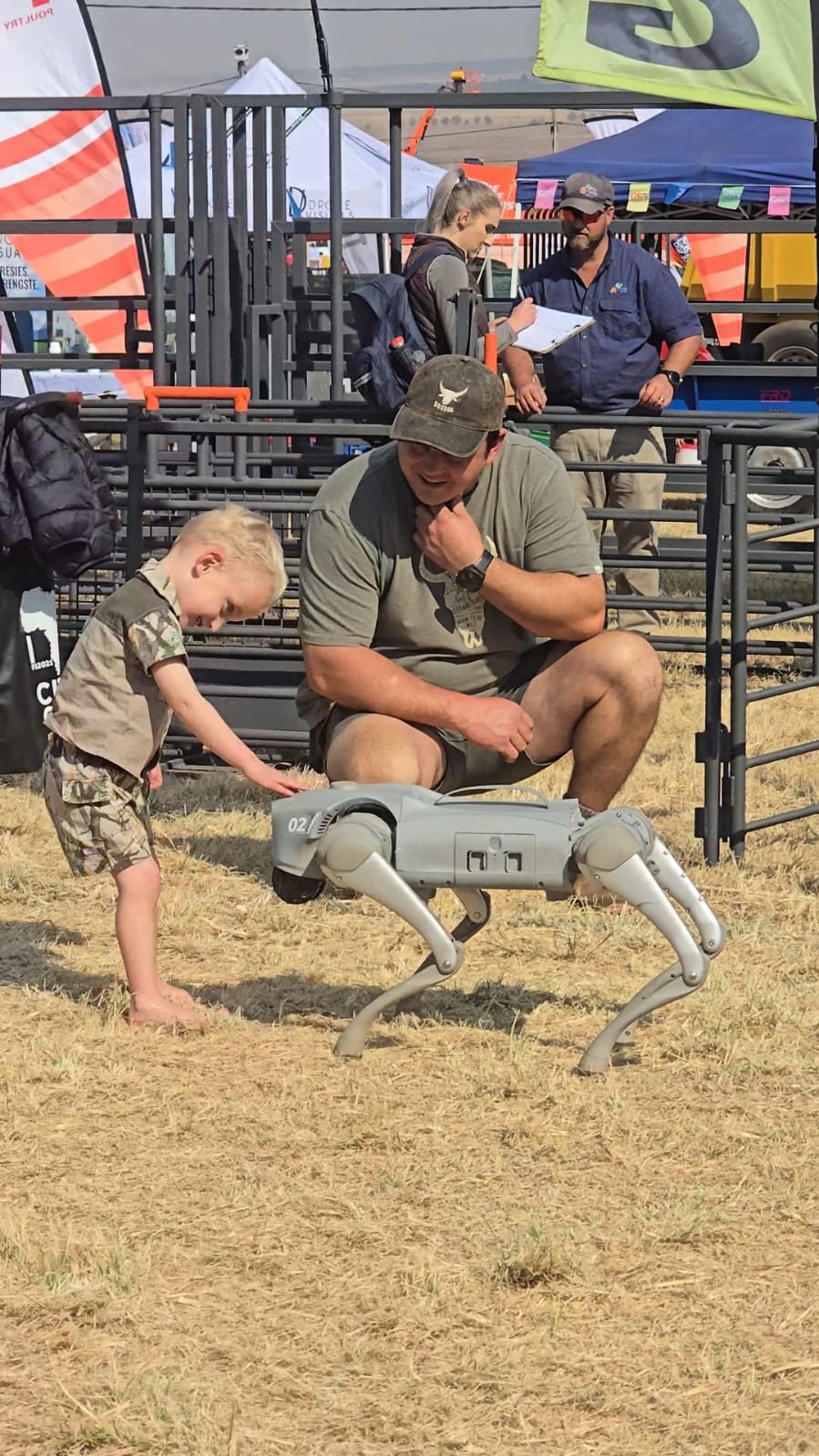
For teaching navigation, mapping and ROS2 to a large class, a quadruped is often the better first buy. The Unitree Go2 EDU Standard starts at R105,000, so a department can run several units for the price of one research humanoid.
One robot, many departments
A humanoid is easier to justify, and to fund, when more than one department uses it:
- Engineering: control, kinematics, ROS2 and the developer SDK.
- Computer science: computer vision, speech and AI agents running on the robot.
- Languages and linguistics: voice interaction in South African languages.
- Psychology and education: how people respond to and learn alongside robots.
- Health sciences: assistive and rehabilitation robotics research.
- Marketing and student recruitment: open days, career expos and school visits.
We map these uses for each institution, so the funding motivation shows a multi-department case rather than a single lab's wish.
Budget for more than the robot
- Spare batteries: at least one per robot, more for full-day teaching.
- A support stand or gantry: for G1 and H2 development work.
- A development PC: for simulation and training.
- Operator training and setup: so staff can run the robot safely from day one.
- Warranty: 12 months on EDU tiers, 8 months on R1 Air and Basic.
Funding routes in South Africa
Universities usually fund research robots through equipment grants such as the NRF's National Equipment Programme, which favours shared, multi-user equipment. TVET colleges and skills programmes often move faster through SETA funding (for example MICT SETA, merSETA or ETDP SETA). We can supply quotations, specifications and a use-case summary for your motivation.
Our recommendation
- School or outreach programme: R1 Air or Basic, operated by staff.
- High school, TVET college or first-year course: R1 EDU Standard.
- University teaching lab: R1 EDU Smart, plus a Go2 EDU fleet for navigation.
- Research group: G1 EDU Plus or Ultimate.
- Human-scale research: H2 EDU.
Visit our Education page or contact us to book a demo at your campus. We'll bring a robot and walk your staff through what each department could do with it.