
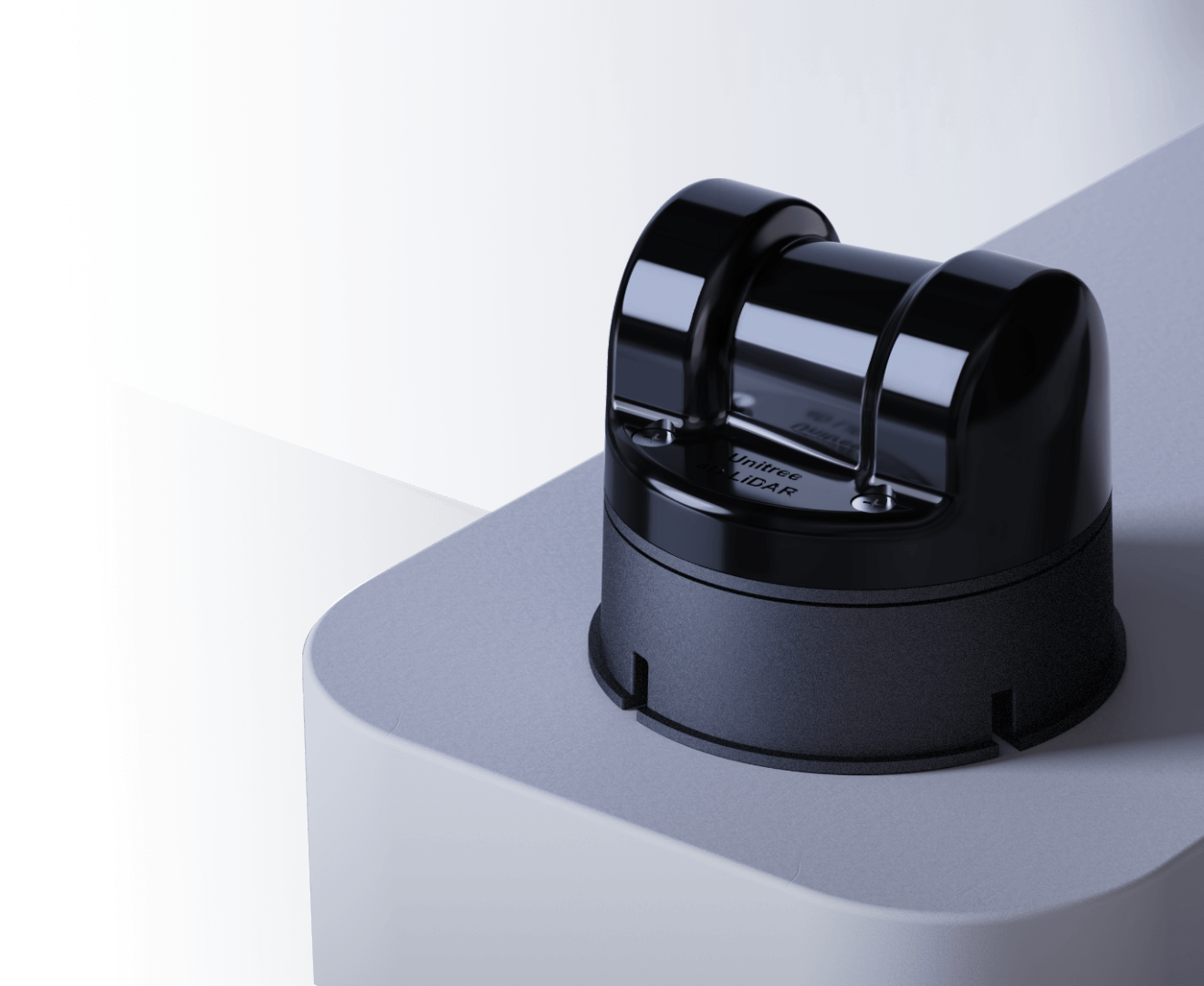
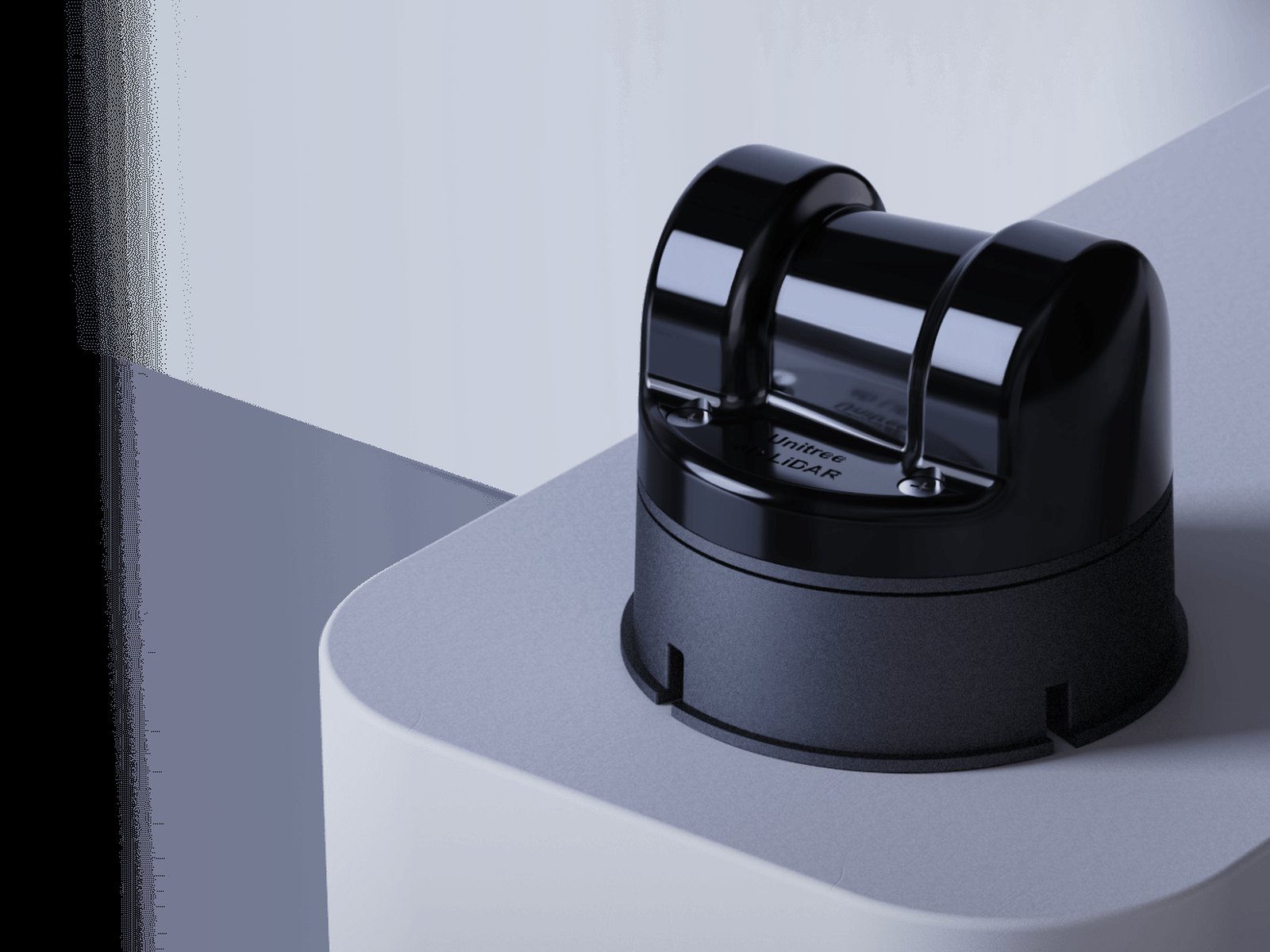
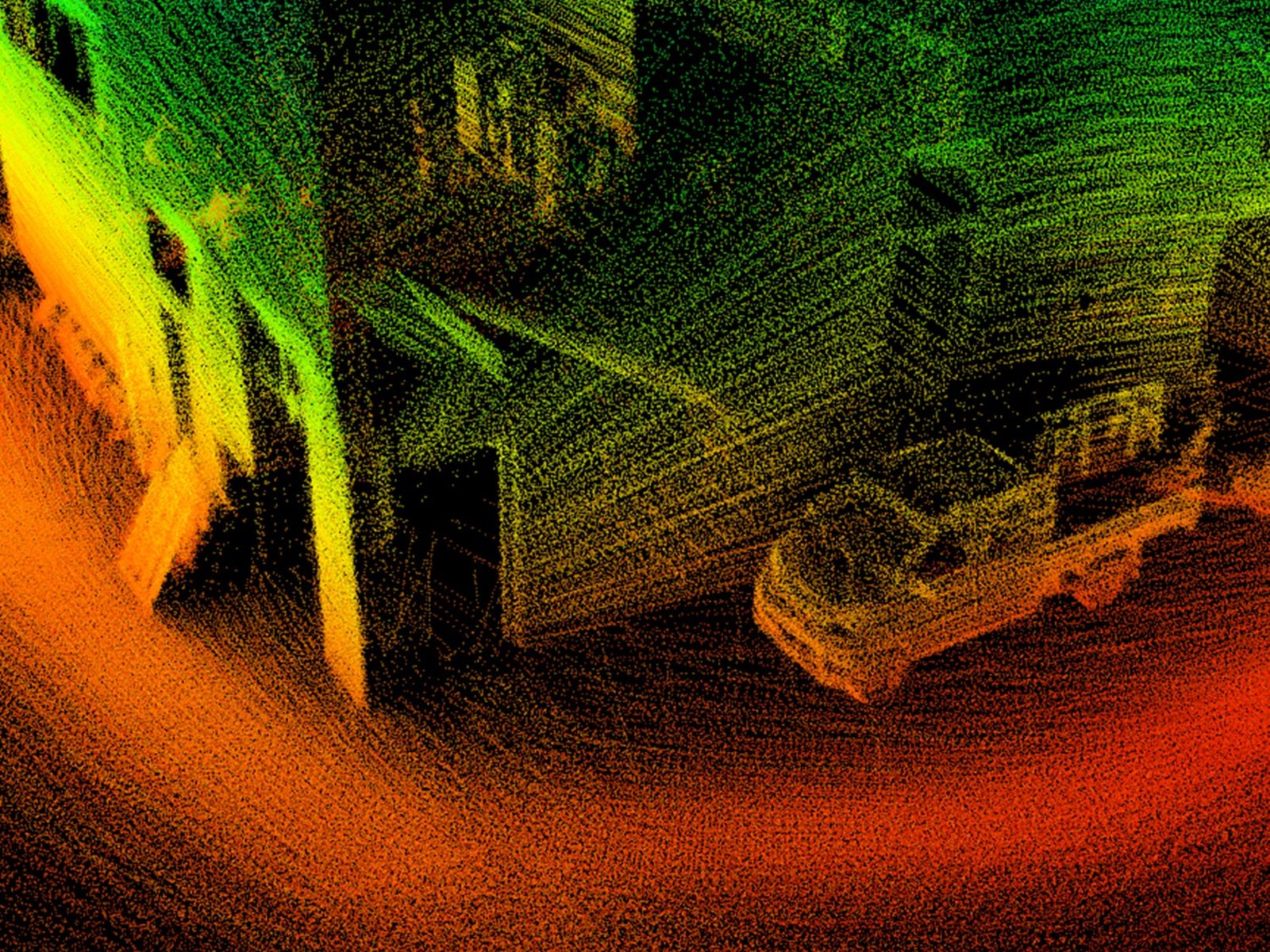
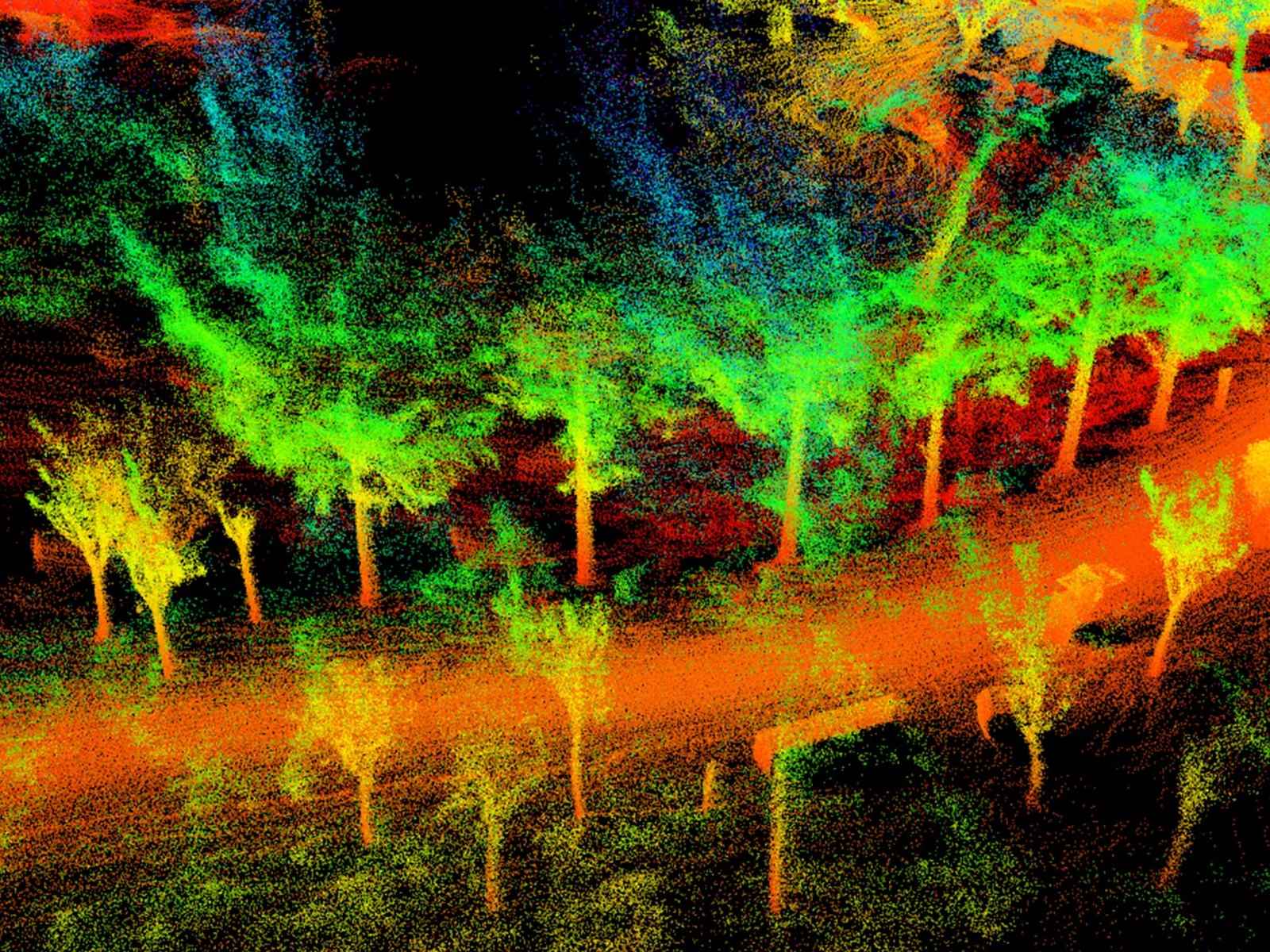
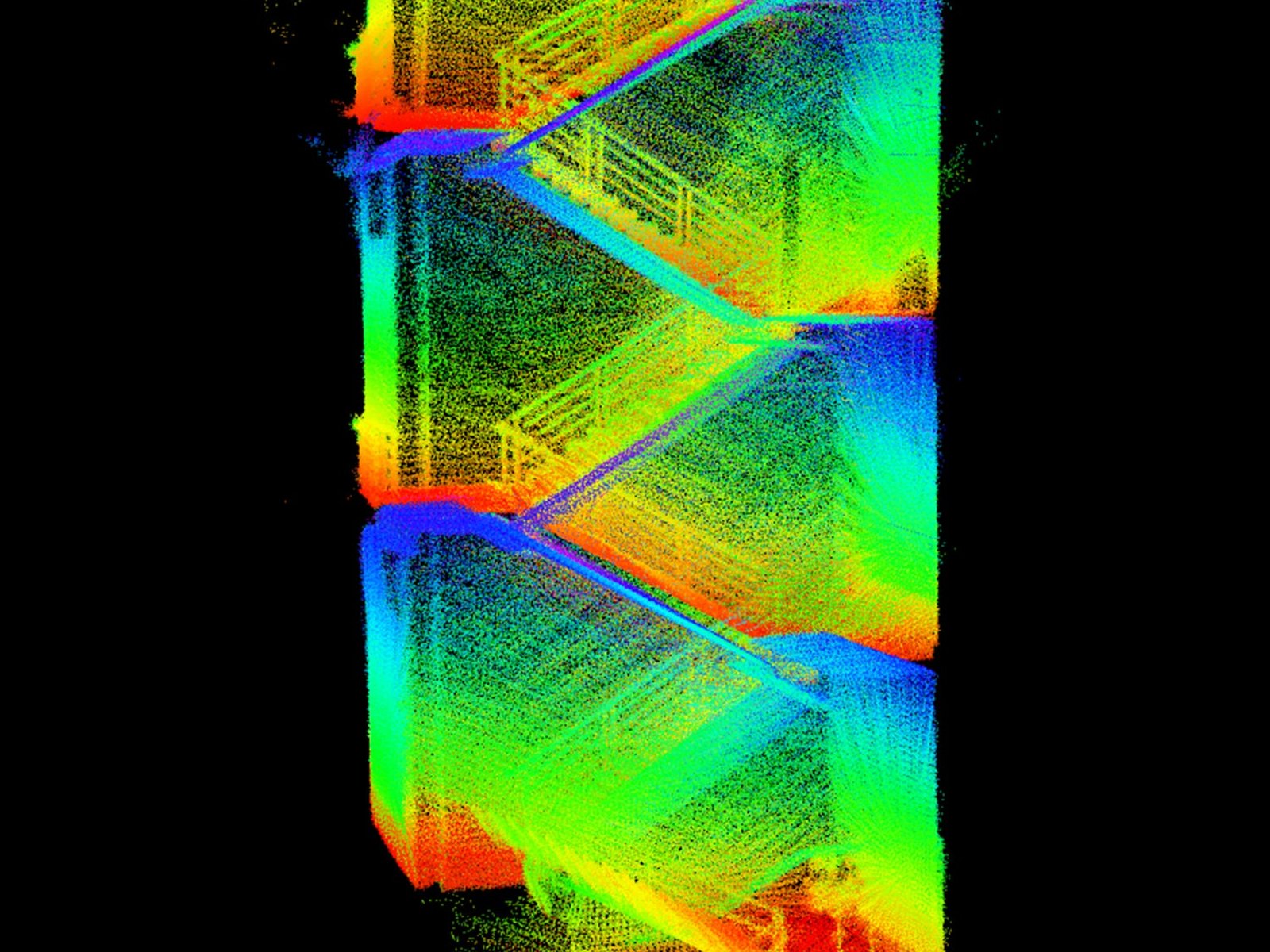
The 4D LiDAR L2 is Unitree’s compact spinning-mirror scanner for mobile robots, drones and handheld mapping. “4D” means each returned point carries three spatial coordinates plus a grayscale intensity value, so surfaces can be told apart by reflectivity as well as by shape.
Non-repetitive scanning
Most LiDAR units retrace the same scan lines on every rotation, so holding still adds nothing. The L2 sweeps a different pattern each revolution, which means point density keeps building the longer the sensor dwells on a scene. Left in place for a few seconds it resolves detail a fixed-line sensor of the same point rate cannot reach.
Coverage and blind zone
The field of view is 360° around and 96° vertically in negative-angle mode, against 360° × 90° standard, and the near blind zone is 50 mm. In practice that means a robot can see the ground immediately around its own footprint as well as overhead structure, without a second sensor to fill the gap underneath.
Mapping without a second positioning sensor
Unitree publishes an open-source SLAM path built on POINT-LIO
(github.com/unitreerobotics/point_lio_unilidar) that maps using the L2 and its own
built-in IMU alone, with no wheel odometry, GNSS or external tracking. Drivers ship for ROS and
ROS 2 through unilidar_sdk2, publishing the point cloud and IMU as separate topics.
Working outdoors
Ambient light immunity is rated above 100 kLux, which covers direct South African summer sun. The unit is Class 1 eye-safe under IEC 60825-1:2014, so it needs no viewing restrictions around people. Below 30°C ambient it runs a self-heating mode before producing point cloud data, and draws up to 13 W while doing so; size the supply for the peak rather than the 10 W typical figure.
L2 against the L1
Compared with the 4D LiDAR L1, the L2 roughly triples the sampling rate to 128 000 points/s, improves distance resolution from 8 mm to 4.5 mm, adds a 6° wider vertical field, and adds an Ethernet interface alongside the serial one. The L1 remains the lighter and cheaper option where a 20 m to 30 m serial-only scanner is enough.
Buying in South Africa
Stocked and supported locally. Price is in Rand excluding VAT, import duty and clearance are handled in house, and first-line technical support comes from George in the Western Cape rather than an overseas ticket queue.
| Scanning distance | 30 m @ 90% reflectivity · 15 m @ 10% reflectivity |
| Field of view | 360° × 96° (negative-angle mode; 360° × 90° standard) |
| Near blind zone | 0.05 m |
| Sampling frequency | 128 000 points/s |
| Effective frequency | 64 000 points/s |
| Measurement accuracy | ≤ 2.0 cm |
| Distance resolution | 4.5 mm |
| Scanning method | Non-contact brushless rotating mirror, non-repetitive |
| Circumferential scan | 5.55 Hz (adjustable) |
| Vertical scan | 216 Hz |
| 4D data | 3D position + 1D grayscale (2D mode supported) |
| IMU | 3-axis accelerometer + 3-axis gyroscope |
| Communication | ENET UDP / TTL UART |
| Power | 10 W typical · up to 13 W peak in self-heating mode |
| Ambient light immunity | > 100 kLux |
| Eye safety | Class 1 (IEC 60825-1:2014) |
| Dimensions | 75 × 75 × 65 mm |
| Weight | 230 g |
| Ranging technology | Laser time of flight |