Choose who you teach and what you want them to do. The navigator matches a Unitree robot to that outcome, prices it in Rand from our live catalogue, and shows how to teach with it, term by term.
MCM Robotics is Unitree’s official distributor in South Africa. Our mission: put a real, programmable robot within reach of every South African learner who is ready for one, help make South Africa the most robotics-literate education system in Africa by 2030, and become Africa’s largest supplier of robots to education.
Rand ex VAT, live from our catalogue on 23 October 2026, at R 17.50 per US dollar
Robots covered
Go2, Go2-W, R1, R1-A, Z1, G1, H2
Frameworks
CAPS Coding and Robotics, UNESCO AI competencies, AI4K12
Audience
Schools, TVET colleges, universities, districts and departments
Revision 3.0George, Western Cape
The Unitree family MCM Robotics supplies. List prices in Rand, ex VAT.
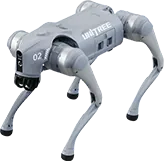
Fig. 1Unitree Go2Quadruped for coding, sensing and autonomyFrom R 32,375Full SDK from R 105,000
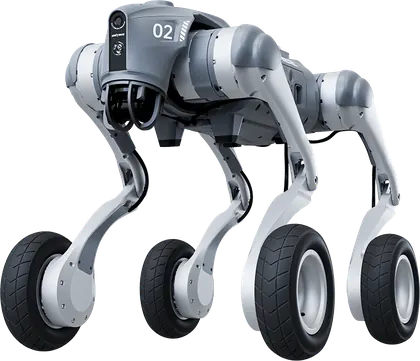
Fig. 2Unitree Go2-WWheel-legged quadruped for mobility and autonomyFrom R 148,750Full SDK from R 148,750
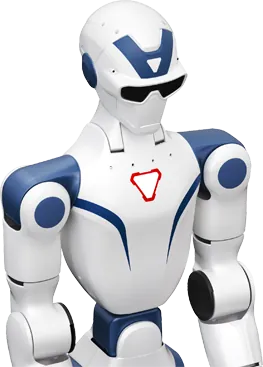
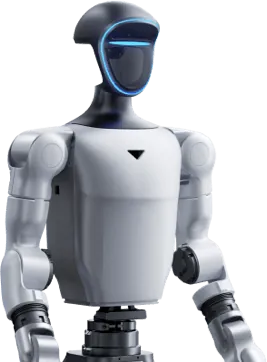
Fig. 3Unitree R1Compact humanoid for schools and collegesFrom R 85,750Full SDK from R 183,750
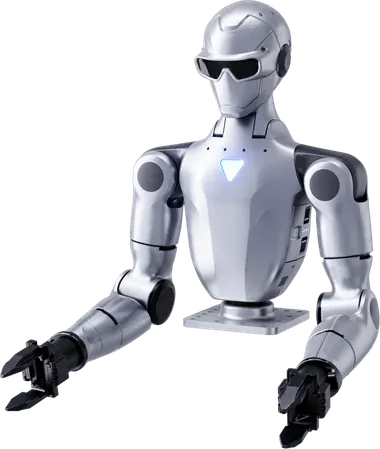
Fig. 4Unitree R1-ADual-arm bench for safe manipulationFrom R 75,075Full SDK from R 117,075
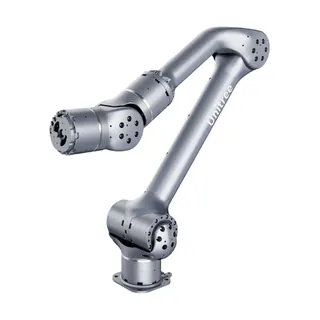
Fig. 5Unitree Z1Six-axis robot arm for kinematics and pick-and-placeFrom R 115,500Full SDK from R 115,500
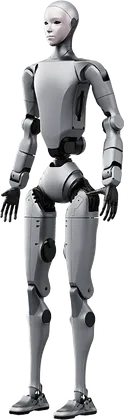
Fig. 6Unitree G1Research humanoid for universitiesFrom R 236,250Full SDK from R 441,000
Fig. 7Unitree H2Full-size humanoid for flagship labsFrom R 523,250Full SDK from R 812,000
Navigator
Find the right robot
Three choices. The recommendation updates as you go, with the Rand price, what the robot can and can’t do, and what your learners will actually do with it.
Rand, ex VAT. Airfreight, customs and delivery are itemised on the formal quotation.
Best fit within your budget
Unitree Go2-X
Quadruped, partial developer access
R 78,750 ex VAT
Our first choice, STEM Classroom Kit at R 133,498, is above your budget. This is the strongest option that fits.
Learners can program it
Partly: same SDK as the EDU, no expansion dock
Compute
No on-board AI dock; code runs from a laptop
Runtime
8,000 mAh, 1–2 h
Highlights
Partial secondary development on the same SDK as the EDU, Isaac Sim support, foot sensors, fast charger
Warranty
12 months, handled locally
Know before you buy. No expansion dock or depth camera, so vision projects run on a laptop. The lowest-cost Go2 learners can program, within those limits.
Select a robot to see the full recommendation, alternatives and add-ons. Prices are live from our catalogue.
Plan builder
Your plan
Add robots, bundles and spares, see the year-one total and the full programme cost per learner, then send it to MCM Robotics for a formal 30-day quotation.
Education programme estimate Prepared 23 October 2026
Your plan is empty
Add the recommended robot from the navigator, or start from a lab bundle:
STEM Classroom KitGo2 EDU Standard, spare long-life battery and self-charging matR 133,498
Locomotion LabGo2 EDU Smart (100 TOPS), spare battery and charging matR 177,248
Perception and Manipulation LabGo2 EDU Standard, 4D LiDAR L2 and a Z1 Air arm on one benchR 227,832.50
R1 Humanoid Starter LabR1 EDU Standard with full SDK, plus a spare batteryR 190,750
Humanoid Teleoperation LabG1 EDU Plus with the PICO VR teleoperation kitR 581,000
Manipulation Research LabG1 EDU Ultimate F with tactile five-finger hands, plus the PICO kitR 778,750
Dual-platform STEM FlagshipR1 EDU Smart and Go2 EDU Smart: a humanoid and a quadruped on one software stackR 358,750
Airfreight, customs and delivery are itemised on the formal quotation.
Why Unitree
Why Unitree leads in education
Unitree shipped more humanoids than any other company in 2025, leads the world in quadrupeds, and most of those robots go to classrooms and research labs. The reason is simple: research-grade robots students can actually program, at a fraction of the usual price, with one of the largest open-source robotics communities behind them. Every new lab adds code, tutorials and published results, which makes the next lab productive faster. That is the message for every committee: the platform your peers already use, at a price education budgets can carry, supported locally.
Unitree in numbers
Humanoid robots shipped in 2025
5,511, the most of any company worldwideUnitree STAR Market prospectus. In H1 2026 the G1 kept its lead in research and education (Counterpoint)
Share of humanoid revenue from research and education, Jan–Sep 2025
73.6%Unitree regulatory filing, reported by 36Kr and Xenospectrum
Quadruped robots sold, 2023–2025
More than 33,000Unitree prospectus, via Gasgoo
Entry humanoid price at launch, R1, July 2025
39,900 yuan, about US$5,900The moment humanoids entered school budgets
Global quadruped market share
Number one: 37% in H1 2026Counterpoint Research. Smart Analytics Global puts it at 52% for the same period; GGII counted about 70% in 2024
Unitree quadrupeds going to entertainment and education, H1 2026
More than 70%Counterpoint Research
Open-source developer stack
SDK2 in C++ and Python, ROS 2, MuJoCo, Isaac Lab reinforcement learning, XR teleoperation, UnifoLM modelsgithub.com/unitreerobotics
Corporate status
Listed on Shanghai’s STAR Market, August 2026Lower risk of orphaned hardware for a 5-year teaching asset
Like-for-like price check, US retail, October 2026
What you need
Unitree
Nearest alternative
Programmable research quadruped
Go2 EDU from US$11,190
Boston Dynamics Spot, about US$74,500 base
Humanoid with full SDK
R1 EDU Standard US$15,950
AgiBot X2 Ultra US$42,999 (no-code tools plus open interfaces)
Walking humanoid for demos
R1 Air US$6,870
AgiBot X2 US$27,999
University research humanoid
G1 EDU Standard US$43,900, Jetson Orin, ROS
AgiBot X2 Ultra US$42,999, built for events and no-code use; the G1 has one of the largest open-source research communities
US figures from Global Drone HQ’s 2026 STEM buyer’s guide and Standard Bots (Spot). In South Africa, MCM Robotics prices every Unitree configuration live in Rand.
The local advantage
Official Unitree channel: manufacturer-backed warranty, genuine parts and firmware support, not a grey import.
Rand pricing from a live exchange-rate engine, invoiced by a South African entity, paid by EFT.
Procurement-ready: formal 30-day quotations and tender documentation for SGBs, departments and universities.
Import, customs and SARS clearance handled in house; every quotation confirms the lead time, typically 4 to 6 weeks for stocked models.
First-line support and repairs from George, a Midrand branch, and Cape Town opening November 2026.
One ecosystem from a Grade 4 demo to a doctoral thesis, so skills and code carry forward instead of dead-ending.
Who already teaches with Unitree
Institution
What they do with Unitree
What South Africa can take from it
MIT CSAIL United States
Its Living Lab lists two Go2 EDU quadrupeds, two G1 Ultimate B humanoids and a B2 as shared equipment, each with a named expert user.
A faculty lab runs on a few shared robots, a trained custodian and a booking system.
Carnegie Mellon and NVIDIA United States
The ASAP project trains agile whole-body skills in simulation and transfers them to a real G1, with about 53% less motion error than earlier methods.
Simulation first, hardware second: the same order this page recommends at every stage.
University of Oxford United Kingdom
The Oxford Robotics Institute took its G1 to the Oxplore Festival in Birmingham in July 2026, for about 600 pupils from 17 state schools.
One university robot can carry a whole district’s school outreach.
RoboStore and OpenMind United States
The US Unitree distributor supports more than 100 institutions, including Harvard, MIT and Stanford, and launched a full G1 university curriculum in November 2025.
A local distributor plus a ready curriculum is what makes adoption scale.
A South African public college South Africa
Awarded MCM Robotics a tender for a Unitree G1 humanoid in September 2026.
Public procurement of humanoids for teaching has already started here.
Know this before you buy
Base models (Go2 Air and Pro, R1 Air and Basic, G1 Basic and Pro) run app behaviours only and can’t be upgraded to EDU later. If learners will write code in the next two years, buy a programmable tier now.
These are research-grade machines for trained adult operators. Learners program; a trained adult runs the robot, with an e-stop drill and a marked zone.
Runtime matters: about 1 hour on the R1, about 2 hours on the G1, 2 to 4 hours on the Go2 EDU. A spare battery keeps a robot teaching all day.
Security researchers disclosed Bluetooth and firmware flaws in Unitree robots in 2025 and 2026. Keep firmware current through MCM, switch Bluetooth off after setup, and run the robot on an isolated network. See the knowledge base for the full checklist.
US policy: since 28 July 2026, new foreign-made mobile robots can’t get US equipment approval. It doesn’t apply in South Africa, and models the US approved earlier, including the G1, Go2 and R1, remain on sale there.
Competition is real: Counterpoint ranked AgiBot first in total humanoid shipments for the first half of 2026. Unitree’s lead is strongest exactly where this page focuses, in research and education.
Walking, balance, routines and conversation are reliable today. Picking up arbitrary objects is still a research problem, which is exactly what makes it a good university project.
Teaching ladder
What to teach, stage by stage
Six stages, one robot family. Each stage names the robot, what learners do, what they can show at the end, and where it sits in CAPS, the UNESCO AI competency framework and AI4K12. Open a course outline for modules, hours, a capstone and the assessment split: MCM programme designs for institutions to adapt to their approved syllabus. The stage that matches your navigator choice is highlighted.
1
Spark
Grade R–3, open days, assembliesRobot: Go2 Air or Pro, R1 AirTime: 4 weeks, about 2 hours a week
Watch, describe and predict what the robot will do next
Sort “robot or not robot” and say why
Learn the safety circle: where people stand when a robot moves
Evidence of learning: Learners can describe a robot as something that senses, decides and acts.
CAPS Coding and RoboticsPattern recognition and problem solving
UNESCO AI competenciesHuman-centred mindset, understand
A labelled robot diagram and a one-minute explanation
2. Give precise instructions
2
A six-to-ten-step route with a prediction
3. Repeat, decide and debug
4
An original and an improved command sequence
4. Robots sense imperfectly
2
An observation sheet
5. People, privacy and AI
2
A class robot-use charter
6. Design a helpful school robot
4
Poster, route and a short demonstration
Capstone. A simulated school helper: learners choose one useful task, design the instructions, test a changed condition and explain why an adult supervises the real robot.
Instructions and problem solving 40%
Testing and improvement 25%
Explanation and responsible use 20%
Participation and collaboration 15%
3
Build
Grade 7–9, district hubsRobot: Go2 EDU (STEM Classroom Kit), Go2-XTime: 8–10 lessons per term
Move from blocks to first Python on a simplified, safe API
Run every program in simulation before the robot
Read live sensor values and make the robot react
Discuss privacy: should a robot with a camera be in a classroom?
Evidence of learning: Learners deliver a short Python program that runs on a real robot, tested first in simulation.
CAPS Coding and RoboticsAlgorithms and coding; robotics skills; internet and e-communication
UNESCO AI competenciesAI techniques, apply; ethics of AI, understand
Capstone. A bounded campus mission in a closed teaching area: detect a marker or follow a set route, log the result, and stop predictably when the task can’t continue.
Problem definition and algorithm 20%
Implementation and code explanation 30%
Testing and evaluation 25%
Documentation 15%
Collaboration and reflection 10%
4
Engineer
Grade 10–12, TVETRobot: Go2 EDU, R1-A bench, Z1 arm, R1 EDUTime: A project per term
Linux command line, Python and ROS 2 nodes
Detect an object with the depth camera and act on it
Pick and place with an arm or the R1-A bench
Document, test and present like an engineer
Evidence of learning: A working, documented robot project with a test log and a demonstration.
CAPS Coding and RoboticsApplication skills; robotics skills (bridging into FET and TVET subjects)
Capstone. A maintainable teaching system: a robot-status dashboard, a supervised mission, and a full commissioning, troubleshooting and handover record. Exactly the technician skills industry will hire first.
Commissioning and correct operation 25%
Fault diagnosis 30%
Integration quality 20%
Records and handover 15%
Individual oral explanation 10%
5
Specialise
Undergraduate, years 1–3Robot: Go2 EDU Smart or Plus, R1 EDU, R1-A7Time: A module or capstone
ROS 2, SLAM and Nav2 on live LiDAR
Kinematics, dynamics and control on real joints
Computer vision on Jetson compute
Sim-to-real: MuJoCo or Isaac twins to hardware
Evidence of learning: A capstone that maps, navigates or manipulates, with results measured against simulation.
CAPS Coding and RoboticsBeyond CAPS: ECSA graduate attributes in design, investigation and engineering tools
Capstone. A closed-course autonomous mission with a documented map, a route planner and measured results: success rate, interventions, time and localisation error.
System design and theory 20%
Implementation and integration 25%
Evaluation and failure analysis 30%
Reproducibility and documentation 15%
Individual technical defence 10%
Alternative track on the R1 EDU or G1: humanoid manipulation and human–robot interaction, 14 weeks and 70 contact hours, from workspace and grasping to XR teleoperation data and a tabletop sorting capstone.
6
Research
Honours, Masters, PhDRobot: G1 EDU family, Go2 EDU Ultimate, H2Time: Projects and theses
Reinforcement-learning locomotion and whole-body control
Teleoperation and demonstration data for imitation learning
Vision-language-action and world models (UnifoLM)
African-context datasets: mining, agriculture, care
Evidence of learning: Publishable results and datasets that put South African labs into the global conversation.
CAPS Coding and RoboticsPostgraduate research outputs
Capstone. A defensible research contribution: reproduce a locomotion or manipulation baseline, test one improvement, measure robustness, and document where simulation and hardware disagree.
Research question and scholarship 20%
Reproducibility 20%
Evaluation and critical analysis 30%
Technical implementation 20%
Responsible research and communication 10%
Before the first lesson: a 16-hour educator bootcamp
4 hoursOperate and supervise
Start, stop, handle and store the robot the manufacturer’s way; mark the zone and assign roles.
4 hoursTeach and adapt
Map one lesson to CAPS or the college syllabus, with an unplugged fallback for every activity.
4 hoursConnect and troubleshoot
Use the approved software setup, read the robot’s status and log a support request MCM can act on.
4 hoursDeliver and assess
Teach a micro-lesson, mark sample learner work and rehearse the full session without learners.
Ready to teach means two trained staff, one rehearsed lesson with a fallback, a configured setup that works, and an agreed support route with MCM. Scope and fees are agreed per institution.
Try it
Try the first lesson yourself
Program a robot across the classroom floor to the flag. Plan the route with blocks, run it, and fix it when it bumps into a cone. Repeated steps become a loop, and the Python updates as you go. This is how a Grade 4 to 9 lesson starts, before anyone touches the real robot.
Your program (select a block to remove it)
# Classroom sketch, not Unitree’s SDK
from classroom import Robot

robot = Robot(start=(0, 4), facing="east")

# Add blocks and they appear here as Python
A classroom sketch in Python, not Unitree’s SDK. On a Go2 EDU the same plan runs through Unitree’s SDK2 for Python, tested in simulation first and run by a trained adult.
What learners practise
Sequencing: the order of instructions changes the outcome.
Loops: three Forward blocks become one loop that repeats.
Debugging: find the block that failed, fix it, run again.
Orientation: left and right depend on which way the robot faces.
CAPS Coding and Robotics: algorithms and coding, Grades 4 to 9. UNESCO AI competencies: AI techniques, apply. AI4K12: representation and reasoning.
CAPS and the world
Curriculum: South Africa and the world
South Africa already has the subject. What it lacks is affordable hardware and a clear ladder from primary school into TVET and university. Here is where policy stands, what the leading countries do, and how a single robot activity can satisfy three frameworks at once.
Feb 2024Umalusi approves the Coding and Robotics CAPS for Grades R to 9.
2025Foundation Phase rollout begins; pilots ran in more than 1,500 schools.
2026Available grade by grade in primary schools where there is capacity.
Mar 2026Provincial specialists trained at the CHPC under a DSTI programme.
Jul 2026Limpopo learner teams compete at the Robotics for Good Youth Challenge in Geneva.
Jul 2026Deputy Minister Mhaule: coding and robotics in every primary school within two to three years; about two-thirds of schools already offer it.
The gap
The Department of Basic Education has told Parliament that, because of the cost of teacher development and equipment, Coding and Robotics can’t be a mandatory subject for all learners in the foreseeable future. Capacity, not curriculum, is the bottleneck.
A practical answer
Share the hardware, not the excuse. One programmable robot per district hub or college, simulation seats for every learner, and a clear ladder of stages. Provinces already fund this kind of work through the MST Conditional Grant; Limpopo’s Geneva teams are the proof. Industry co-funds too: in July 2026 Isuzu Motors SA donated a R1.9 million AI, coding and robotics centre to Khulile Primary in Gqeberha.
What the leading systems do, and what South Africa can borrow
System
What they do
What South Africa can borrow
China
Information Science and Technology is compulsory in Grades 1 to 9 since 2022, with AI content from age six. Beijing now requires at least 8 AI class hours a year in every grade; Hangzhou, Unitree’s home city, requires 10. AI becomes a basic university course under the 2026 AI and Education action plan.
Protected timetable hours and a ladder that runs all the way to university.
India
More than 10,000 Atal Tinkering Labs with robotics, AI and 3D printing; the 2025–26 budget adds 50,000 labs in government schools over five years, funded for running costs as well as setup.
Fund labs with a multi-year running budget, not a once-off delivery.
USA, AI4K12
The Five Big Ideas in AI (perception, representation and reasoning, learning, natural interaction, societal impact) with progressions for Grades K–2, 3–5, 6–8 and 9–12.
A simple shared vocabulary teachers can use from Grade R.
UNESCO
The AI competency framework for students (2024): 12 competencies across a human-centred mindset, ethics of AI, AI techniques and applications, and AI system design, at three levels: understand, apply, create.
Progression levels that make assessment of AI and robotics work consistent.
Singapore
Code for Fun (IMDA and the Ministry of Education) has run since 2014 and reaches more than 50,000 students a year; since 2020 every upper-primary learner gets 10 hours of coding and emerging technology. From 2025, AI for Fun adds modules such as AI with Smart Robots in primary and a 10-hour AI module in secondary.
A guaranteed block of hours for every learner in one grade, delivered with real robots and kits.
United Kingdom
Computing has been compulsory in every state school from age 5 since 2014. By Key Stage 2, pupils design, write and debug programs that control or simulate physical systems, then move to text-based languages such as Python at Key Stage 3.
Make “control a physical system” an explicit outcome. A walking robot makes it literal: the loop works or it doesn’t.
Ready-made curricula you can adopt now
Unitree’s Go2 training course
Unitree’s own graded, in-person course on the Go2, with training kits and debugging stations. It covers basic maintenance, motion control, autonomous navigation and secondary development, and links simulation, practical training, competition and projects. Ideal for TVET colleges and district hubs. Ask MCM about availability in South Africa.
OpenMind and RoboStore G1 curriculum
Launched in November 2025 and billed as the first full-scale university curriculum for humanoids: modular, video-based units on locomotion, perception, coordination and interaction, built on the open-source OM1 operating system and the Unitree G1. RoboStore, the US distributor behind it, supports more than 100 institutions including Harvard, MIT and Stanford.
Online upskilling for lecturers
Self-paced RoboUniversity courses on the G1 and Go2, from setup and ROS 2 to MuJoCo simulation, Sim2Real with Isaac Sim and vision-language-action models, get lecturers productive before the robot arrives.
One robot activity, three frameworks
Robot activity
CAPS Coding and Robotics
UNESCO level
AI4K12 big idea
Robot
Robot, follow my instructions: learners sequence movement cards, the teacher runs them
Algorithms and coding; pattern recognition
Understand
Representation and reasoning
Go2 Air or Pro
How does a robot see? Compare the camera view with the LiDAR point cloud
Robotics skills
Understand
Perception
Go2, any model
Should a robot film us? A structured class debate on cameras and consent
Internet and e-communication
Understand (ethics of AI)
Societal impact
Any
Code a robot dance in Python, simulation first
Algorithms and coding
Apply
Representation and reasoning
Go2 EDU, R1 EDU
Teach it to recognise: train an object detector and run it on the robot
Application skills
Apply to create
Learning; perception
Go2 EDU
Design a conversation for a welcome robot
Application skills
Create (human-centred mindset)
Natural interaction
R1 Basic or EDU
Pick and place: grasp a block with an arm or the dual-arm bench
Robotics skills
Create (AI system design)
Learning
R1-A, Z1
Map the school hall with LiDAR SLAM
Robotics skills
Create (AI system design)
Perception; representation and reasoning
Go2 EDU Plus
After Grade 9: FET, TVET and university
FET (Grades 10–12). There is no Coding and Robotics subject yet, but robot projects feed existing ones: Information Technology (algorithms, Python-style logic), Engineering Graphics and Design (mechanisms), Electrical and Mechanical Technology (motors, sensors, batteries), Mathematics (trigonometry and vectors in kinematics) and Physical Sciences (forces and energy).
TVET colleges. A Go2 EDU, a LiDAR and a Z1 or R1-A arm on one bench cover locomotion, perception and manipulation practicals for NC(V) and NATED engineering programmes, and give lecturers a live link to industry work in mining, agriculture and manufacturing.
Universities. Robot labs map naturally onto ECSA graduate attributes such as engineering design, investigation and the use of modern engineering tools. Undergraduates work on ROS 2, SLAM, kinematics and vision; postgraduates on reinforcement learning, whole-body control and robot foundation models.
Set the number of installations and the kit for each tier. Defaults show one programmable hub per province, a perception and manipulation lab in each of the 50 public TVET colleges, and a teaching plus research pair at each of the 26 public universities.
District and provincial hubs
Default: one hub per province. A hub serving ten schools reaches about 600 learners a year.
Public TVET colleges
South Africa has 50 public TVET colleges.
Public universities
South Africa has 26 public universities.
Indicative total
R 32.3 million
R 32,307,555 ex VAT, or R 37,153,688.25 incl. VAT
9 × district and provincial hubs
R 1,201,482
50 × public TVET colleges
R 11,391,625
26 × public universities
R 19,714,448
Learners reached per year
14,980
Cost per learner, 5-year life, ex VAT
R 431
Hardware at current list prices only. National volumes, training and support packages are priced on application.
Pilot
Start with a 90-day pilot at one anchor institution
One robot configuration, two prepared educators and one cohort, measured over a single term, so the decision to scale rests on evidence.
Days 1–15Accept and prepare
Acceptance test on the exact configuration, two educators prepared, first lessons rehearsed.
Days 16–30Simulate and introduce
Simulation lessons for the whole class, supervised first robot sessions and a learner baseline.
Days 31–60Teach one cohort
Rotate robot time, keep learner portfolios and log every support request.
Days 61–90Review and decide
Measure learning and running cost, then decide: more cohorts, more partners or more robots.
What the pilot measures
Learners who complete an assessed task
Before-and-after concept scores
Educators teaching without support
Supervised robot hours, and sessions cancelled
Support requests and the time to resolve them
Full cost per learner-year
The 90 days start once the robot is delivered and accepted. Procurement and shipping come first.
Where to begin, SDKs and software, budgets and funding, safety and cybersecurity, aftersales, the latest developments and a plain-language glossary. Search it, or filter by topic.
66 answers
Where to begin
Start with the outcome, not the robot
Write down what learners must be able to do at the end of the term: describe a sensor, write a loop, build a map, train a model. Then choose the lowest tier that delivers it. The navigator on this page does exactly that.
Decide now whether learners will write code
Base models (Go2 Air and Pro, R1 Air and Basic, G1 Basic and Pro) run Unitree’s app behaviours only, and Unitree offers no upgrade from a base unit to an EDU unit. If coding is in your plan within two years, buy a Go2-X, an EDU tier or an R1-A Smart from day one.
Begin in simulation, even before the robot arrives
Unitree publishes simulation twins for MuJoCo and NVIDIA Isaac Sim, and the same code runs on the virtual and the real robot. A whole class can code at once in simulation while one robot runs the best programs. It costs nothing and protects the hardware.
Name a robot champion and a safety lead
One teacher or lecturer owns the robot’s timetable, charging log and firmware updates. A second adult is trained on the remote’s stop and damping controls. Unitree robots are research-grade machines for trained adult operators; learners program, adults operate.
Prepare the room and the network
A marked robot zone of at least 3 × 3 m on a dry, non-slip floor (2 m clearance all round for the H2).
A dedicated Wi-Fi network or VLAN that isn’t connected to the school’s administration systems.
A lockable, ventilated cabinet for charging and storing batteries.
Ubuntu laptops for coding, and for universities an NVIDIA RTX workstation for reinforcement learning.
Order with spares and lead time in mind
Order a spare battery with every robot so one pack charges while the other teaches. Stocked models typically arrive 4 to 6 weeks after payment; newer models can take longer, and the quotation confirms the lead time. Order a full term before you need the robot. MCM issues formal 30-day quotations and supports tender paperwork.
Your first semester, week by week
Week 1: unbox, safety briefing and the e-stop drill.
Weeks 2–3: simulate first in Isaac Sim or MuJoCo.
Weeks 4–6: first code on hardware, high-level Python, then ROS 2 nodes.
Weeks 7–10: perception projects, mapping, vision and person-following.
Exam block (universities): joint-level control, reinforcement-learning policies sim-to-real, and the write-up.
A four-step rollout for one school
Term 0, see it move. Book a live demo in George or Midrand, or a virtual one. Name one champion teacher, run this navigator with the HOD and the bursar, and confirm where the money comes from. Cost: an afternoon.
Term 1, pilot the platform. One robot, one class, one term: a STEM Classroom Kit (R 133,498) or an R1 Humanoid Starter Lab (R 190,750), ex VAT. Simulation first, then a term-end demonstration for parents and the SGB.
Year 1, build the lab. Add stations, spare batteries, a charging cabinet, a gantry for humanoids and a sign-out log, and put robotics on the timetable.
Year 2, showcase and compete. Enter a competition, host a district robotics day, partner with a university, and use the results to attract sponsors.
SDKs and software
What “secondary development” actually unlocks
High-level motion commands: stand, walk, turn and gestures in a few lines of Python or C++.
Low-level joint control: torque, position and velocity for every motor.
Raw sensor streams: LiDAR, depth camera, cameras and IMU.
On-board compute: Jetson modules from 40 to 100 TOPS run your models on the robot.
ROS 2 on native DDS, plus simulation twins in Isaac Sim and MuJoCo.
unitree_sdk2 and unitree_sdk2_python: the core SDK in C++ and Python.
unitree_ros2: ROS 2 integration for navigation, mapping and visualisation.
unitree_mujoco: a simulator that runs the same code against a virtual robot.
unitree_rl_gym and unitree_rl_lab: reinforcement-learning pipelines in NVIDIA Isaac Gym and Isaac Lab, ready to deploy to the robot.
xr_teleoperate: control humanoid arms and hands from Apple Vision Pro, PICO or Meta Quest, and record demonstrations.
UnifoLM-WMA-0 and UnifoLM-VLA-0: open robot foundation models released in September 2025 and January 2026.
Which language at which stage
Blocks through the app in primary school, Python with a simplified safe API in Grade 7 to 9, full Python and ROS 2 from Grade 10 and TVET, C++, ROS 2 and PyTorch at university. The point of one ecosystem is that every step builds on the last.
The computers you need
Everyday coding: a laptop running Ubuntu Linux connected to the robot’s network.
Reinforcement learning: a workstation with an NVIDIA RTX graphics card.
On the robot: the Jetson module on EDU tiers runs inference while it moves.
A class of 30 needs 30 simulation seats, not 30 robots.
Third-party tools that work with Unitree robots
ROS 2 Nav2 and SLAM tools for navigation, OpenCV and YOLO-family detectors for vision, NVIDIA Isaac Sim and Isaac Lab for simulation and training, and Hugging Face LeRobot for imitation learning. Universities can teach industry-standard tools on affordable hardware.
Firmware and updates
Unitree improves its robots through over-the-air updates, including security fixes. Keep firmware current through MCM Robotics, record the version in your robot log, and test an update in simulation-only mode before a class depends on it.
Your first hour with the Python SDK
The commands below follow the README of Unitree’s official Python SDK. Configure the robot’s network first, using Unitree’s developer quick-start guide, and keep the robot in a clear zone with the e-stop ready.
# Ubuntu laptop on the robot’s network
sudo apt install python3-pip
git clone https://github.com/unitreerobotics/unitree_sdk2_python.git
cd unitree_sdk2_python
pip3 install -e .

# 1. Check communication (two terminals)
python3 ./example/helloworld/publisher.py
python3 ./example/helloworld/subscriber.py

# 2. Read the robot’s state (use your network interface name)
python3 ./example/high_level/read_highstate.py enp2s0

# 3. First movement: stand up and lie down
python3 ./example/high_level/sportmode_test.py enp2s0
If pip can’t find CycloneDDS, build CycloneDDS 0.10.x first, as the README explains. Run the same logic in the MuJoCo twin before it touches hardware.
Which robots can learners program?
Robot
Programmable
Best classroom use
Go2 Air, Go2 Pro
No, app and remote
Demos, sequencing, outreach
Go2-X
Yes, SDK from a laptop
Clubs on a budget
Go2 EDU Standard to Ultimate
Yes, full SDK, ROS 2, 40 to 100 TOPS on board
Coding, perception, navigation
R1 Air, R1 Basic
No, app and voice AI
Humanoid demos and events
R1 EDU Standard, Smart, Professional A to D
Yes, full SDK
High-school and first-year humanoid coding
R1-A Smart (bench)
Yes, 40 TOPS module
Safe manipulation practicals
G1 Basic, G1 Pro
No, app and pre-loaded actions
Showcases and outreach
G1 EDU family
Yes, full SDK, ROS 2, low-level control
University teaching and research
H2 Basic
No, app and voice interaction
Showcases at human scale
H2 EDU Standard
Yes, secondary development on dedicated development PCs
Human-scale flagship research
Competition builds and the R1 EDU Professional E to H configurations: confirm secondary development on your quotation.
Budget and funding
Year-one packages in Rand
Package
Ex VAT
STEM Classroom Kit (Go2 EDU Standard, Go2 long-life battery (15,000 mAh), self-charging mat (Go2-X and EDU))
R 133,498
Locomotion Lab (Go2 EDU Smart, Go2 long-life battery (15,000 mAh), self-charging mat (Go2-X and EDU))
R 177,248
Perception and Manipulation Lab (Go2 EDU Standard, 4D LiDAR L2, Z1 Air robot arm)
R 227,832.50
R1 Humanoid Starter Lab (R1 EDU Standard, R1 battery)
Prices read live from our catalogue on 23 October 2026. Other configurations are on each robot’s page.
What else to budget for
Airfreight, customs and VAT, itemised on the MCM quotation.
Spare batteries and chargers.
A dedicated router or VLAN, and a lockable charging cabinet.
Ubuntu laptops; an RTX workstation for universities.
Teacher release time for training.
Spares after the warranty period, for example a Go2 joint motor at R 6,562.50.
Work out the cost per learner
A STEM Classroom Kit at R 133,498 ex VAT, used for five years by 150 learners a year, costs about R 178 per learner per year. Use the plan calculator above with your own numbers; shared hubs push the figure lower still.
Funding routes for schools
Provincial Mathematics, Science and Technology (MST) Conditional Grant, which already supports Coding and Robotics, enrichment, teacher development and laboratory resources.
School governing body budgets.
Section 18A donations from companies and foundations.
B-BBEE skills development and socio-economic development spend, and corporate social investment.
Funding routes for TVET colleges and universities
NRF National Equipment Programme, with co-investment from the institution.
University equipment committees and faculty research budgets.
SETA discretionary grants for skills programmes.
Industry partnerships in mining, automotive, agriculture and manufacturing.
How buying from MCM works
Configure online or ask for a departmental recommendation.
Receive a formal PDF quotation in Rand, valid 30 days, with banking details.
Pay by EFT; MCM handles airfreight, customs and SARS clearance.
Delivery anywhere in South Africa, typically 4 to 6 weeks for stocked models, with orientation material.
Tender documentation and institutional paperwork are supported.
Safety, cybersecurity and POPIA
Physical safety rules for classrooms
A trained adult operates the robot; learners program and observe.
Run the e-stop and damping drill before every session.
Mark the robot zone and keep young learners behind a line.
Use the gantry stand during humanoid development.
Indoors, dry floors, 0 to 40 °C; these robots aren’t waterproof.
Never leave a powered robot unattended.
Batteries
Charge lithium packs on a non-flammable surface, never unattended overnight, and store them in a ventilated cabinet. Stop using a swollen or damaged pack and contact MCM. Ask MCM for the dangerous-goods guidance if a robot travels to competitions.
Cybersecurity: what was found and what to do
In September 2025 researchers disclosed a Bluetooth flaw, known as UniPwn, affecting Go2, B2, G1 and H1 firmware; further G1 issues were reported in 2026. Unitree acknowledged the findings. Practical controls for schools and universities:
Keep firmware current through MCM.
Switch Bluetooth off once Wi-Fi is configured.
Run robots on an isolated Wi-Fi network or VLAN without internet by default.
Change default credentials and never connect robots to administration networks.
Review and disable cloud features you don’t need.
POPIA and learner data
Robots carry cameras and microphones. Get consent from parents or students, avoid storing identifiable images or voices, keep project data on local machines, and don’t enable cloud recognition features with learners without written approval. University data-collection projects should go through ethics review.
Set expectations honestly
Walking, balance recovery, preset routines and conversation are reliable today. Picking up arbitrary objects is still an active research problem, and the acrobatics in launch videos are trained routines. Saying this up front makes the robot exceed expectations instead of disappointing them.
Aftersales and support
Warranty by model
Robot
Warranty
Go2 Air
6 months
Go2 Pro, Go2-X, Go2 EDU tiers
12 months
R1 Air, R1 Basic
8 months
R1 EDU tiers, R1-A
12 months
G1 Basic
8 months
G1 Pro
12 months
G1 EDU tiers
18 months
H2 Basic
8 months
H2 EDU Standard
12 months
Backed by Unitree and handled locally by MCM Robotics.
Where support comes from
First-line support, repairs and genuine parts run from the George head office (+27 44 878 2917), with sales and operations in Midrand (+27 12 030 3451) and a Cape Town branch opening in November 2026. Wear from normal teaching use is repairable in George.
What arrives with your robot
Orientation material covering safe handling, batteries and the e-stop drill, pointers into Unitree’s official documentation, SDKs and simulators, and the gantry stand on R1 EDU and G1 EDU tiers. MCM is a call away for setup questions.
See it before you buy
Book a departmental demo, live or on video, on the contact page. Tell MCM your course outcomes and budget, and you’ll leave with a tier recommendation and a formal quotation in Rand.
Developments
Unitree, 2025 to 2026
2025: shipped 5,511 humanoids, the most of any company, and launched the low-cost R1 and the full-size H2.
September 2025: open-sourced the UnifoLM-WMA-0 world-model-action model; security researchers disclosed the UniPwn Bluetooth flaw.
2025: launched a graded Go2 training course for students, with training kits and debugging stations.
January 2026: open-sourced the UnifoLM-VLA-0 vision-language-action model.
First half of 2026: number one in quadrupeds with 37% of global shipments (Counterpoint), and about 5,900 humanoids shipped (SAG).
March to July 2026: STAR Market listing approved, with 2025 revenue up more than 300%.
August 2026: listed on the Shanghai STAR Market.
South Africa, 2024 to 2026
February 2024: Coding and Robotics CAPS for Grades R to 9 approved by Umalusi.
2025: Foundation Phase rollout begins.
2026: available grade by grade in primary schools where there is capacity.
March 2026: provincial specialists trained at the CHPC in Cape Town.
July 2026: Limpopo teams at the Robotics for Good Youth Challenge in Geneva.
October 2026: MCM Robotics shows live Unitree robots at GovTech 2026 in Durban.
What fast development means for buyers
Unitree iterates quickly. Buy the tier your course needs this year, rely on over-the-air updates for new capability, and plan a five-year teaching life. Newer models extend the ladder rather than replacing the skills learners have built.
Questions schools ask
Is a robot safe around young learners?
Yes, when it runs the way it is designed to: a trained adult operator, a marked zone, the e-stop drill and close supervision. Young learners interact by planning, predicting and observing, not by handling the robot.
How many learners can one robot serve?
One robot per class works well with a rotation model: groups code in simulation while one group runs its program on the robot. A district hub on a timetable can serve many schools a year.
Do we need internet?
No. Robots run on a local network. Firmware updates can be done through MCM, and keeping robots off the open internet is good security practice.
Can a base model be upgraded to EDU later?
No. Unitree doesn’t offer that upgrade. If coding might be in your plans, buy a programmable tier from the start.
What happens if a learner breaks something?
Start in simulation and use the gantry stand for humanoid development to prevent most damage. Normal teaching wear is repairable in George, and genuine parts are priced in Rand. Misuse falls outside the warranty, so the adult-operator rule matters.
Can we start without buying a robot?
Yes. Unitree’s simulators are free. Many schools start a term in simulation and buy, or borrow from a hub, once learners have code worth running.
Does the robot speak our languages?
R1 models carry built-in voice AI; supported languages depend on the software package. Ask MCM to confirm specific languages in writing on your quotation.
Is there a ready-made curriculum we can use?
Yes. Unitree runs a graded Go2 training course covering maintenance, motion control, navigation and secondary development; OpenMind and RoboStore offer a modular university curriculum for the G1; and online courses teach lecturers ROS 2, simulation and Sim2Real on Unitree robots. Combine them with the six stages and the CAPS crosswalk on this page.
Can a club use the G1 competition builds?
The G1-Comp and G1 EDU Boxing builds are made for competition and boxing events, and MCM’s specification sheet doesn’t list secondary development for them. For a club that wants to code, choose a Go2-X, a Go2 EDU or an R1 EDU, and add a G1 EDU when the club reaches university-level work.
Why not another brand?
Other good robots exist. Unitree’s advantage for education is the combination of research-grade robots at education prices, one of the largest open-source communities, and one ecosystem from Grade 4 to PhD, supported locally by its official distributor.
Can we pay on a purchase order or tender?
Yes. MCM issues formal 30-day quotations, supports tender documentation and invoices in Rand from a South African entity, so procurement never deals with foreign exchange or imports.
Glossary
SDK
Software development kit: the code libraries that let learners program the robot directly. Unitree’s SDK2 works in C++ and Python. Base models don’t expose it; EDU tiers do.
Secondary development
Unitree’s term for programming a robot beyond its built-in app behaviours. EDU tiers have full access, the Go2-X partial access, base models none.
EDU tier
The education and research configurations of a Unitree robot, with on-board compute, developer access and technical support. A base unit can’t be upgraded to EDU later.
ROS 2
Robot Operating System 2: the open-source framework universities and industry use to connect sensors, planners and controllers. Unitree robots support it.
Degrees of freedom (DoF)
The number of joints a robot can move independently. More DoF means more dexterity, and more to control.
TOPS
Trillions of operations per second: a measure of on-board AI compute. 40 TOPS runs vision models; 100 TOPS runs larger models in real time.
LiDAR
A laser sensor that measures distances all around the robot and builds a 3D point cloud. Every Go2 carries one.
Depth camera
A camera that measures how far away each pixel is, so the robot can see shape as well as colour.
SLAM
Simultaneous localisation and mapping: the robot builds a map of a space while working out where it is in that map.
Simulation
A virtual copy of the robot and its world, in tools such as MuJoCo and NVIDIA Isaac Sim. Learners test code here before the real robot moves.
Sim-to-real
Moving a behaviour learned in simulation onto real hardware, and closing the gap between the two.
Reinforcement learning
A robot learns by trial and error against a reward, usually millions of attempts in simulation.
Imitation learning
A robot learns a task from recorded human demonstrations, often collected by teleoperation.
Teleoperation
A person controls the robot remotely, for example through a VR headset, to perform a task or record demonstrations.
Embodied AI
AI that acts in the physical world through a body, rather than only producing text or images.
End effector
Whatever sits at the end of a robot arm: a gripper, a three-finger hand or a five-finger hand.
Tactile sensing
Touch sensors in a robot hand that measure contact and pressure, needed for delicate grasping.
Firmware
The software inside the robot itself. Keep it current through MCM: updates fix bugs and security issues.
Gantry stand
A frame that holds a humanoid by a harness while new code is tested, so a fall can’t damage it.
Acceptance test
A documented check, on delivery, that the robot, its configuration and its software work as quoted.
No answers match
Try a broader word such as battery, warranty, Python or funding, or ask MCM directly at info@mcmrobotics.co.za.
Next step
See it move, then decide
Book a departmental demo in George or Midrand, live or on video. Tell us your course outcomes and budget, and you leave with a tier recommendation and a formal quotation in Rand.
Prices are indicative, in Rand excluding VAT, airfreight, customs and delivery, read live from our catalogue and linked to the USD rate. A formal quotation is valid for 30 days. Unitree robots are research-grade machinery for trained adult operators, not toys. Specifications follow Unitree factory data and may change with firmware and hardware revisions. Unitree is a trademark of Hangzhou Yushu Technology Co., Ltd. MCMCO CC trading as MCM Robotics.